
Antibiotic Overuse: How Misuse Fuels Resistance and C. difficile Infections
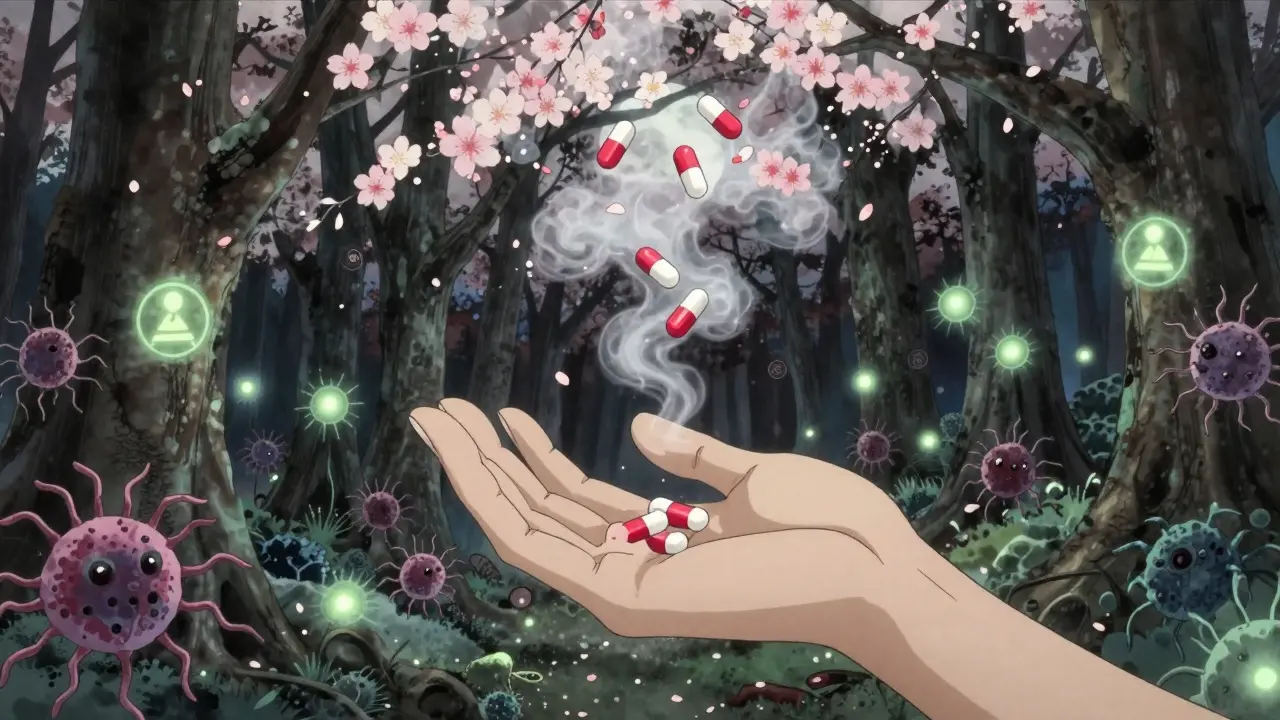
Every time you take an antibiotic when you don’t need it, you’re not just helping yourself-you’re helping bacteria become stronger. That’s the harsh truth behind antibiotic overuse, one of the quietest and most dangerous public health threats today. It’s not just about a single bad prescription. It’s about millions of them-across hospitals, clinics, farms, and homes-adding up to a global crisis that’s already killing over a million people a year.
What Happens When Antibiotics Don’t Work Anymore?
Antibiotics were once miracles. A simple pill could turn a deadly infection into a minor inconvenience. But now, bacteria are fighting back. They’ve evolved. They’ve learned how to survive the drugs meant to kill them. This isn’t science fiction. It’s happening right now. According to the World Health Organization, in 2023, one in six confirmed bacterial infections worldwide were resistant to standard antibiotics. That means for every six people treated for something like a urinary tract infection, pneumonia, or bloodstream infection, one won’t respond to the first-line drug. In some regions, like South-East Asia and the Eastern Mediterranean, it’s even worse-one in three infections don’t respond. The most worrying part? This isn’t slowing down. Between 2018 and 2023, resistance rates increased in over 40% of the pathogen-antibiotic combinations tracked globally. Some bacteria, like Escherichia coli and Staphylococcus aureus, are now resistant to drugs we’ve relied on for decades. Methicillin-resistant Staphylococcus aureus (MRSA) shows up in 35% of cases across 76 countries. For urinary infections, one in five E. coli strains no longer respond to ampicillin or fluoroquinolones. And then there’s the last resort. Carbapenems-antibiotics we use when everything else fails-are losing their power. Experts predict resistance to these drugs will double by 2035 compared to 2005 levels. When that happens, even simple surgeries or chemotherapy could become life-threatening because we won’t be able to prevent or treat the infections that follow.C. difficile: The Hidden Consequence of Antibiotic Use
You might not think of your gut when you hear the word "antibiotic." But your intestines are home to trillions of good bacteria that keep you healthy. Antibiotics don’t just kill the bad guys-they wipe out the good ones too. That’s where Clostridioides difficile (C. difficile) comes in. This bacterium is normally kept in check by your gut microbiome. But when antibiotics destroy that balance, C. difficile takes over. It multiplies fast, releases toxins, and causes severe diarrhea, fever, and even life-threatening colon damage. The CDC reports that in 2017, C. difficile caused nearly half a million infections in the U.S. alone. While exact 2025 numbers aren’t yet finalized, the trend is clear: every time antibiotics are misused, the risk of C. difficile goes up. In hospitals, where antibiotics are used heavily, C. difficile infections are among the most common healthcare-associated infections. And the problem got worse during the pandemic. Between 2019 and 2021, hospital-onset resistant infections rose by 20%-partly because more patients got antibiotics they didn’t need, and infection control slipped. What makes C. difficile so dangerous? It doesn’t just go away after treatment. It forms spores that survive on surfaces for months. A single contaminated doorknob or bed rail can spread it to the next patient. And once you’ve had it once, you’re at high risk of getting it again.Why Are We Still Overusing Antibiotics?
If the risks are so clear, why is this still happening? One big reason: pressure. Patients ask for antibiotics when they have a cold or the flu-viral illnesses that antibiotics can’t touch. Doctors, under time pressure or wanting to please, sometimes give in. In some countries, antibiotics are sold over the counter without a prescription. In others, farmers use them to make livestock grow faster or prevent disease in crowded conditions-another major source of resistance. Even in hospitals, it’s common to start antibiotics "just in case," before lab results come back. That’s called empirical treatment. It’s not always wrong-but without fast, accurate diagnostics, it leads to unnecessary use. In low-resource settings, where labs are scarce, doctors often have no choice but to guess. And when they guess wrong, resistance grows. The economic system makes it worse. Drug companies don’t make much money from antibiotics. Unlike pills you take for life-like for high blood pressure or diabetes-an antibiotic course lasts a week or two. And when new antibiotics are developed, they’re often held in reserve, used only as a last resort, so they don’t lose effectiveness. That means companies can’t recoup their research costs. As a result, the pipeline for new antibiotics is drying up. Since 2016, CARB-X has invested over $480 million in 118 projects worldwide, but it’s not enough. We need new drugs-and fast.
What’s Being Done-and Why It’s Not Enough
There are solutions. Antibiotic stewardship programs-teams of doctors, pharmacists, and nurses who review prescriptions and push for the right drug, at the right dose, for the right time-have proven effective. Hospitals with strong stewardship programs have cut C. difficile rates by 30% or more. Global surveillance is improving. The WHO’s GLASS system now collects data from over 100 countries. That’s a big step forward. But data means nothing without action. Only 12% of countries have fully implemented national action plans on antimicrobial resistance. Public awareness is low. Most people don’t know that antibiotics don’t work on colds or flu. They don’t know that finishing a full course isn’t always the best advice-sometimes, stopping early is safer if the infection is gone and the drug is causing harm. They don’t know that taking leftover antibiotics from a previous illness is dangerous. And the worst part? Progress is slipping. Between 2012 and 2019, the U.S. saw an 18% drop in resistant infections. But during the pandemic, those gains vanished. Hospitals were overwhelmed. Antibiotic use spiked. Prevention measures dropped. Resistance came roaring back.What You Can Do
You don’t need to be a doctor or a policymaker to make a difference. Here’s what actually works:- Don’t ask for antibiotics for colds, flu, or sore throats unless a doctor confirms a bacterial infection. Most of these are viral.
- Never take antibiotics prescribed for someone else. The wrong drug can make you sicker and contribute to resistance.
- Always finish the full course-unless your doctor tells you otherwise. Stopping early leaves behind the strongest bacteria.
- Ask: "Is this really necessary?" If your doctor suggests an antibiotic, ask if there’s a way to wait for test results first.
- Practice good hygiene. Wash your hands. Get vaccinated. Preventing infections means fewer antibiotics are needed.
- Support policies that fund research and regulate antibiotic use in farming. Your voice matters.
The Future Is on the Line
By 2050, antimicrobial resistance could kill 10 million people a year-more than cancer. That’s not a distant prediction. It’s the path we’re on if nothing changes. We’re not talking about a few bad apples. We’re talking about a system that’s broken-from how drugs are developed, to how they’re prescribed, to how we think about illness. But the good news? We can fix it. We’ve done it before. When antibiotics were first introduced, people used them like candy. Then we learned. We built guidelines. We trained doctors. We improved sanitation. We cut resistance rates. We can do it again. The question isn’t whether we can stop this crisis. It’s whether we’re willing to act before it’s too late.Can I take leftover antibiotics for a new infection?
No. Leftover antibiotics are likely the wrong drug for your new infection, and taking them without a prescription can make bacteria resistant. They may also be expired or improperly stored, reducing their effectiveness. Always see a doctor for a new illness.
Do probiotics prevent C. difficile?
Some studies suggest certain probiotics, like Saccharomyces boulardii, may reduce the risk of C. difficile in people taking antibiotics, especially in hospitals. But they’re not a substitute for smart antibiotic use. Always talk to your doctor before taking probiotics-they’re not right for everyone.
Are natural remedies a good alternative to antibiotics?
For viral infections like colds or flu, rest, fluids, and time are the best treatments. But for serious bacterial infections-like pneumonia, sepsis, or kidney infections-natural remedies won’t work. Delaying antibiotics in these cases can be deadly. Don’t replace proven medicine with unproven remedies when your life is at risk.
Why don’t we have more new antibiotics?
Developing antibiotics is expensive and unprofitable. Companies invest millions, but new antibiotics are used sparingly to preserve their effectiveness, so they don’t generate enough sales. This broken business model has led to a nearly empty pipeline. Governments and nonprofits are trying to fix it, but progress is slow.
Can antibiotic resistance be reversed?
In some cases, yes. If antibiotic use drops significantly, resistant strains can decline over time because they’re less fit than susceptible ones in a low-drug environment. But resistance genes stick around in bacteria, so the threat never fully disappears. The goal isn’t to reverse it completely-it’s to control it so it doesn’t spread out of control.
Ashok Sakra
January 21, 2026 AT 10:14This is why I don't trust doctors anymore. They just hand out antibiotics like candy. My cousin got antibiotics for a cold last year and now he's in the hospital with some superbug. It's insane. I swear, they're just trying to make money.
Roisin Kelly
January 21, 2026 AT 20:03Yeah right. Antibiotics are just a government scam to control us. Big Pharma and the WHO are in cahoots. They want you scared so you'll keep taking pills. I stopped taking all meds after I read about the flu vaccine containing microchips. Same thing here.
Kevin Narvaes
January 23, 2026 AT 01:10we live in a simulation and antibiotics are just code that got corrupted. like, think about it-bacteria evolved because the system needed to balance the human ego. we think we’re so smart with our pills but really we’re just glitching the matrix. the real cure? stop believing in medicine altogether. go live in the woods. eat dirt. be free.
Jarrod Flesch
January 23, 2026 AT 02:55Man, this is so real. I work in a clinic and I see it every day. People come in with a runny nose and demand amoxicillin like it's soda. I always explain it’s viral, but half the time they just go to the pharmacy down the street and buy it without a script. 😔
And C. diff? Yeah, I had a patient last month-32, healthy, took antibiotics for a sinus infection, ended up in ICU. Scary stuff. We need way more education. Maybe posters in pharmacies? TikTok videos? Something.
Barbara Mahone
January 24, 2026 AT 03:30Antibiotic stewardship programs have been shown to reduce C. difficile rates by up to 40% in well-implemented settings. The data is clear. What’s lacking is consistent policy enforcement across state and federal levels. Public health infrastructure must be prioritized-not just funded, but structured with accountability.
Kelly McRainey Moore
January 25, 2026 AT 03:14I never knew antibiotics could mess up your gut like that. I thought they were just for killing bad germs. Thanks for explaining C. diff-I’m gonna ask my doctor next time I’m tempted to ask for a script for my cold. 🙏
michelle Brownsea
January 25, 2026 AT 16:32And yet… people still take leftover antibiotics like they’re candy. They think it’s "saving money" or "being resourceful." It’s not. It’s criminal negligence. You’re not being smart-you’re playing Russian roulette with your microbiome. And if you think probiotics "fix" it? Please. They’re not magic fairy dust. This isn’t a lifestyle blog-it’s a public health emergency. Stop being casual about it.
lokesh prasanth
January 26, 2026 AT 05:47Malvina Tomja
January 27, 2026 AT 03:53Let me be blunt: if you're not a doctor, you have no business deciding whether you need antibiotics. Period. You're not a medical expert. You're not a microbiologist. You're just a person who watched one YouTube video and now thinks you know better than 20 years of clinical research. This isn't about freedom-it's about responsibility. And most people? They don't have it.
Yuri Hyuga
January 28, 2026 AT 22:19Hey everyone-this is serious, but we can turn this around 💪
I’ve seen hospitals cut C. diff rates by half just by training nurses to question every antibiotic order. It’s not magic-it’s discipline. We need more stewardship teams. We need better diagnostics. We need governments to fund new antibiotics like they fund defense.
And yes, YOU can help. Ask your doctor: "Is this necessary?" Then vote for leaders who treat public health like a priority-not an afterthought. We’ve done hard things before. We can do this too. 🌍❤️
MARILYN ONEILL
January 30, 2026 AT 09:56Ugh. Another doomsday article. Everyone’s panicking over antibiotics like it’s the end of the world. I’ve taken them 10 times and I’m fine. My grandma took them for 40 years and lived to 98. Stop fearmongering. It’s just bacteria. They’ve been around longer than us. They’ll outlive us anyway.
Steve Hesketh
January 31, 2026 AT 09:52Bro, I’m from Nigeria and I’ve seen kids die because the only medicine available was expired antibiotics bought from a street vendor. We don’t have labs. We don’t have time. But we still try. We still teach. We still fight.
This isn’t just a US problem. It’s a human problem. And if we don’t act together, no one wins. Let’s not wait for the next pandemic to wake up. We got this. 🙌
shubham rathee
February 1, 2026 AT 14:54