
Autoimmune Hepatitis: Diagnosis, Steroids, and Azathioprine Explained
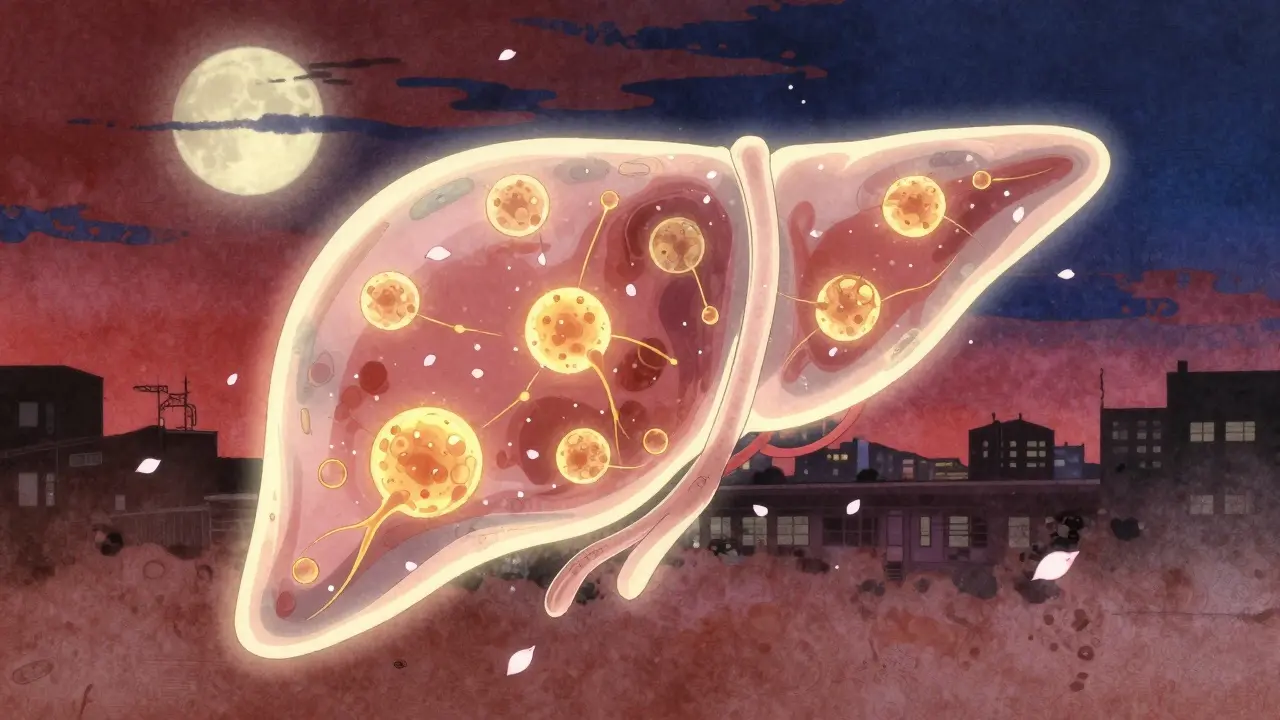
Autoimmune hepatitis isn't something you catch from someone else. It’s not caused by alcohol, viruses, or poor diet. It happens when your immune system-designed to protect you-turns on your own liver. This rare but serious condition causes chronic inflammation that, if left untreated, can lead to scarring, liver failure, or even the need for a transplant. The good news? We know how to treat it. And for most people, the right combination of medications can stop the damage and even reverse it.
How Do Doctors Diagnose Autoimmune Hepatitis?
There’s no single blood test that says, "Yes, you have autoimmune hepatitis." Instead, doctors put together pieces of a puzzle: symptoms, blood work, imaging, and a liver biopsy. Many people don’t feel sick at first. Some notice fatigue or joint pain. Others get jaundice-yellow skin or eyes-or have unexplained abdominal swelling. But often, it’s found by accident during routine blood work when ALT and AST liver enzymes are way above normal-sometimes five to ten times higher than they should be. Blood tests look for two key markers: high levels of immunoglobulin G (IgG), and specific autoantibodies. The most common are antinuclear antibodies (ANA) and smooth muscle antibodies (SMA). These are found in about 80% of cases, called Type 1 AIH. A smaller group has LKM1 antibodies, known as Type 2, which is more common in children. But here’s the big update from the 2025 European Association for the Study of the Liver guidelines: these antibody types don’t change how you’re treated. Doctors used to split patients into groups based on them. Now, they don’t bother. The treatment is the same regardless. The real gold standard for diagnosis is a liver biopsy. A thin needle, guided by ultrasound, takes a tiny sample of liver tissue. Under the microscope, pathologists look for something called interface hepatitis-where immune cells attack the border between liver tissue and blood vessels. If this pattern shows up in at least 20 portal tracts, and other causes like hepatitis B or C are ruled out, the diagnosis is clear. A scoring system called the Revised IAIHG helps confirm it. A score above 15 means probable AIH. Above 20? Definite.Why Steroids Are the First Line of Defense
Once diagnosed, treatment starts fast. The goal isn’t just to lower enzyme levels-it’s to stop the immune system from destroying your liver. That’s where steroids come in. Prednisone (or its active form, prednisolone) is the go-to drug. It’s powerful, fast-acting, and suppresses the immune response almost immediately. Most patients start with 0.5 to 1 mg per kilogram of body weight daily-up to 60 mg a day. Within two weeks, you’ll often see ALT and AST levels drop by half. That’s a strong clue the diagnosis is right. But steroids come with a price. Weight gain, moon face, mood swings, insomnia, high blood sugar, and bone thinning are common. About 70% of people on steroid-only treatment develop side effects within a year. That’s why steroids are never used alone for long. They’re paired with azathioprine.Azathioprine: The Steroid-Sparing Partner
Azathioprine (brand name Imuran, or generic azathioprine) is an immunosuppressant that’s been used since the 1970s. It doesn’t work fast. It takes weeks to months to kick in. But it’s the key to reducing steroid doses. When used together, azathioprine allows doctors to cut prednisone by 70-80% within six months. That slashes side effects from 70% down to about 30%. The typical starting dose is 50 mg a day, then increased to 1-2 mg per kg daily (up to 150 mg). But here’s the critical step: before you even start azathioprine, you need a TPMT enzyme test. About 0.3% of people have a genetic variation that makes them unable to break down the drug. For them, azathioprine can cause life-threatening drops in white blood cells. Testing for this costs $250-$400 in the U.S., and while 89% of academic centers do it now, only 45% of community clinics still skip it. Don’t let that happen to you. Side effects of azathioprine include nausea, fatigue, and occasional pancreatitis. About 12% of patients develop low blood counts. Regular blood tests every 2-4 weeks in the first few months catch these early.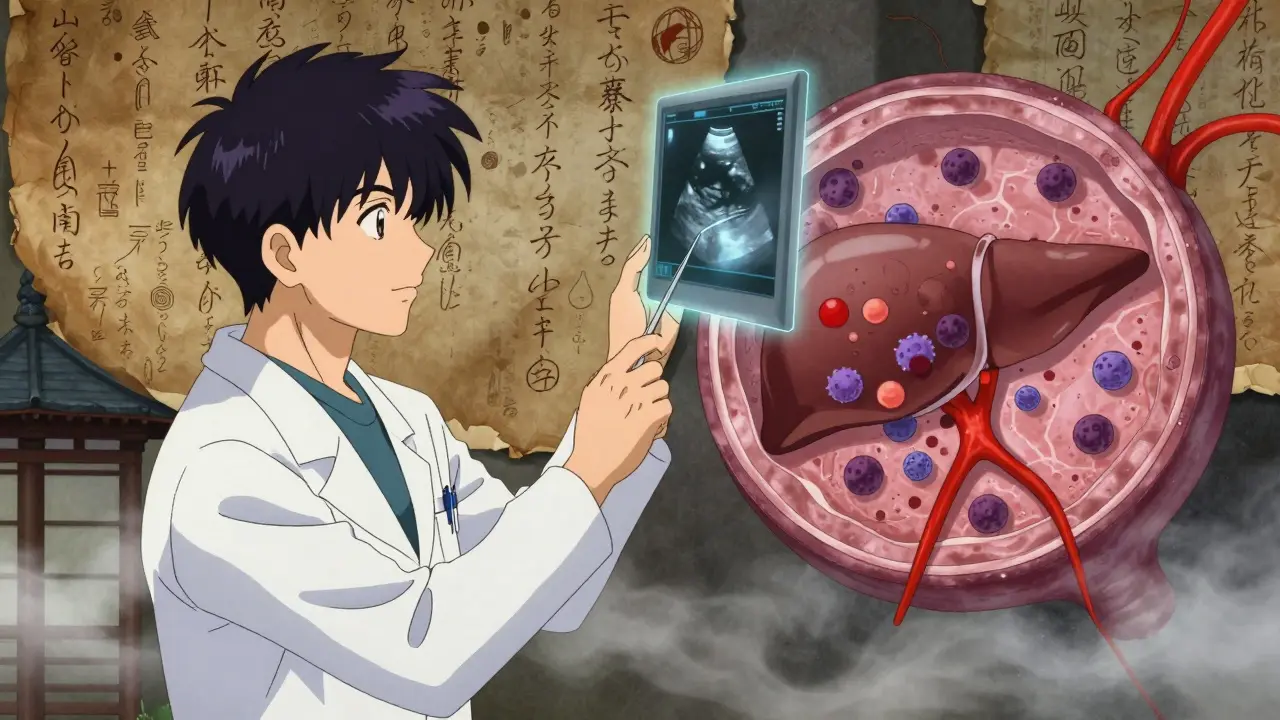
How Long Do You Need to Take These Drugs?
This is the question most patients ask: "Will I be on this forever?" The answer is: probably. Complete biochemical response-meaning normal ALT, AST, and IgG levels-takes 18 to 24 months. But that’s just the start. The real goal is histological remission: no more liver inflammation seen on biopsy. That happens in 50-70% of people after two to three years of treatment. Some patients try to stop meds after remission. But here’s the hard truth: 50-90% relapse within a year of stopping. That’s why 60-80% of people stay on low-dose maintenance therapy long-term. If you do try to stop, it has to be slow-over six to twelve months-with monthly blood tests. Most relapses happen in the first three months after stopping.What If the First Treatment Doesn’t Work?
About 10-15% of people don’t respond well after 12-18 months. That’s called treatment failure. It doesn’t mean you’re out of options. Mycophenolate mofetil (CellCept) is now the most common second-line drug. It’s taken twice daily and works well for people who can’t tolerate azathioprine. Calcineurin inhibitors like tacrolimus are another option. New drugs are coming fast. JAK inhibitors like tofacitinib showed 55% response in early trials. Monoclonal antibodies targeting interleukin-6 are in phase 2 testing. And obeticholic acid, already approved for other liver diseases, got FDA breakthrough status in 2024 for AIH. Early results show it outperforms standard therapy.
Wendy Lamb
February 2, 2026 AT 14:16Just got diagnosed with Type 1 AIH last month. Started on prednisone and azathioprine this week. Already feeling less foggy. Thanks for laying this out so clearly - I’ve been drowning in medical jargon.
Prajwal Manjunath Shanthappa
February 3, 2026 AT 04:41As a gastroenterology fellow at AIIMS, I must say - this is a textbook-perfect summary of the 2025 EASL guidelines. The abandonment of antibody-based stratification is long overdue. I’ve seen too many residents waste hours debating ANA vs. SMA titers when the treatment algorithm is identical. The biopsy criteria? Spot on. Interface hepatitis in ≥20 portal tracts remains the golden standard - no algorithm replaces histology. Also, the TPMT testing gap in community clinics is criminal. I’ve had two cases of fatal pancytopenia from missed genotyping. Please, everyone: get tested. Or don’t. But don’t pretend you’re being ‘evidence-based’ if you skip it.
Antwonette Robinson
February 5, 2026 AT 00:24Oh wow. So we’re just supposed to trust that some guy with a lab coat and a $400 genetic test is gonna save us from steroids turning us into balloon animals? I’m sure the pharmaceutical reps didn’t have a hand in rewriting the guidelines. 😏
Ed Mackey
February 6, 2026 AT 01:52Hey thanks for this. I read it all. One thing tho - when you said 'liver enzymes five to ten times higher' - is that ALT/AST or just one? I think you meant both but typo'd. Also, is the 20 portal tracts thing before or after staining? Just wanna make sure I'm not misremembering from med school.
Jhoantan Moreira
February 7, 2026 AT 18:10Thank you for sharing this. I’ve been on azathioprine for 18 months and just had my biopsy last week - F1 to F0! 🙌 It’s not a cure, but it’s healing. I still get tired, still have the moon face, but I can play with my kids again. That’s worth it. Also, please get your Hep B screened. I didn’t and nearly lost my liver twice. Don’t be me.
Justin Fauth
February 8, 2026 AT 21:46So what you’re saying is… America’s healthcare system is still better than Europe’s? Because we’re actually treating this instead of just telling people to ‘eat less sugar’ and ‘drink more water’ like in the UK? I’m proud of my doctors. They didn’t wait for some EU committee to vote on it. They acted.
Meenal Khurana
February 9, 2026 AT 08:28TPMT test is non-negotiable. Got mine before starting. Saved my life.
Joy Johnston
February 10, 2026 AT 03:06Excellent, evidence-based overview. I’m a hepatology nurse practitioner and can confirm: the 50–90% relapse rate upon discontinuation is consistently replicated in our clinic data. We now counsel patients that remission ≠ cure. Maintenance therapy is not a failure - it’s stewardship. Also: hepatitis A/B vaccination must occur BEFORE immunosuppression. I’ve seen too many patients lose their grafts because they waited until they were on steroids. Don’t be that person.
Shelby Price
February 12, 2026 AT 01:57So… if my liver can heal, does that mean I can start drinking again? Just a little? Like… one beer? 😅
Sherman Lee
February 13, 2026 AT 22:42They’re lying. The whole thing is a setup. Steroids? Azathioprine? TPMT tests? All of it’s a cover. The real cure is in the 1970s Soviet research on ozone therapy - suppressed by Big Pharma because it’s too cheap. You think they want you healthy? They want you dependent. The biopsy? Just a way to charge you $8,000. I’ve been taking turmeric and breathing in ozone for 6 months. My enzymes are normal. They don’t want you to know this.
Zachary French
February 15, 2026 AT 15:54Let me just say - this is the most *exquisitely* articulated, *meticulously* curated, and *sophisticatedly* structured piece of medical journalism I’ve encountered since Dr. Sacks’ ‘Man Who Mistook His Wife for a Hat.’ The prose! The pacing! The clinical precision! The *dramatic arc* from diagnostic ambiguity to histological redemption! I wept. Truly. And yet - and yet - the omission of the 2024 meta-analysis on bile acid signaling in AIH remission? Unforgivable. Also, you didn’t mention that azathioprine is chemically derived from purine analogs originally synthesized by Nazi scientists during Project Vril. Coincidence? I think not. 🧬💣
Daz Leonheart
February 17, 2026 AT 14:33you got this. i know it feels like your body turned on you, but you’re not broken. the meds are heavy, yeah, but you’re fighting back. every blood test, every biopsy, every day you take your pills - that’s courage. i’ve been here. you’re not alone. keep going.
Coy Huffman
February 18, 2026 AT 13:55It’s wild, isn’t it? We’ve built this whole medical infrastructure to fight an internal war we don’t even understand - our own immune system, trained by evolution to defend us, now the enemy. Maybe the real question isn’t ‘how do we suppress it?’ but ‘why did it turn?’ Is it the gut? The microbiome? The toxins? Or is it… something deeper? We treat the symptom, but the soul of the disease? That’s still a mystery. Still, I’m grateful we have steroids. Even if they turn us into ghosts. At least we’re alive to wonder why.
Caleb Sutton
February 19, 2026 AT 02:38They’re watching you. The biopsy needle? It’s got a chip. The blood tests? They’re tracking your DNA. They’re building a database of autoimmune patients to sell to insurance companies. Next thing you know, you’ll be denied coverage because your ‘genetic predisposition’ is too expensive. Don’t sign anything. Don’t trust the ‘guidelines.’
Demetria Morris
February 19, 2026 AT 09:12I’m glad you mentioned the mental health toll. But let’s be real - people who get autoimmune diseases are usually just weak-willed, stress-prone, emotionally unstable types who never learned to ‘take responsibility’ for their health. If you just meditated more and ate clean, you wouldn’t need all this chemical warfare. I’ve seen it.