
Behavioral Economics: How Patient Psychology Drives Drug Choices

Why do so many patients stop taking their medication-even when it’s cheap, effective, and prescribed by their doctor? The answer isn’t about cost, education, or access. It’s about psychology.
For decades, healthcare systems assumed patients make rational decisions: if Drug A costs less than Drug B and works just as well, they’ll pick A. But real-world data tells a different story. In one study, 68% of patients stuck with a more expensive drug even when a cheaper, equally effective alternative was available. Why? Because fear, habit, and mental shortcuts override logic. This is where behavioral economics comes in-not as an abstract theory, but as a practical tool to understand why people choose what they do when it comes to their health.
Loss Aversion: The Fear of Losing What You Have
People hate losing more than they love gaining. This is called loss aversion-and it’s one of the biggest reasons patients refuse to switch medications.
Imagine you’ve been on a statin for three years. Your doctor says there’s a generic version that works the same, costs 30% less, and has fewer side effects. You nod along. But later, you think: What if this new one doesn’t work? What if I feel worse? You don’t weigh the facts. You focus on the risk of losing what feels familiar. That’s loss aversion in action.
Studies show this bias explains why only half of patients take their meds as prescribed. Even when the cost is covered, the emotional cost of change is too high. One clever intervention flipped this: patients were told they’d lose a $50 monthly rebate if they missed a dose. That simple framing-tying adherence to avoiding a loss-boosted medication persistence by 14.3% compared to traditional reminders.
Present Bias: The Here-and-Now Over the Future
Most people know smoking leads to lung cancer. Most people also know high blood pressure increases stroke risk. But knowledge doesn’t change behavior. Why? Because the brain values immediate comfort over future safety.
This is present bias. It’s why 33% of prescriptions go unfilled after being written. A patient walks out of the clinic with a pill bottle, feels fine today, and decides tomorrow’s symptoms aren’t worth today’s inconvenience. Side effects? Too real. Dosing twice a day? Too hard. The long-term benefit-preventing a heart attack in five years-feels abstract.
One study found that patients on daily medication for hypertension were 23.7% more likely to skip doses if they had to take more than one pill per day. Complexity breeds neglect. The fix? Simplify. Combine drugs into one pill. Send SMS reminders timed to daily routines-like brushing teeth. Frame it not as “take your pill,” but as “don’t lose your streak.” Small nudges, big impact.
Confirmation Bias: Believing What Feels Right
Patients often believe more expensive drugs are better. It’s not logic-it’s a mental shortcut. A 2022 study found that prescription drug prices rose 47% faster than general inflation since 2010. Yet, patients didn’t just pay more-they preferred the pricier option, convinced it was stronger or safer.
This is confirmation bias: seeking information that confirms what you already believe. If you’ve been told “brand-name drugs are superior,” you’ll ignore studies showing generics are just as effective. Even when doctors explain the science, patients cling to the idea that cost equals quality.
One hospital system tackled this by changing how drugs were presented. Instead of listing the brand first, they defaulted to the generic. Clinicians could still override it-but 37.8% more patients ended up on the cheaper, equally effective option. The choice was still open. But the default made the right choice easier.
Social Norms: What Everyone Else Is Doing
Humans are social creatures. We care deeply about what others think-and what others do.
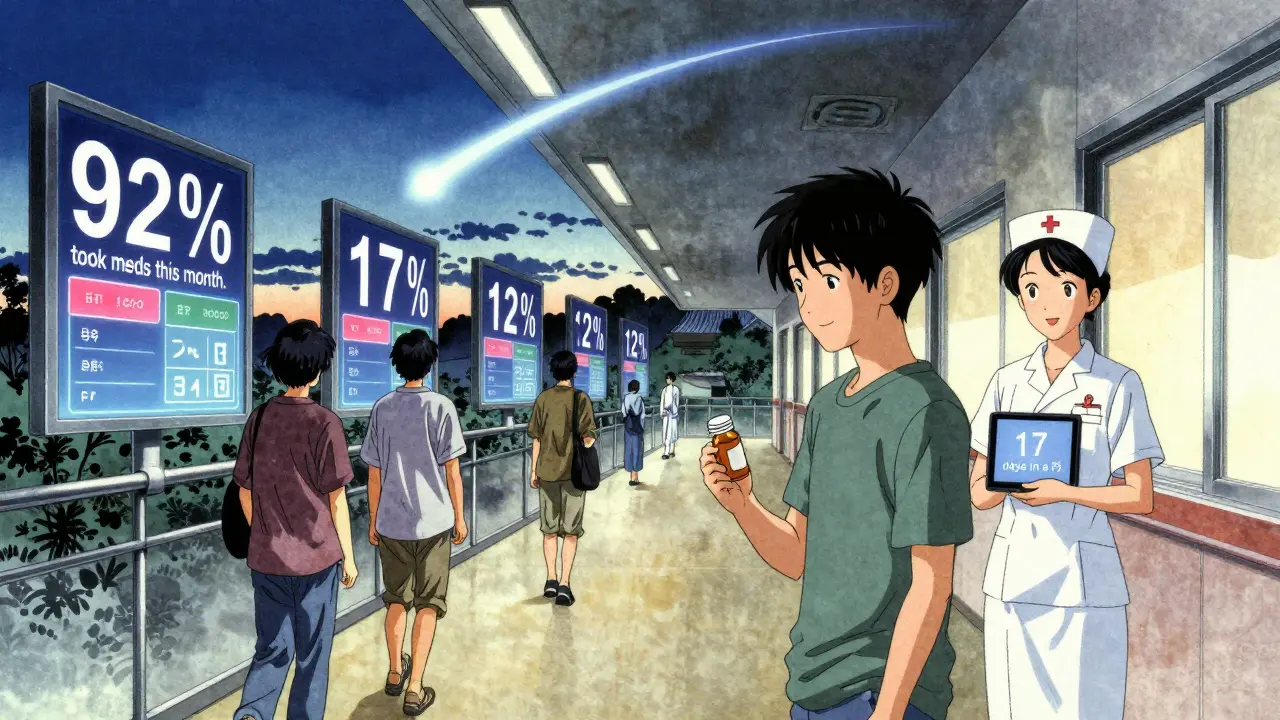
In an HIV clinic, researchers put up posters showing monthly adherence rates: “92% of patients took all their meds last month.” Within weeks, adherence jumped by 22.3%. Why? Because people didn’t want to be the outlier. They didn’t want to fall behind.
Another example: a diabetes program sent patients a monthly text: “You’re in the top 20% of patients who take their meds on time.” That simple social comparison increased adherence by 18%. It wasn’t about punishment or reward. It was about belonging.
Pharmaceutical companies now use this in patient support apps. Instead of saying “Take your pill,” they say “You’ve taken your meds 17 days in a row. Keep going.” The message doesn’t just remind-it validates.
Framing: How Words Change Decisions
It’s not what you say-it’s how you say it.
In a 2021 vaccine trial, one group was told: “This vaccine is 95% effective.” Another heard: “There’s a 5% chance the vaccine won’t work.” The first group had an 18.4 percentage point higher uptake. The same fact. Two completely different reactions.
This is the framing effect. People respond to how information is packaged. In drug choices, saying “This medication reduces your risk of stroke by 40%” works better than “There’s still a 60% chance you’ll have a stroke.”
One study tested two versions of a heart failure drug pamphlet. Version A: “If you don’t take this, your chance of hospitalization increases.” Version B: “Taking this reduces your chance of hospitalization.” Patients on Version B were 21% more likely to start the medication.
Healthcare providers are learning: language matters as much as dosage.
Why Education Alone Fails
Most healthcare systems still rely on pamphlets, videos, and counseling. “Just educate them,” the logic goes. But data shows it doesn’t work.
A 2022 review of 44 studies found traditional patient education improved adherence by only 5-8%. Behavioral interventions? They improved prescribing and adherence in 92.3% of cases. Defaults, loss aversion, and social norms didn’t just help-they outperformed education by a landslide.
Why? Because education assumes people are rational. They’re not. You can explain the science of statins until you’re blue in the face. But if someone fears side effects, hates complexity, or believes brand-name is better, they’ll ignore the facts.
Behavioral economics doesn’t ignore emotion-it builds around it.
Barriers That Can’t Be Fixed by Nudges
Not all problems have behavioral fixes.
Patients with severe depression or anxiety are 31.4% less responsive to behavioral nudges. Mental health doesn’t just complicate adherence-it overrides it. No amount of SMS reminders helps if someone can’t get out of bed.
Drug shortages also break the model. If there’s no alternative, you can’t nudge someone to switch. In oncology, where treatment options are narrow and side effects brutal, only 12.3% of adherence programs use behavioral tools. The stakes are too high. The choices too few.
And then there’s cost. Even with behavioral tweaks, if a drug is unaffordable, patients will skip doses. Nudges can’t replace policy. They work best when paired with affordability.

Real-World Impact: The Numbers Don’t Lie
Non-adherence costs the U.S. healthcare system $289 billion a year. It causes 125,000 preventable deaths.
But when behavioral economics is applied well, results are dramatic:
- Smart pill bottles with real-time feedback improved adherence by 24.3%
- Loss aversion rebate programs increased statin persistence by 23.8%
- Default settings in electronic health records boosted appropriate substitutions by 37.8%
- SMS messages saying “Don’t lose your streak!” improved adherence by 19.7%
Pharmaceutical companies using these strategies report 17.3% higher medication persistency and 22.8% fewer discontinuations. Payers are catching on too. Twenty-seven of the top 30 pharmacy benefit managers now build behavioral nudges into their formularies.
The FDA even updated its 2023 guidance to require drug makers to evaluate how dosing frequency and administration route affect patient decision-making. Behavioral economics isn’t a trend-it’s becoming standard.
What’s Next: Personalized Nudges
The next frontier isn’t one-size-fits-all reminders. It’s personalized behavioral targeting.
Early 2023 pilot studies used machine learning to predict which patients respond to which nudges. One algorithm found that patients under 30 responded best to social norms (“Your peers are taking their meds”). Those over 65 responded better to loss aversion (“You’ll lose your monthly reward”).
By analyzing data like age, income, mental health history, and past adherence, systems can now tailor interventions. A patient with depression gets a phone call from a nurse. A busy parent gets a text at 7 p.m. A patient with anxiety gets a simplified pill box with color-coded days.
These personalized approaches are projected to boost effectiveness by 42.3% in the next two years. The goal isn’t to control behavior. It’s to make the right choice the easiest one.
Final Thought: It’s Not About Control-It’s About Support
Some critics say behavioral economics is manipulation. But that’s not accurate. You can still choose. A default doesn’t force you. A rebate doesn’t punish you. A reminder doesn’t shame you. It just makes the path of least resistance the healthier one.
Behavioral economics doesn’t assume patients are irrational. It assumes they’re human. And being human means we’re influenced by emotion, habit, and context. The best healthcare systems aren’t the ones that yell the loudest. They’re the ones that listen-and design accordingly.
John McDonald
February 11, 2026 AT 09:47Man, this post hit different. I’ve seen this with my old man-he stayed on this expensive blood pressure med for years even though the generic was right there. Said he ‘didn’t trust it.’ No data, no studies, just gut feeling. And honestly? I get it. We’re wired to cling to what’s familiar, even when it’s hurting us. Behavioral econ isn’t magic-it’s just… real.
Also, that ‘don’t lose your streak’ thing? Genius. I’ve got a fitness app that does that, and I’ve never been more consistent. Turns out, humans love trophies more than health.
Why can’t all healthcare be this smart?
Chelsea Cook
February 11, 2026 AT 22:44Oh wow, so now we’re treating adults like toddlers who need stickers to take their vitamins? 🙄
Let me guess-next they’ll send a happy emoji every time you swallow a pill. ‘You did it! 🎉👏 Your heart says thank you!’
Look, I get the intent. But this feels like corporate wellness theater. We’re not fixing the system-we’re just slapping Band-Aids on a broken leg and calling it ‘nudges.’
Meanwhile, the real issue? Drugs still cost $500/month in this country. No amount of ‘streaks’ fixes that.
Andy Cortez
February 12, 2026 AT 18:01Ok but like… what if the ‘cheaper’ drug is just a placebo with a different label??
I mean, c’mon. Big Pharma’s been lying for decades. They *want* you to think generics are the same. But have you seen the fillers? The binders? The *coloring agents*??
I had a cousin who switched to generic levothyroxine and ended up in the ER with a heart attack. Yeah, yeah, ‘correlation ≠ causation’-but I’m telling you, the brand name one *feels* different. Your body knows.
Also, why does the FDA even let this happen?? #PharmaCoverup
Jacob den Hollander
February 12, 2026 AT 22:56This is so important. I work in a clinic, and honestly? The biggest barrier isn’t cost or ignorance-it’s shame.
Patients don’t say it out loud, but they’re terrified they’ll look ‘weak’ for not taking meds perfectly. Or they think, ‘If I forget once, I’m a failure.’ That’s not rational. It’s emotional. And we’ve been treating it like a math problem.
The ‘streak’ thing? It works because it doesn’t punish. It celebrates. That’s psychology 101.
Also-social norms? Huge. When patients see ‘92% of us are on track,’ they don’t want to be the one who’s not. That’s not manipulation. That’s community.
And yeah, defaults help. I’ve seen it: when the EHR auto-selects the generic, 70% of patients just click ‘next.’ No debate. No stress. Just… done.
It’s not about control. It’s about removing friction. We owe our patients that.
Patrick Jarillon
February 14, 2026 AT 08:48BEHAVIORAL ECONOMICS??
That’s just a fancy word for mind control.
Who’s designing these ‘nudges’? Corporations. Insurance companies. The same people who raised drug prices 47%.
You think they care about your health? Nah. They just want you to keep paying. ‘Don’t lose your streak!’-sure, until they cancel the rebate next month.
And the ‘default settings’? That’s how they sneak in the cheaper drugs without you even knowing. You think you’re choosing? No-you’re being programmed.
Wake up. This isn’t healthcare. It’s behavioral manipulation disguised as science.
#DeepStateHealth
Randy Harkins
February 15, 2026 AT 01:13This is beautiful. 😊
So many people think ‘health’ is about facts and numbers. But it’s really about feelings. Fear. Habit. Belonging. Shame. Hope.
The fact that we can use psychology to help people-not force them, not shame them, but gently guide them-is one of the most humane things I’ve seen in medicine lately.
And that stat about the 125,000 preventable deaths? That’s not a number. That’s 125,000 moms. Dads. Grandmas. Friends.
Let’s keep doing this. Not because it’s efficient. But because it’s kind.
❤️
Chima Ifeanyi
February 17, 2026 AT 00:26While the behavioral frameworks presented are statistically compelling, they fail to account for the structural heterogeneity in patient decision matrices. The axioms of loss aversion and present bias are predicated on a neoclassical utility function that assumes homogenous cognitive architecture-yet cross-cultural, socioeconomic, and neurocognitive variance renders these models non-generalizable.
For instance, in collectivist societies, social norm compliance is mediated by familial gatekeeping, not individual adherence metrics. Moreover, the ‘default effect’ is contingent on institutional trust, which is inversely correlated with systemic marginalization.
Thus, while nudges may yield marginal gains in homogeneous, high-trust, high-income cohorts, they exacerbate disparities in vulnerable populations. The paper’s conclusion is thus a classic case of ecological fallacy.
Recommendation: Integrate behavioral models with structural equity audits.
Jonah Mann
February 17, 2026 AT 06:59Yessss. I’ve been saying this for years. People don’t need more info-they need less friction.
I had my mom on a med for years. She’d forget. Then they switched to a once-a-day combo pill, sent texts at 7am (right after her coffee), and gave her a little sticker chart. She’s been on it for 2 years now. No drama. No guilt.
And yeah-the ‘streak’ thing? I use it for flossing. I’m not proud. But I floss.
Also-defaults. I used to pick the brand name because I didn’t know better. Now my pharmacy auto-picks generic. I never even noticed. And I feel fine.
It’s not magic. It’s just… smart.
PS: I spelled ‘medication’ wrong like 3 times in this comment. Sorry. 😅
THANGAVEL PARASAKTHI
February 17, 2026 AT 22:11Very good insights. I work in pharmacy in India and we see this daily. People prefer expensive brands because they think 'more expensive = more powerful'. Even when the generic is same.
One trick we do: we put a small note on the bottle: 'Same as Brand X, 70% cheaper'.
And guess what? 60% switch. No push. No lecture. Just info.
Also, SMS reminders work best if sent at 8am or 8pm. When people are awake and not rushing.
Simple things. Big impact.
PS: We don't have 'streaks' here. But we have 'success stories' shared in WhatsApp groups. That works too.
Human is human. Everywhere.