
Benign Prostatic Hyperplasia and Decongestants: What You Need to Know About Urinary Retention Risk
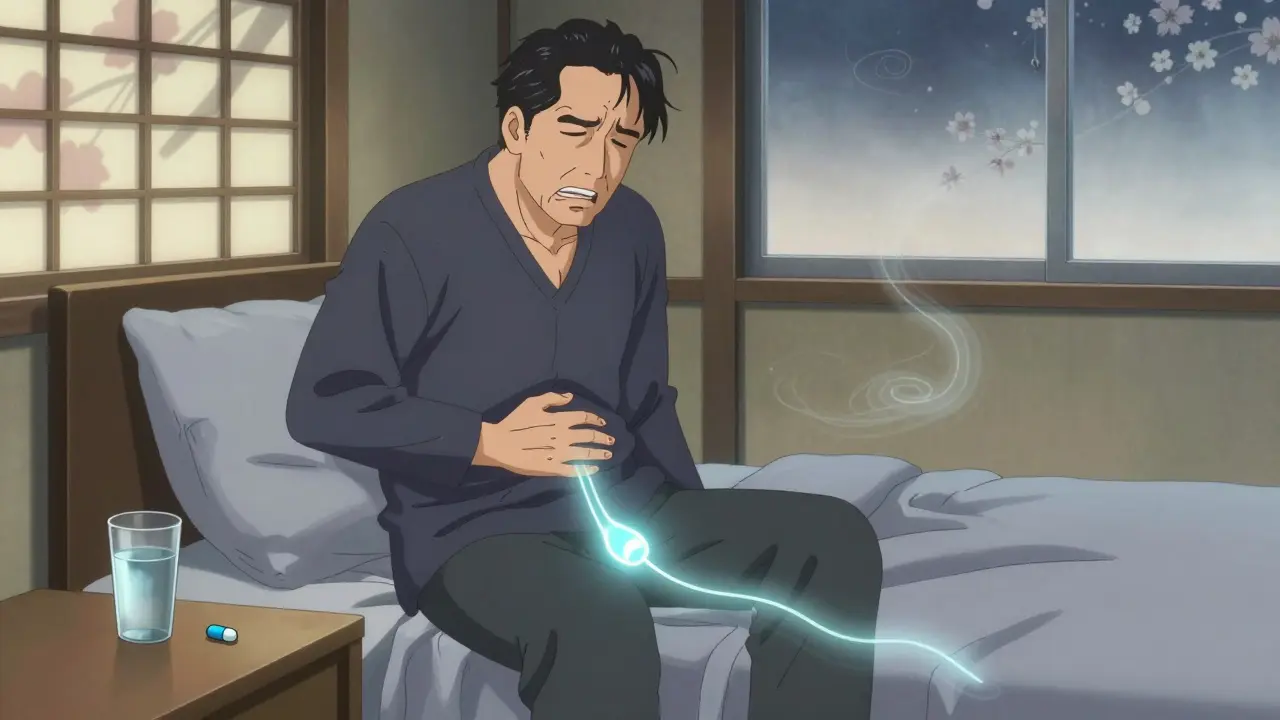
Men over 50 with an enlarged prostate-known as benign prostatic hyperplasia, or BPH-often face a quiet but dangerous risk when they reach for a common cold medicine. A single pill of pseudoephedrine, found in many over-the-counter decongestants like Sudafed, can trigger a medical emergency: acute urinary retention. This isn’t a rare side effect. It’s a well-documented, predictable reaction that affects thousands of men every year, many of whom had no idea their cold medicine could stop them from peeing entirely.
How BPH Makes Your Urinary System Fragile
Benign prostatic hyperplasia isn’t cancer. It’s just the prostate growing larger with age. By 60, about half of all men have some degree of enlargement. By 85, that number jumps to 90%. The prostate wraps around the urethra-the tube that carries urine out of the bladder. As it grows, it squeezes the urethra, making it harder to start urinating, weakens the stream, and leaves you feeling like you never fully empty your bladder. This isn’t just inconvenient. It puts your urinary system under constant pressure. Your bladder muscles work harder to push urine through the narrowed passage. Over time, they become overworked and less responsive. Even small changes in resistance can push you over the edge into retention-where your bladder fills but you can’t release a single drop.Why Decongestants Are a Hidden Threat
Decongestants like pseudoephedrine and phenylephrine work by tightening blood vessels in your nose to reduce swelling. But they don’t just target your nasal passages. These drugs are alpha-adrenergic agonists, meaning they activate receptors in smooth muscle throughout your body-including in the prostate and the bladder neck. The prostate is about 50% smooth muscle. When pseudoephedrine hits those receptors, the muscle contracts. That contraction adds more pressure on the urethra, which is already narrowed by the enlarged prostate. Urodynamic studies show this increases urethral resistance by 35-40%. In men with BPH, that’s enough to completely block urine flow. A 2021 study in the Journal of Urology found that men with BPH who took pseudoephedrine were 2.8 times more likely to experience acute urinary retention. And it doesn’t take much. A single 30mg dose can trigger symptoms within 1-2 hours. The effects can last up to 24 hours because pseudoephedrine has a long half-life-12 to 16 hours. That means even if you take it at night, you could wake up unable to urinate the next morning.Pseudoephedrine vs. Phenylephrine vs. Nasal Sprays
Not all decongestants are created equal. Pseudoephedrine is the worst offender. A 2022 meta-analysis found it carries an odds ratio of 3.45 for causing urinary retention in men with BPH. That means more than three in four men who take it and have BPH will face some level of urinary trouble. Phenylephrine, often listed as the “alternative” in stores, is slightly less risky-but still dangerous. It increases urethral resistance by 15-20%, and carries an odds ratio of 2.15. It’s not safe. It’s just less dangerous. Nasal sprays like oxymetazoline (Afrin) are different. They’re applied locally and absorbed minimally into the bloodstream. Their odds ratio for urinary retention is only 1.25-close to baseline. But here’s the catch: if you use them for more than three days, you risk rebound congestion. So they’re not a long-term fix, but they’re a much safer short-term option than pills.Who’s at Highest Risk?
Age matters. Men over 70 are far more vulnerable. A 2016 NIH study found that 51.8% of men over 70 with BPH developed subclinical voiding dysfunction after taking pseudoephedrine. That’s more than half. In men under 50 with mild BPH, the rate was only 17.3%. Symptom severity matters too. Men with an International Prostate Symptom Score (IPSS) above 12-meaning they’re already struggling to urinate, waking up multiple times at night, or feeling like they can’t empty their bladder-are at the highest risk. The American Urological Association says pseudoephedrine should be considered contraindicated in this group. Even men with mild symptoms aren’t safe. A 2023 survey of 1,245 men with BPH showed that 68% experienced worsened urinary symptoms after taking decongestants. The average increase in symptom severity was 4.7 points on the IPSS scale. That’s the difference between mild discomfort and needing a catheter.
Real Stories, Real Consequences
Reddit user u/BPH_Warrior took one 30mg pill of pseudoephedrine for a stuffy nose. Within hours, he couldn’t urinate at all. He felt his bladder filling, but nothing came out. He ended up in the ER, where he was catheterized for 48 hours. He wrote: “It was terrifying. I thought I was dying.” On the Prostate Cancer Foundation forum, 76% of 187 men reported urinary problems after taking pseudoephedrine. Over a third needed emergency catheterization. One man, 68, posted on Drugs.com: “I’ve used Sudafed for years without issue.” But that’s the dangerous myth. Some men get lucky. Others don’t. You can’t predict who will react. And when it happens, it’s not a minor inconvenience-it’s a hospital visit.What You Can Do Instead
You don’t have to suffer through congestion just because you have BPH. There are safer options:- Saline nasal irrigation (like NeilMed Sinus Rinse): Works for 68% of users, with zero urinary side effects. It physically flushes out mucus and irritants.
- Intranasal corticosteroids (like fluticasone): Reduces inflammation in the nasal passages. Effective in 72% of cases, with no impact on urinary function.
- Loratadine (Claritin): An antihistamine without strong anticholinergic effects. Much safer than diphenhydramine (Benadryl), which has an odds ratio of 2.85 for urinary retention.
- Steam inhalation and humidifiers: Simple, free, and effective for mild congestion.
One 2022 Cochrane Review found saline irrigation just as effective as pseudoephedrine for relieving congestion-without the risk. And 82% of Amazon reviewers rated NeilMed Sinus Rinse as “very effective.”
What If You Absolutely Need a Decongestant?
If you’re under a doctor’s care and have no other option, there’s a protocol. The Cleveland Clinic study from 2022 showed that if you’re already taking an alpha-blocker like tamsulosin (Flomax), your risk drops by 85%. Here’s the safe approach:- Start tamsulosin 0.4mg daily at least 72 hours before taking any decongestant.
- Use the lowest possible dose of pseudoephedrine-30mg maximum.
- Never take it for more than two days in a row.
- Watch for warning signs: weaker stream, increased straining, feeling like your bladder is full but nothing comes out.
Pharmacists are now required to screen for BPH before selling pseudoephedrine. But many don’t. The FDA updated labels in 2022, but 73% of sales still happen without pharmacist consultation. Don’t assume someone else is watching out for you.

What to Do If You Can’t Urinate
If you’ve taken a decongestant and suddenly can’t pee-don’t wait. Go to the ER. Acute urinary retention is a medical emergency. Your bladder can stretch too far, damage nerves, or even rupture if left untreated. Catheterization is usually needed for 48-72 hours. In 70% of cases, men who experience this need to be catheterized. Don’t try to “push it out.” Don’t wait for it to pass. Don’t assume it’s just “a bad day.” If your bladder feels full and nothing happens, you’re already in retention.The Bigger Picture
The global BPH treatment market is worth over $5 billion. And yet, most men aren’t warned about decongestants. The American Urological Association and European Urology Association now recommend medication reviews as standard care. The American Geriatrics Society lists pseudoephedrine as a “potentially inappropriate medication” for men over 65 with BPH. It’s not just about avoiding one drug. It’s about understanding how your body works-and how common medicines can interact in ways no one tells you about. Your prostate isn’t just growing. It’s becoming more sensitive. And every alpha-adrenergic drug you take is tightening the screws.Final Advice
If you have BPH:- Never take pseudoephedrine without talking to your doctor or urologist.
- Check every cold, flu, or sinus medicine label-even “natural” ones. Some contain hidden decongestants.
- Use saline rinses or nasal steroids first.
- Know the signs of urinary retention: weak stream, straining, feeling full, no urine for 8+ hours.
- If you’re on an alpha-blocker, you’re safer-but still not risk-free.
There’s no shame in avoiding a drug that could land you in the hospital. Your bladder is worth more than a clear nose.
Can pseudoephedrine cause urinary retention even in men with mild BPH?
Yes. Even men with mild BPH (IPSS <8) can experience urinary retention after taking pseudoephedrine. A 2023 survey of over 1,200 men with BPH found that 68% had worsened urinary symptoms after using decongestants. The risk is lower in mild cases, but it’s still real. Some men may tolerate it, but there’s no way to predict who will react. The safest approach is to avoid it entirely unless under direct medical supervision.
Is phenylephrine safer than pseudoephedrine for men with BPH?
Phenylephrine is less potent than pseudoephedrine, but it’s still risky. It increases urethral resistance by 15-20%, compared to 35-40% for pseudoephedrine. Its odds ratio for urinary retention is 2.15-still more than double the baseline risk. Many men assume phenylephrine is a safe alternative, but studies show it can still trigger acute retention. It’s not a safe option. Saline rinses or nasal steroids are better choices.
Can I take Claritin (loratadine) if I have BPH?
Yes, loratadine (Claritin) is generally safe for men with BPH. Unlike first-generation antihistamines like diphenhydramine (Benadryl), which have strong anticholinergic effects and an odds ratio of 2.85 for urinary retention, loratadine doesn’t significantly affect bladder function. Studies show its odds ratio is only 1.35-close to normal. It’s one of the safest oral options for allergy or congestion relief in men with BPH.
How long does it take for pseudoephedrine to cause urinary retention?
Symptoms can begin within 1 to 2 hours after taking pseudoephedrine. The drug reaches peak concentration in the blood around 2-4 hours, and its effects last up to 24 hours due to its 12-16 hour half-life. Many men don’t notice problems until the next morning, when they wake up unable to urinate. That’s why it’s dangerous to take it at night.
Should I stop taking my BPH medication if I need a decongestant?
Never stop your prescribed BPH medication without talking to your doctor. If you must take a decongestant, the safest approach is to continue your alpha-blocker (like tamsulosin) and use the lowest possible dose of pseudoephedrine for no more than two days. A 2022 study found that combining tamsulosin with pseudoephedrine reduced urinary retention risk by 85%. Stopping your medication could make your BPH symptoms worse and increase your overall risk.
Are nasal sprays like Afrin safe for men with BPH?
Oxymetazoline nasal sprays (like Afrin) are safer than oral decongestants because they’re absorbed minimally into the bloodstream. Their odds ratio for urinary retention is only 1.25-barely above normal. But they’re not meant for long-term use. Using them for more than three days can cause rebound congestion, making your nose worse than before. Use them only for short-term relief while trying safer alternatives like saline rinses.
What should I do if I can’t urinate after taking a decongestant?
Go to the emergency room immediately. Acute urinary retention is a medical emergency. Your bladder can stretch too far, leading to nerve damage or even rupture. Do not wait, try to push, or assume it will pass. You’ll likely need a catheter inserted to drain your bladder. This is common-70% of men who experience this require catheterization for 48-72 hours. Early intervention prevents complications.
Ellie Stretshberry
December 26, 2025 AT 11:22Zina Constantin
December 28, 2025 AT 05:59Dan Alatepe
December 28, 2025 AT 16:22Angela Spagnolo
December 29, 2025 AT 03:43Sarah Holmes
December 30, 2025 AT 07:50Michael Bond
December 30, 2025 AT 11:49Kuldipsinh Rathod
December 30, 2025 AT 14:50SHAKTI BHARDWAJ
December 31, 2025 AT 20:47Matthew Ingersoll
January 2, 2026 AT 16:03