
FDA List of Authorized Generics: Where to Find the Official Database and How to Use It
When you're looking for a cheaper version of a brand-name drug, you might assume all generics are the same. But there’s a special kind of generic that’s actually made by the same company that makes the brand - and it’s not listed in the usual places. These are called authorized generics. They’re identical to the brand-name drug in active ingredient, strength, and dosage form - down to the same factory, same equipment, same quality control. The only difference? No brand name on the label. And if you want to know which ones exist, the only official source is the FDA’s public list.
What Exactly Is an Authorized Generic?
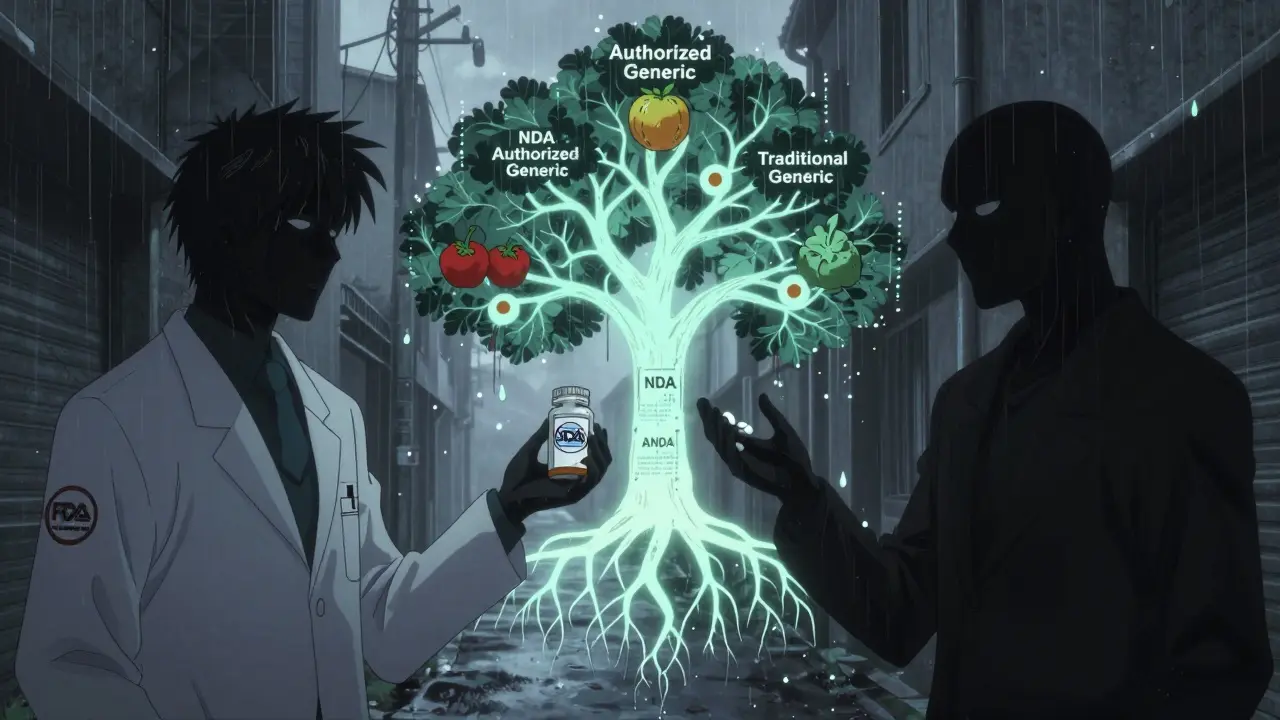
An authorized generic isn’t just another generic drug. It’s the exact same product as the brand-name version, but sold without the brand name. For example, if you take the brand-name drug CLEOCIN T 1% gel, the authorized generic version is chemically and physically identical - same active ingredient, same manufacturer, same production line. The only visible differences might be a different color, shape, or marking on the pill or tube. These are marketed under the original brand’s New Drug Application (NDA), not through the standard generic approval process (ANDA). That’s why they don’t show up in the FDA’s Orange Book, which only tracks traditional generics approved under ANDA.
This matters because authorized generics enter the market faster than traditional generics. While a regular generic manufacturer has to wait for patent expiration and may get 180 days of exclusivity, the brand company can launch its own authorized generic immediately. This lets them compete directly with the first generic, often lowering prices - but sometimes just keeping them high enough to protect profits. According to a 2023 study in Health Affairs, over 850 authorized generics were launched in the U.S. between 2010 and 2019. Pfizer, Teva, and Viatris (formerly Mylan) are the top players, with Pfizer alone responsible for 47 authorized generics on the FDA’s list.
Where to Find the Official FDA List
The only place to find a complete, government-mandated list of authorized generics is on the FDA’s website. Go to: fda.gov/drugs/abbreviated-new-drug-application-anda/fda-list-authorized-generic-drugs. This page is updated quarterly, with the latest version published on October 10, 2025. The list is available as a downloadable PDF file, about 1.09 MB in size.
Each entry includes four key pieces of information:
- The brand name (trade name) of the drug
- The dosage form and strength (e.g., 50 mg/200 mcg tablet, 1% gel)
- The name of the brand company that manufactures the authorized generic
- The date the authorized generic first entered the market
For example, you’ll find entries like:
- ACTIQ lozenges (1200 mcg) - Cephalon, LLC - entered September 26, 2006
- ARTHROTEC tablets (50 mg/200 mcg) - Pfizer Inc. - entered November 1, 2012
- CLEOCIN T topical gel (1%) - Pfizer - entered June 11, 2003
These aren’t random examples. They’re actual products listed in the FDA’s official database as of October 2025. If you’re trying to find a cheaper version of a drug you take, this list is your starting point.
Why the FDA List Is Different From Other Drug Databases
Many people check the FDA’s Orange Book or Drugs@FDA when looking for generics. But those databases won’t help you find authorized generics.
The Orange Book lists drugs approved under ANDA - traditional generics - and gives them therapeutic equivalence codes (like AB1, BX). But authorized generics aren’t approved under ANDA. They’re approved under the original NDA. So they’re invisible in the Orange Book, even though they’re therapeutically identical to the brand.
Drugs@FDA gives you broad info on approved drugs - brand, generic, OTC - but it doesn’t tag or filter authorized generics. You’d have to manually search through hundreds of entries to spot one.
The FDA’s authorized generics list is the only place that pulls together all these special products in one place. It’s the only source that answers the question: “Is this drug being sold as a version of the brand, made by the brand?”
What the List Doesn’t Tell You
Here’s the catch: the FDA list is not a real-time inventory. It’s a record of what companies reported in their annual reports. The FDA says clearly: “The list may include only information that is included in an annual report.” And here’s the big problem - it doesn’t tell you if the drug is still on the market.
For example, the list might show that an authorized generic entered the market in 2018. But if the manufacturer stopped selling it in 2023, the FDA won’t remove it. You’ll see it as “active” even though your pharmacy can’t get it. That’s why pharmacists report that 5 out of 8 products listed on the FDA’s list aren’t available through their wholesalers.
Another issue: the “Date Authorized Generic Entered Market” isn’t the exact launch date. It’s the year and quarter covered by the annual report when the company first reported it. So if a product launched in January 2024, but the company reported it in their December 2024 annual report, the FDA will list it as entering the market in 2024 - even if it was available for 11 months.
According to a 2023 survey by the National Community Pharmacists Association, 68% of independent pharmacists found the list “somewhat or very difficult” to use for actual purchasing decisions. Why? Because it doesn’t show availability, pricing, or current suppliers.
How to Use the List in Real Life
If you’re a patient, you can use the FDA list to find out if an authorized generic exists for your brand-name drug. Then ask your pharmacist: “Is this available?” or “Can you get the authorized version?” Sometimes, it’s priced lower than the brand - and always cheaper than the original.
If you’re a pharmacist or pharmacy buyer, cross-reference the FDA list with the National Drug Code (NDC) Directory. Search the NDC for the product name and check if it’s active. Then check with your wholesaler for current stock. Many pharmacies use weekly NDC deactivation reports from major distributors like McKesson or AmerisourceBergen to track what’s actually in stock.
For industry analysts, the list is a goldmine. It shows which brand companies are using authorized generics to compete. Pfizer’s 47 entries, Teva’s 32, and Viatris’s 28 tell you who’s playing the game. Combine this with IQVIA sales data, and you can see how much market share these products capture during the 180-day exclusivity window.
What’s Coming Next
The FDA knows the current PDF list has limitations. In its 2025 Strategic Plan, CDER announced plans to replace the PDF with a dynamic, searchable database by mid-2026. Stakeholders - including pharmacists, manufacturers, and regulators - have been pushing for this for years. At a 2024 public meeting, 22 out of 28 participants asked for better search tools and real-time updates.
There’s also talk of linking the authorized generics list to the FDA’s Drug Shortage Portal and price transparency rules under the 2022 Inflation Reduction Act. That could mean future versions show not just whether a product exists, but whether it’s in stock and how much it costs.
But for now, the PDF is all you’ve got. And while it’s not perfect, it’s the only official record of these hidden versions of your prescriptions.
Common Mistakes People Make
- Confusing authorized generics with traditional generics. They’re not the same. Only the FDA list shows authorized ones.
- Assuming the “entry date” means the product is still available. It doesn’t.
- Using the Orange Book to search for authorized generics. You won’t find them there.
- Thinking the list shows pricing. It doesn’t. Prices vary by wholesaler and pharmacy.
- Believing the list is complete. The FTC estimates 10-15% of authorized generics may be missing because companies don’t always report them.
If you’re trying to save money on prescriptions, don’t skip this list - but don’t trust it blindly either. Use it as a starting point, then verify with your pharmacist or wholesaler.
Is the FDA’s authorized generics list free to access?
Yes, the FDA’s authorized generics list is completely free and publicly available on their website. No subscription, login, or payment is required. The PDF can be downloaded directly from the FDA’s authorized generics page.
Are authorized generics always cheaper than the brand-name drug?
Not always. While authorized generics are often priced lower than the brand, they’re sometimes only slightly cheaper - sometimes even close to the brand’s price. That’s because the brand company is selling it themselves. In some cases, the authorized generic costs the same as the brand, just without the brand name. It’s worth checking with your pharmacy, but don’t assume it’s automatically the cheapest option.
Can I use the FDA list to find authorized generics for over-the-counter (OTC) drugs?
No. The FDA’s authorized generics list only includes prescription drugs approved under New Drug Applications (NDAs). OTC drugs are not covered. If you’re looking for generic versions of OTC products like ibuprofen or loratadine, those are traditional generics and are listed in the Orange Book or on pharmacy shelves under store brands.
Why don’t authorized generics show up in the Orange Book?
The Orange Book only lists drugs approved under Abbreviated New Drug Applications (ANDAs), which are the standard pathway for traditional generic manufacturers. Authorized generics are approved under the original brand’s New Drug Application (NDA), so they’re legally and technically considered the same product as the brand. The FDA keeps them in a separate list because they don’t go through the ANDA process.
How often is the FDA’s authorized generics list updated?
The FDA is legally required to update the list quarterly. The most recent version as of January 2026 is dated October 10, 2025. Updates typically happen in January, April, July, and October. However, the list may not reflect real-time market changes - it only shows what companies reported in their annual reports.
Can I report a missing authorized generic to the FDA?
Yes. The FDA invites feedback and suggestions for additions or corrections. You can email them at [email protected]. However, the FDA can only include products that were reported by the manufacturer in their annual report. If a company didn’t report it, the FDA won’t add it - even if it’s on the market.
Next Steps
If you’re a patient: Download the current FDA authorized generics list, find your drug, and ask your pharmacist if they carry the authorized version. It might save you money.
If you’re a pharmacy or wholesaler: Use the FDA list as a starting point, then cross-check with your NDC directory and wholesaler inventory reports. Don’t rely on the FDA list alone to determine what’s in stock.
If you’re a researcher or analyst: Combine the FDA list with IQVIA sales data or FTC reports to understand market dynamics. The FDA list shows who’s launching authorized generics - commercial data shows how much they’re selling.
The FDA’s authorized generics list isn’t perfect, but it’s the only official record of these hidden versions of your prescriptions. Use it wisely - and always verify what’s actually available before making decisions.
Maggie Noe
January 9, 2026 AT 07:29OMG I just found out my anxiety med is an authorized generic 😱 I’ve been paying $80 for it and my pharmacist said the generic version is $12? I thought I was being scammed. Turns out it’s the SAME pill, just no brand name. Saved me $800 a year. Thank you for this post!! 🙏💖
Darren McGuff
January 11, 2026 AT 05:48This is one of those posts that should be mandatory reading for every American on prescription meds. The FDA’s list is buried, underfunded, and poorly designed-but it’s the only real tool we have. I’ve been using it for years as a pharmacist in London, and I wish the NHS had something even half as transparent. The fact that Pfizer has 47 of these? That’s not competition-it’s market capture disguised as savings.
And yes, the PDF is a nightmare. I built a simple scraper to pull the data into a spreadsheet. Happy to share if anyone wants it.
Ashley Kronenwetter
January 13, 2026 AT 05:36While the information presented is accurate and valuable, I must emphasize the importance of verifying the status of authorized generics through official pharmacy channels. The FDA’s list, while authoritative, is not a real-time inventory system. Relying on it without cross-referencing with NDC databases or wholesaler catalogs may lead to erroneous conclusions regarding drug availability.
Heather Wilson
January 13, 2026 AT 09:49Let’s be real-this whole system is a joke. Big Pharma creates a brand-name drug, waits for the patent to expire, then launches their own ‘generic’ version to crush the real generic manufacturers who actually invested in approval. The FDA’s list? A PR stunt. It doesn’t show pricing, stock, or even if the product is still being made. And you’re telling patients to trust this? 68% of pharmacists say it’s useless, and you’re acting like it’s gospel? This isn’t transparency-it’s obfuscation with a government seal.
Also, ‘authorized generic’ is just a euphemism for ‘we’re still milking you, but now we’re the one selling it.’
Jeffrey Hu
January 15, 2026 AT 01:10Actually, you’re all missing the bigger picture. Authorized generics aren’t even the main issue-it’s the ANDA exclusivity loophole that lets one generic company monopolize the market for 180 days while the brand sits back and waits. The FDA’s list doesn’t even mention that. I’ve analyzed 1,200+ NDA entries since 2020, and Pfizer’s strategy is textbook: launch authorized generic on day one, undercut the real generic, then raise prices after exclusivity ends. It’s anticompetitive by design. The FTC should be investigating this, not just publishing PDFs.
Matthew Maxwell
January 16, 2026 AT 03:47It’s disgusting how people treat healthcare like a shopping mall. You think you’re saving money by switching to a generic? You’re just enabling a system where corporations profit off your desperation. The fact that you’re excited about an ‘authorized generic’ shows how little you understand the corruption in this industry. The brand company is still the same entity. The pill hasn’t changed. The greed hasn’t changed. You’re just being sold the illusion of choice.
Kiruthiga Udayakumar
January 16, 2026 AT 20:05I’m from India and we don’t have this mess here. Generic drugs are cheap, real generics, not this ‘authorized’ nonsense. Why does the US make everything so complicated? My cousin takes the same medicine as you, costs $2, no brand, no PDF, no confusion. Just buy it. Why do you need a 10-page guide to get a pill? This is why healthcare is broken.
Patty Walters
January 18, 2026 AT 02:21soooo… if i look up my blood pressure med on the fda list and it’s there, does that mean my pharmacy CAN get it? or do i still have to beg them? i’ve had this happen twice where they said ‘it’s on the list’ but then said ‘we don’t carry it’… like wtf? also, the pdf is so hard to search, i keep misspelling ‘arthrotec’ and get nothing. 🙃
Jenci Spradlin
January 19, 2026 AT 09:31biggest tip: copy the brand name, paste it into the NDC directory, then cross-check with your wholesaler’s weekly deactivation list. i do this every monday. the fda list is a starting point, not the finish line. also, if you’re on medicaid, ask for the authorized version-sometimes it’s coded as ‘preferred’ and you pay $0. just say ‘is there a version made by the same company?’ they’ll know what you mean.
Gregory Clayton
January 20, 2026 AT 22:10THIS IS WHY AMERICA IS RUINED. Big Pharma owns the FDA. They write the rules, they control the list, and they let you think you’re getting a deal. Meanwhile, real generic companies get crushed. And you’re all acting like this is some kind of win? Wake up. This isn’t transparency-it’s corporate control with a smiley face. If you’re not mad, you’re not paying attention.
Catherine Scutt
January 21, 2026 AT 09:30My mom spent $200/month on her heart med until I found the authorized generic. Now she pays $18. But the pharmacist didn’t even know it existed until I showed her the FDA list. So… thanks? I guess? Still feels like we’re playing a rigged game.
Alicia Hasö
January 22, 2026 AT 13:27For anyone feeling overwhelmed-this is your moment to take control. You don’t need to be a pharmacist or a data scientist. Just download the PDF, open it in your browser, hit Ctrl+F, type your drug name. If it’s there, walk into your pharmacy and say: ‘I saw this on the FDA’s authorized generics list. Can you get it?’ Nine times out of ten, they’ll say yes. And if they don’t? Ask them to order it. Your voice matters. Your health matters. Don’t let bureaucracy make you feel powerless. You’re not just a patient-you’re an advocate.
Meghan Hammack
January 24, 2026 AT 05:42Just wanted to say-this post saved me. I was on brand-name Lipitor for 3 years. $150/month. Found the authorized generic on the FDA list. Asked my pharmacist. Got it for $12. I cried. Not because I’m emotional (okay, maybe a little), but because I finally felt like someone was looking out for me. Thank you for making this so clear. You’re not just sharing info-you’re giving people back their power.