
How Generics Shape Global Healthcare Spending: The Economic Balance Between Innovation and Affordability
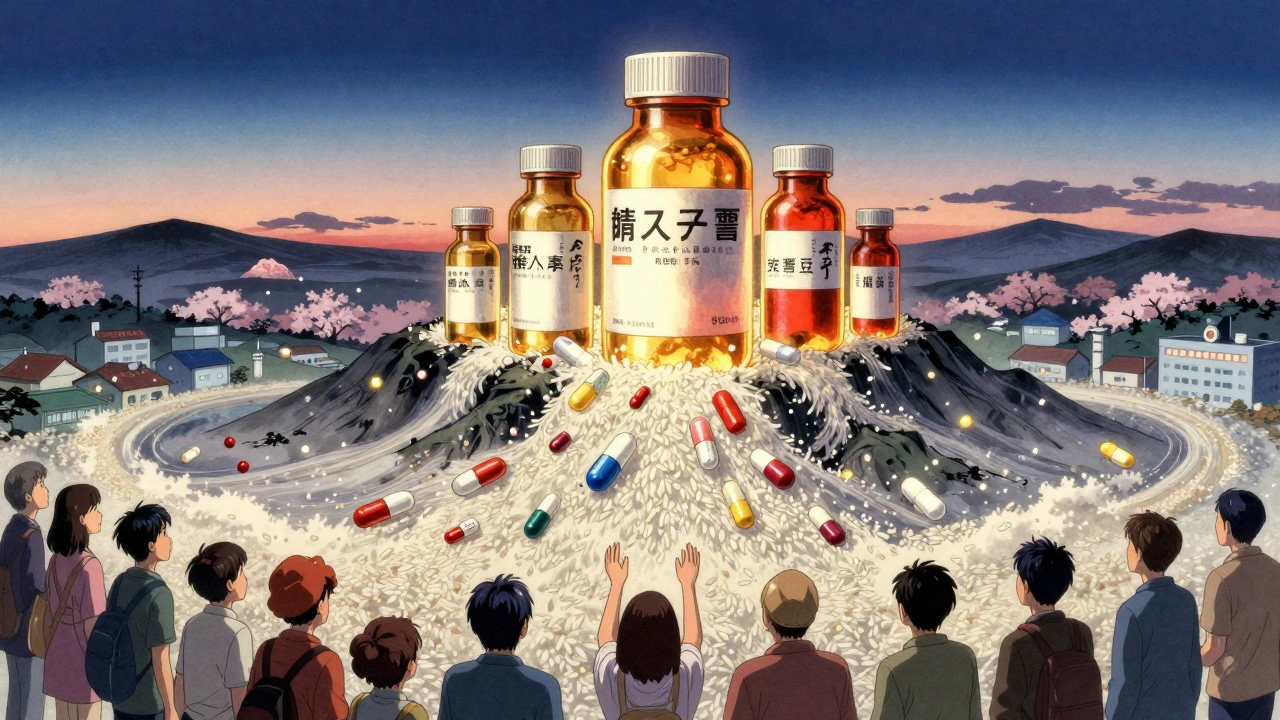
By 2025, the world will spend over 1.6 trillion dollars on medicines. That’s more than the entire GDP of Canada or Australia. And yet, nearly half the global population still pays for healthcare out of their own pockets - often skipping pills because they can’t afford them.
Why Generics Are the Silent Stabilizers of Global Health
| Income Group | Avg. Healthcare Spending (% of GDP) | Out-of-Pocket Share of Spending | Generics as % of Prescriptions |
|---|---|---|---|
| High-Income | 5.8% | 15-25% | 80-90% |
| Upper-Middle | 4.0% | 35-50% | 60-75% |
| Lower-Middle | 2.4% | 50-70% | 40-60% |
| Low-Income | 1.2% | 70-90% | 30-50% |
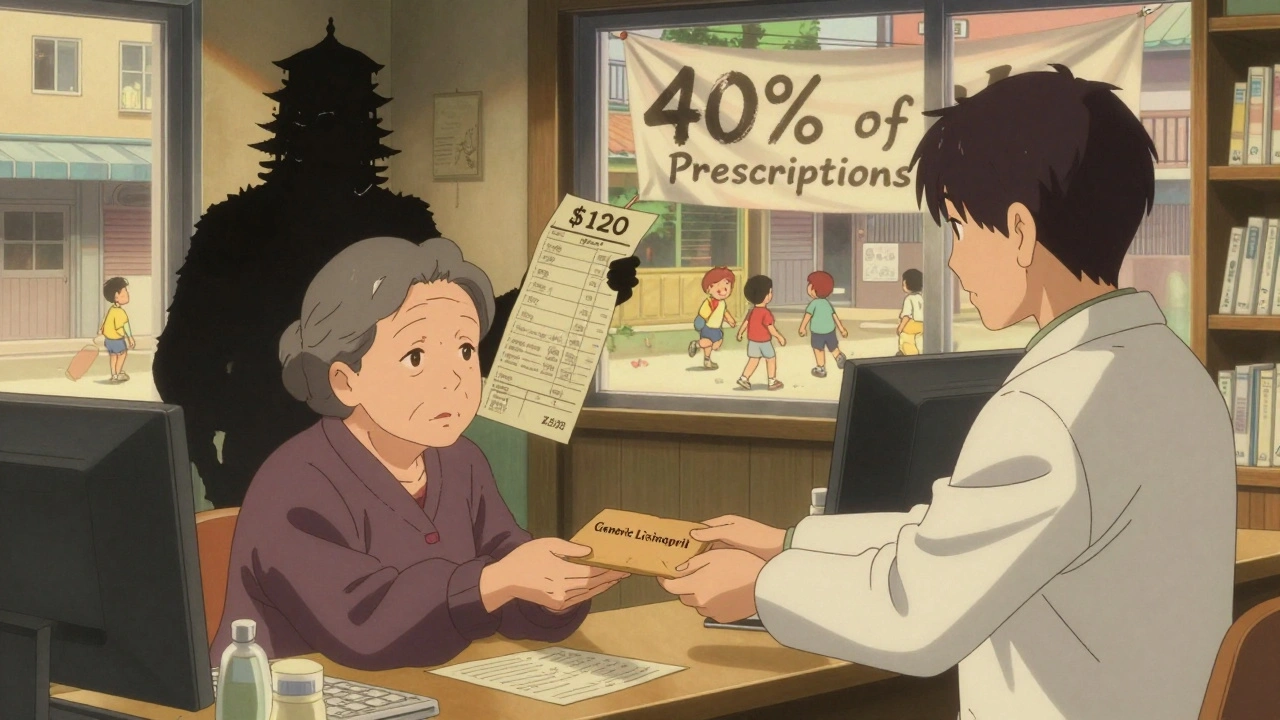
Generics aren’t just cheaper versions of brand-name drugs. They’re the reason millions of people with diabetes, hypertension, or depression can still get treatment. In the U.S., where drug prices are the highest in the world, generics make up over 90% of prescriptions - but only 15% of total spending. That’s because a 30-day supply of generic lisinopril costs $4. A brand-name version? $120. Without generics, the U.S. healthcare system would collapse under its own weight.
But it’s not just about price. It’s about access. In Nigeria, where the average person spends 78% of their healthcare budget out of pocket, a generic antiretroviral for HIV might be the only thing standing between life and death. In Turkmenistan, where out-of-pocket payments hit 85%, generics are the backbone of the entire public health system. These aren’t theoretical numbers. These are real people choosing between food and medicine every single day.
The Double-Edged Sword of Innovation
While generics hold down costs, new drugs are pushing spending higher. In 2024, the U.S. saw prescription drug spending jump $50 billion - mostly because of new treatments for obesity, cancer, and autoimmune diseases. These drugs aren’t just expensive. They’re often priced at $100,000 a year. And they’re not coming with generics anytime soon.
Take semaglutide (Ozempic). It’s revolutionized diabetes and weight loss. But its patent won’t expire until 2031. Until then, biosimilars - the next generation of generic-like biologics - are slow to arrive. Regulatory delays, complex manufacturing, and patent thickets mean patients pay premium prices for years. In the Middle East and Africa, 55% of insurers say new drugs are the #1 driver of rising costs. That’s why countries like India and Brazil are investing heavily in local generic production. They can’t afford to wait for innovation to trickle down.
The irony? The same countries spending the most on new drugs are also the ones with the lowest generic use. The U.S. spends more per capita on drugs than any other nation - yet only 12% of its drug spending goes to generics. Meanwhile, Germany, where generics are aggressively promoted by insurers and pharmacists, spends less than half as much per person on medicines - and gets better health outcomes.
Where Generics Are Failing - And Why
It’s easy to assume generics work everywhere. But they don’t. In low-income countries, the problem isn’t lack of demand. It’s lack of supply. Many generic manufacturers don’t bother producing medicines for diseases that mostly affect poor countries. Tuberculosis, malaria, and neglected tropical diseases? Few generics exist. Why? Because the market is too small. No profit. No incentive.
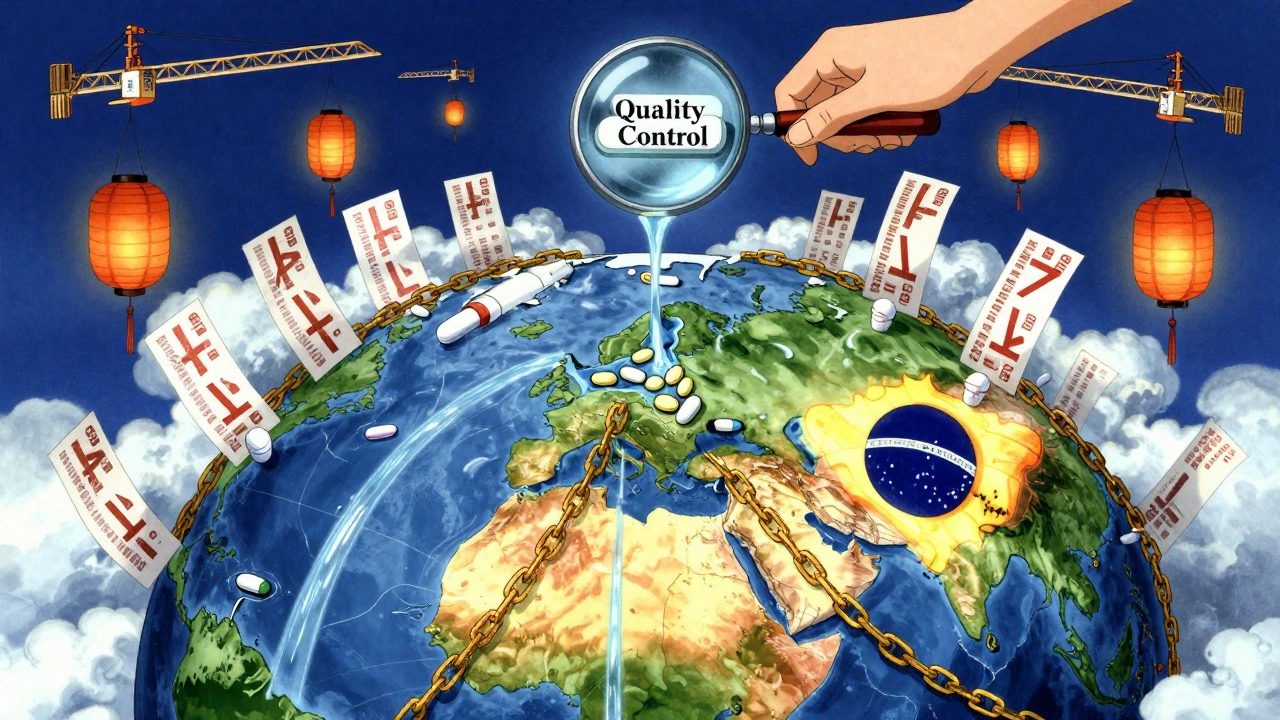
Even when generics are available, they’re often not trusted. In parts of Africa and Southeast Asia, patients believe “cheap means weak.” Some have been burned by counterfeit drugs sold as generics. Others have seen local pharmacies stock expired or substandard versions. Trust isn’t built by lowering prices. It’s built by quality control, regulation, and education.
Then there’s the issue of supply chains. In Malawi, public health spending dropped 41% between 2019 and 2021. When budgets shrink, generic drugs are the first to be cut - not because they’re expensive, but because they’re assumed to be “easy to replace.” But when the supply breaks, people die. A single shortage of generic antiretrovirals can reverse years of progress in HIV treatment.
The Rise of the Pharmerging Markets
China is changing the game. Once a hub for cheap generic production, it’s now investing billions in its own innovative drug industry. By 2025, Chinese companies will launch more new drugs than any country outside the U.S. This shift means China’s generic market is shrinking - not because demand fell, but because patients and insurers are willing to pay more for cutting-edge treatments.
India, on the other hand, remains the world’s pharmacy. It supplies over 50% of global generic demand by volume. But even here, the pressure is mounting. The Indian government is pushing for higher quality standards. Foreign buyers - especially in the U.S. and EU - are demanding better documentation, better manufacturing, and better oversight. That’s good for patients. But it’s also raising costs for Indian producers. Some small manufacturers can’t keep up. And when they close, global supply chains tighten.
Meanwhile, in Latin America, countries like Brazil and Argentina are using bulk purchasing and national formularies to drive down prices. They negotiate directly with generic manufacturers. They reject patents that don’t meet public health needs. And they’ve seen prescription rates for generics rise above 70% - even for chronic conditions like heart disease.
What’s Next? The Economic Tightrope
By 2033, U.S. drug spending could hit $1.7 trillion. That’s more than the entire healthcare budget of the European Union. And while generics will continue to offset some of that growth, they won’t stop it. The real question is: who will pay?
Out-of-pocket costs in the U.S. are projected to rise 30% by 2033. That means more Americans will skip doses, split pills, or go without. Generics help - but they don’t fix a broken system. If you’re earning $30,000 a year and your insulin costs $231 annually out of pocket, a $15 generic isn’t a solution. It’s a bandage.
Real change needs policy. Countries that cap drug prices, require transparency in pricing, and incentivize generic substitution - like Canada, Germany, and Thailand - have lower costs and better outcomes. The U.S. doesn’t do any of these things. It lets drugmakers set prices, lets insurers negotiate in secret, and lets patients bear the burden.
Global health funding is also shrinking. Development aid for health is expected to drop to $39.1 billion in 2025 - the lowest since 2009. That means countries relying on foreign aid for HIV, TB, and maternal health will have even less to spend on medicines. Generics become even more vital. But without investment in local manufacturing, quality control, and distribution, they won’t reach the people who need them most.
Generics Are Not the Answer - But They’re the Only Tool We Have
There’s no magic fix. No single policy that will solve global healthcare spending. But if we want to keep people alive, we need to use what works. Generics are the most proven, scalable, and cost-effective tool we have. They’ve saved millions. They’ve kept families from ruin. They’ve made chronic disease manageable in places where it once meant a death sentence.
The challenge now isn’t whether generics matter. It’s whether we’re willing to protect them. To fund their production. To enforce their quality. To ensure they’re available when they’re needed most. Because in a world where one in five people can’t afford medicine, the cheapest drug isn’t the one with the lowest price tag. It’s the one that actually reaches someone’s hand.
Paul Dixon
December 11, 2025 AT 15:49generics are the unsung heroes of modern medicine honestly. i had to switch my blood pressure med to generic lisinopril last year and it saved me like $100 a month. no side effects, no drama. just works. why are we still acting like brand names are somehow better?
Jimmy Kärnfeldt
December 13, 2025 AT 05:11it’s wild how we treat medicine like a luxury good instead of a basic human right. generics don’t just cut costs-they keep people alive. in places like Nigeria or Malawi, a $2 pill isn’t a ‘cheap alternative,’ it’s the difference between watching your parent die slowly or letting them see their grandkids grow up. we talk about innovation like it’s a virtue, but if innovation leaves people behind, is it even progress?
Ariel Nichole
December 14, 2025 AT 18:09totally agree with the point about trust in generics. my aunt in rural Georgia refused to take her generic diabetes med for years because she thought it was ‘fake.’ she finally tried it after her pharmacist sat down with her and showed her the FDA approval docs. now she’s doing way better. education matters more than we think.
matthew dendle
December 15, 2025 AT 16:44so the us spends a trillion on drugs and still people skip pills?? wow what a surprise. next youll tell me water is wet and the sky is blue. pharma execs are just laughing all the way to the bank while grandma eats cat food to afford her insulin. and dont even get me started on ozempic costing more than my rent
Mia Kingsley
December 15, 2025 AT 23:46wait so you’re saying generics are good but only if you’re poor?? what about the people who actually paid for the research?? the innovators?? if we dont reward innovation then we get zero innovation and then what?? everyone dies of nothing because no one made anything new. also i heard some generics are made in basements in india with dirt in them
Jean Claude de La Ronde
December 17, 2025 AT 06:41the irony is canada spends half what the us does on meds and has better outcomes. we cap prices, we push generics, we don’t let corporations set the rules. but nooo, the us has to act like it’s above common sense. you want innovation? fine. but dont make the rest of us pay for your billionaire fantasy. also i just paid $3 for my generic metformin. i feel like a king
Jim Irish
December 17, 2025 AT 08:57the data shows generics prevent hospitalizations and reduce long term costs. the real issue is systemic neglect. without policy reform, even the cheapest pill won't help if it's not accessible. we need transparency, bulk purchasing, and enforcement of quality standards. it's not complicated. it's just political.
Kristi Pope
December 18, 2025 AT 15:22generics are like the quiet neighbor who always shovels your walk but never asks for thanks. they don’t scream for attention like the flashy new drug with the jingle and the celebrity ad. but when you’re lying in bed with chest pain? you’d give anything for that quiet neighbor to be there. and if we let them disappear? we’re not just losing money-we’re losing humanity