
How to Prevent Liver Injury from Acetaminophen Combination Products
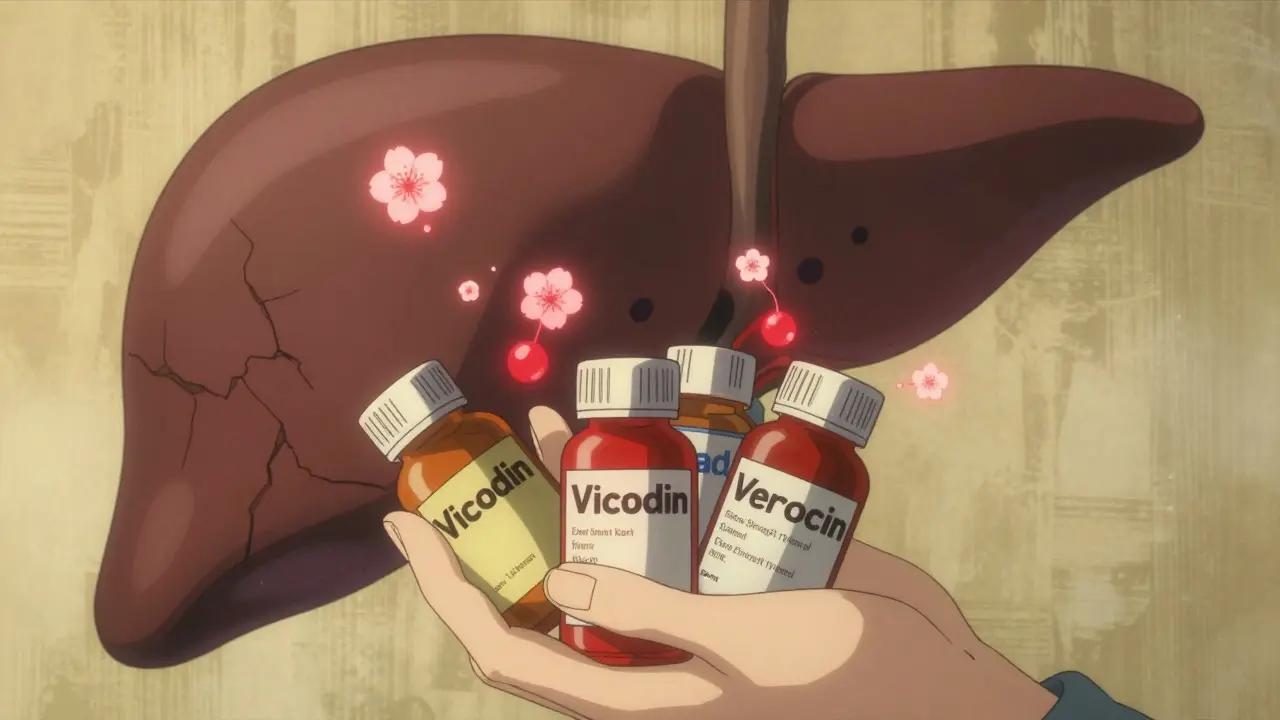
Every year, thousands of people end up in the hospital with severe liver damage-not from alcohol, not from viruses, but from a common painkiller they didn’t realize they were overusing. Acetaminophen, the active ingredient in Tylenol and hundreds of other medications, is safe when used correctly. But when it’s mixed with other drugs-like hydrocodone, oxycodone, or codeine-in combination products, the risk of accidental overdose skyrockets. And most people have no idea they’re in danger.
Why Combination Products Are So Dangerous
Acetaminophen doesn’t come alone. It’s packed into prescription painkillers like Vicodin, Percocet, and Percocet, and even in some OTC cold and flu remedies. The problem? People take one pill for back pain, another for a headache, and a third for a sinus infection-all without realizing they’re hitting the same ingredient three times over. The body can handle up to 4,000 mg of acetaminophen in a day. But when you’re taking two pills of a combination product that each contain 325 mg, and then grab a bottle of Extra Strength Tylenol for a fever, you’re already at 1,300 mg in just a few hours. That’s not even halfway to the limit. But it’s easy to lose track.
According to the FDA, nearly 40% of unintentional acetaminophen overdoses in the U.S. between 2005 and 2011 came from these combination products. Even after the FDA forced manufacturers to cap acetaminophen at 325 mg per dose in prescription combos in 2014, a 2019 study in Hepatology found that these products still caused 27% of all acetaminophen-related liver injuries. Why? Because patients still don’t know what’s in their meds.
The Science Behind the Damage
Acetaminophen itself isn’t toxic. Your liver breaks it down safely using two main pathways: glucuronidation and sulfation. But when you take too much, those pathways get overwhelmed. The liver switches to a third, minor pathway that produces a harmful byproduct called NAPQI. Normally, your liver has enough glutathione-a natural antioxidant-to neutralize NAPQI. But when you overdose, glutathione gets used up. Once it drops below 30% of normal levels, NAPQI starts attacking liver cells, causing oxidative stress, mitochondrial failure, and eventually cell death.
This isn’t a slow burn. Liver damage can happen within 24 hours. And unlike alcohol-related liver injury, there’s often no warning signs until it’s too late. No nausea, no jaundice, no pain-just elevated liver enzymes on a routine blood test. By the time symptoms show up, the damage may already be irreversible.
How to Protect Yourself
Prevention isn’t about avoiding painkillers. It’s about knowing what you’re taking. Here’s what actually works:
- Read every label, every time. Look for “acetaminophen,” “APAP,” or “paracetamol.” These are the same thing. If you see it listed anywhere, count it toward your daily limit. Don’t assume “prescription” means “safe.”
- Keep a written log. Write down every medication you take, including OTC pills, in a notebook or phone app. Include the name, dose, and time taken. This simple habit cuts overdose risk by over half, according to a 2018 study in Annals of Internal Medicine.
- Never mix acetaminophen products. If you’re on a prescription combo like oxycodone/acetaminophen, don’t take Tylenol, Excedrin, NyQuil, or any cold medicine. Even one extra tablet can push you over the edge.
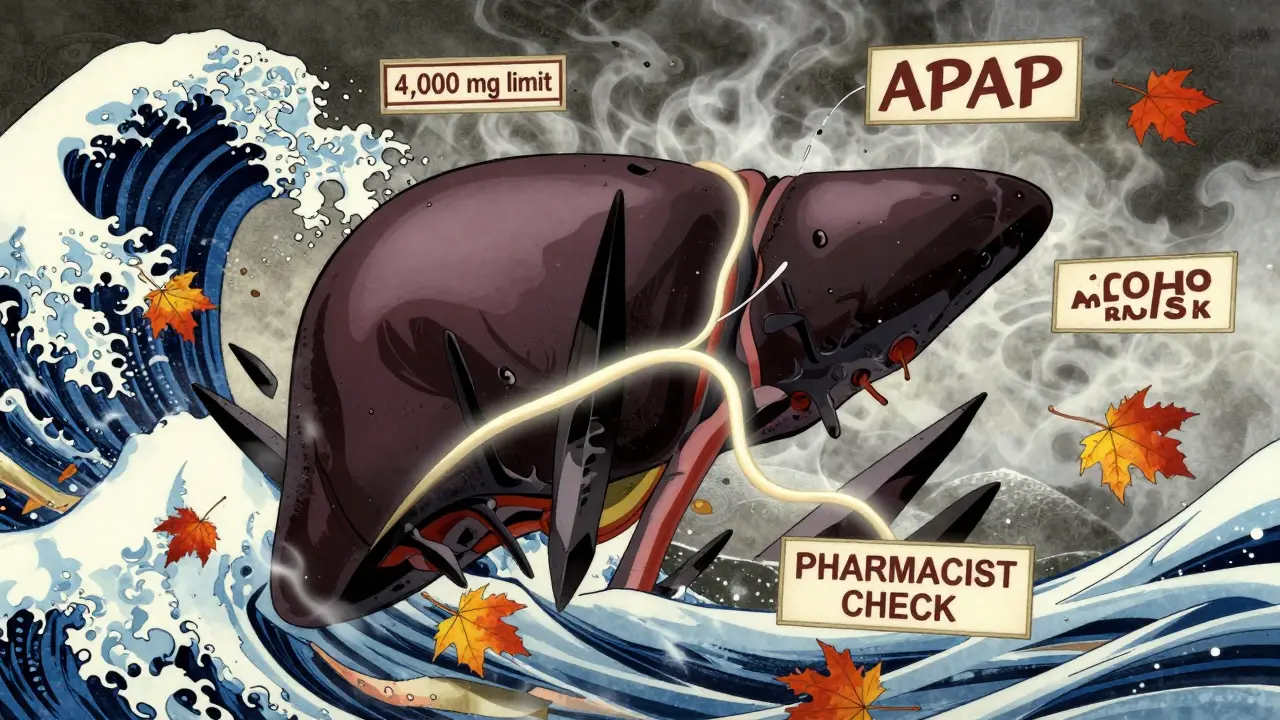
- Know your personal limit. If you drink alcohol regularly, have liver disease, are underweight, or are malnourished, your safe limit drops to 2,000-3,000 mg per day. Your liver’s natural defenses are already weakened. Pushing the standard 4,000 mg limit could be deadly.
- Ask your pharmacist. Pharmacists are trained to catch these mistakes. A 2021 study showed pharmacist-led counseling reduced unintentional overdoses by 41%. Tell them exactly what you’re taking-every pill, every supplement.
What Doctors and Pharmacies Are Doing
Health systems aren’t ignoring the problem. Electronic health records now track acetaminophen across all prescriptions. If you’re prescribed a new painkiller, your doctor’s system should flag if you’re already taking another one with acetaminophen. As of early 2023, 87% of Epic EHR systems have this feature turned on.
Pharmacies have also improved labeling. New packaging for drugs like Vicodin now features bold red warnings: “CONTAINS ACETAMINOPHEN. DO NOT TAKE WITH OTHER ACETAMINOPHEN PRODUCTS.” One Amazon review from March 2023 said: “The new box made me check all my other meds. I didn’t realize I was doubling up.” That’s the goal.
The FDA’s “Know Your Dose” campaign has reached over 89 million Americans since 2012. Multilingual medication guides are now available in 14 languages. But education alone isn’t enough. Studies show that even after a doctor explains the risk, only 62% of patients truly understand it. That’s why clear labels, pharmacist checks, and personal tracking are all needed together.
What Happens If You Overdose?
If you suspect you’ve taken too much acetaminophen-no matter how small it seems-don’t wait. Go to the ER. The antidote, N-acetylcysteine (NAC), works best if given within 8 hours. It replenishes glutathione and protects mitochondria. Studies show it can reduce liver injury by up to 46% if given early. Even after 12 hours, NAC still helps.
In 2021, the FDA approved a new treatment: fomepizole. It blocks the enzyme that turns acetaminophen into NAPQI. In trials, it cut severe liver injury by 32% when used with NAC, especially in late-presenting cases. And in early 2023, a new extended-release form of NAC hit the market, making it easier to take at home without the 72-hour IV drip.
But none of this is a substitute for prevention. Treatment helps, but it’s not foolproof. Many people still end up with liver failure, even with treatment.
What’s Changing in the Future
Researchers are looking at smarter solutions. A new smartphone app, currently in beta testing, scans barcodes on medication bottles and calculates your total daily acetaminophen intake. In trials, it was 89% accurate across 150 different products. Another promising idea? Adding natural compounds like sulforaphane (found in broccoli) or emodin (from rhubarb) to medications. These activate the body’s own antioxidant defenses, giving the liver a buffer against accidental overdose.
But some experts warn against this. Dr. Neil Kaplowitz, a leading liver specialist, says adding protective agents creates a false sense of security. “People will think, ‘It’s safe because it has something in it,’ and take more,” he warned in a 2022 editorial. That’s why education remains the core strategy.
The Bottom Line
You don’t need to avoid acetaminophen. You need to respect it. It’s not just a painkiller-it’s a chemical that can shut down your liver if you’re not careful. The biggest threat isn’t intentional misuse. It’s confusion. People think they’re taking different medicines. They’re not. They’re taking the same ingredient over and over.
Check every bottle. Ask your pharmacist. Log your doses. If you’re on a combo product, skip all other acetaminophen. And if you ever feel off after taking painkillers-nausea, fatigue, dark urine-get checked. Liver damage doesn’t always scream. Sometimes, it just whispers. And by the time you hear it, it might be too late.
John Smith
February 24, 2026 AT 21:57Shalini Gautam
February 25, 2026 AT 16:42Natanya Green
February 26, 2026 AT 17:45Timothy Haroutunian
February 26, 2026 AT 22:33Erin Pinheiro
February 27, 2026 AT 13:44Michael FItzpatrick
February 28, 2026 AT 00:14Brandice Valentino
March 1, 2026 AT 22:13Larry Zerpa
March 2, 2026 AT 20:59tia novialiswati
March 4, 2026 AT 19:58Lillian Knezek
March 5, 2026 AT 06:18Alfred Noble
March 6, 2026 AT 09:14Spenser Bickett
March 8, 2026 AT 04:45Christopher Wiedenhaupt
March 8, 2026 AT 17:18Steven Pam
March 9, 2026 AT 17:12Haley Gumm
March 11, 2026 AT 16:59