
How to Train Yourself to Check Labels Before Every Dose for Medication Safety
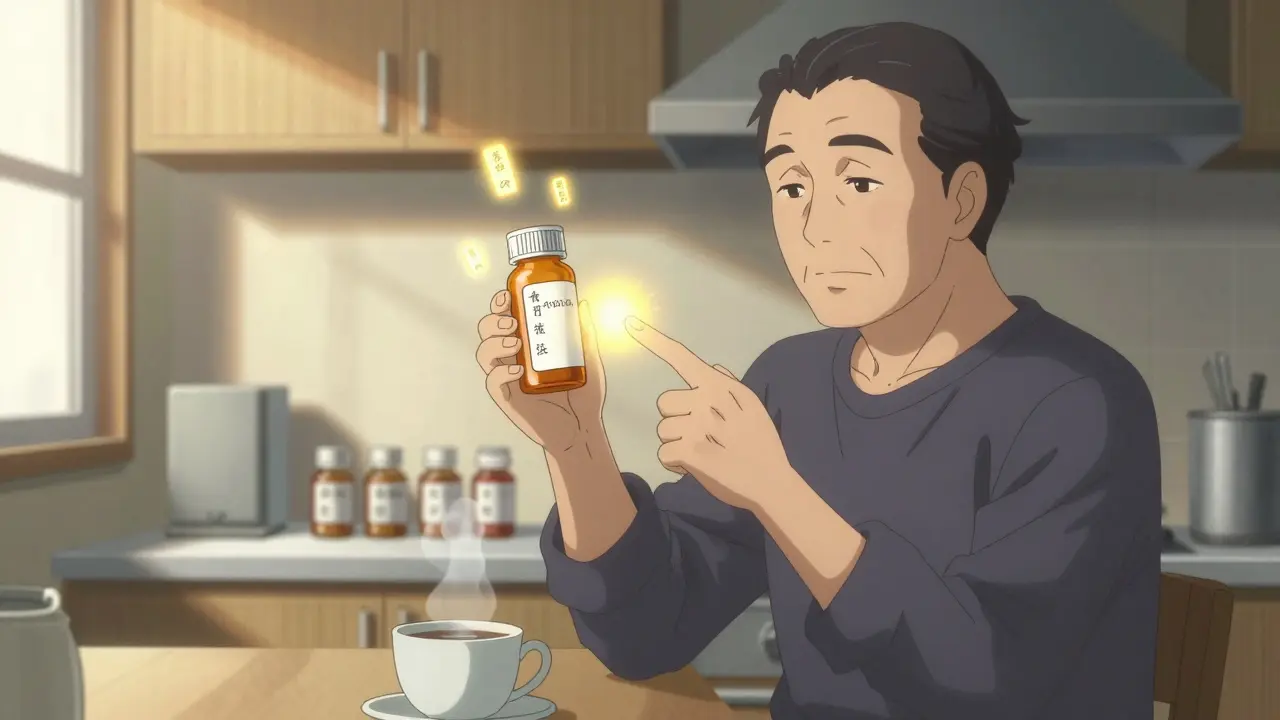
Every year, thousands of people in the U.S. are hospitalized or worse because they took the wrong pill. Not because they were careless. Not because they didn’t care. But because they forgot to check the label. It’s easy to fall into the trap of muscle memory: grab the bottle, open it, swallow. You’ve done it a hundred times before. But what if this bottle is different? What if it’s a new refill, a different brand, or a medication you haven’t taken in months? One wrong dose can turn a routine day into a medical emergency.
Why Checking Labels Isn’t Optional
The FDA reports that medication errors cause between 7,000 and 9,000 deaths annually in the U.S. That’s more than car accidents in some years. And the biggest cause? Label mistakes. Not pharmacist errors. Not doctor mistakes. Patients taking the wrong thing because they didn’t stop to read. A 2023 study from SmithRx found that people who check their labels before every dose cut their risk of a medication error by 76%. That’s not a small improvement. That’s life-changing. Compare that to pill organizers, which only reduce errors by 42%, or medication apps without verification steps, which drop to 29%. The difference isn’t in the tech-it’s in the habit. Labels aren’t just paperwork. They’re your last line of defense. The 2025 FDA labeling standards made this official: every prescription bottle must now have a clear, high-contrast label with minimum 6-point font for key info and 8-point or larger for warnings. Colors are chosen for visibility. Warnings are bolded. Even the spacing between lines is designed to help your eyes catch the right details. But none of that matters if you don’t look.The 10 Things You Must Check Every Time
Don’t just glance. Scan. Slowly. Here’s what to verify every single time you reach for a pill:- Patient name - Is it your full name? Not your spouse’s, not your child’s, not a typo like “John Smith” when it should be “Jonathan Smith.”
- Drug name - Both brand and generic. Is it “Lisinopril” or “Zestril”? Same thing, but if you’re used to one name and see the other, pause.
- Dosage - Is it 10 mg? 20 mg? 50 mg? A single digit change can be dangerous.
- Frequency - Once a day? Twice? Every 6 hours? Don’t assume.
- Quantity and refills - Did you get 30 pills or 60? Are there any refills left? Missing refills can mean you’re taking an old bottle.
- Expiration date - Never take expired meds. Effectiveness drops, and some can become harmful.
- Date filled - If it’s older than 30 days, ask your pharmacist. Some meds degrade fast.
- Warnings - “Avoid alcohol,” “Take with food,” “May cause dizziness.” These aren’t suggestions-they’re safety rules.
- Pharmacy name and number - If something feels off, call them. Pharmacists expect this.
- Prescriber’s name - Did your doctor change? Did someone else prescribe this? Unfamiliar names mean double-check.
How to Turn Checking Into a Habit (Not a Chore)
You don’t need to be perfect. You need to be consistent. Habits form through repetition, not willpower. Most people need 18 to 22 reps to make something automatic. That’s about three weeks. Start with the Three-Touch Method, endorsed by the American Society of Health-System Pharmacists:- Hold the bottle in your non-dominant hand.
- Use your dominant index finger to touch the patient’s name on the label. Say aloud: “This is for [your full name].”
- Touch the drug name. Say: “This is [drug name].”
- Touch the dosage. Say: “I take [dosage] [times per day].”
Where to Place Your Medications for Maximum Safety
Most missed checks happen in the morning-rushed, half-awake, coffee in hand. That’s when your brain is on autopilot. Move your meds to where your routine already lives. Put your morning pills next to your coffee maker. Put your nighttime meds on your nightstand beside your toothbrush. Don’t store them in a drawer, cabinet, or medicine cabinet. Out of sight = out of mind. MedPak’s behavioral research found that placing bottles directly in the path of daily routines reduced missed checks by 53%. Why? Because your brain links actions together. Coffee → reach for pills → check label → take pill. No extra thought needed.Tools That Actually Help (Not Just Look Nice)
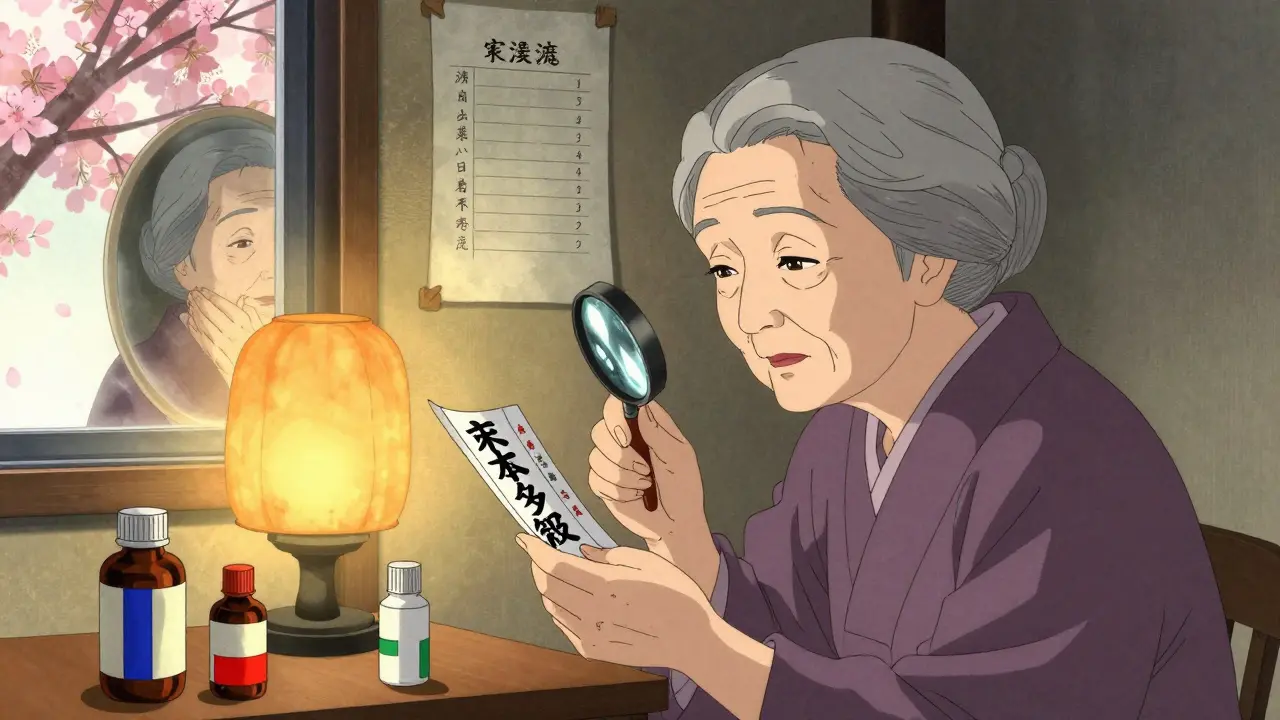
Some tools work. Others are just noise.- Magnifying labels - If you’re over 65 or have vision issues, these are essential. They reduce errors by 38%.
- Color-coded systems - Use colored stickers or tape. Red for heart meds, blue for blood pressure, green for vitamins. 82% of pharmacists recommend this.
- Verification checklists - Print the 10-point list above. Tape it to your medicine cabinet. Check it off each time. It’s old-school, but it works.
- Medication apps with mandatory verification - Apps that require you to scan or photograph the label before logging a dose have 63% higher retention at 90 days. They force you to look.
When Label Checking Fails (And What to Do)
This isn’t foolproof. Some people struggle. If you have severe vision loss, ask your pharmacist for large-print labels or audio labels. Many pharmacies now offer them. If you have memory issues or cognitive decline, involve a caregiver. Teach them the Three-Touch Method too. Don’t leave it to them to guess. One Reddit user, “MedSafetyMom,” shared how she trained her kids using a “label check ritual.” She made it part of the morning routine: “Who’s this for?” “What’s this for?” “How much?” Within 21 days, it was automatic. No reminders. No arguments. On the flip side, a user on Drugs.com lost her father to an insulin overdose because he confused it with saline solution. He’d taken saline for weeks. The label changed. He didn’t check.
Why This Matters More Than Ever
The average Medicare beneficiary takes 5.1 prescriptions. Nearly half of adults over 65 are on five or more. That’s a lot of bottles. A lot of chances for confusion. The FDA’s “Check Before You Take” campaign launched in January 2024. It’s not just a slogan. It’s a national standard. And pharmacies are starting to respond. CVS and Walgreens are testing smart packaging that won’t open unless you scan the label. That’s the future. But the future starts with you. Right now. Before your next dose.What If You Still Forget?
You’re human. You’ll slip up. That’s okay. Set a daily alarm on your phone: “Check label before taking meds.” Name it something funny-“Don’t Be a Statistic.” Put it on repeat until it sticks. After a month, turn it off. You won’t need it anymore. Or better yet: tell someone. A spouse, a friend, a neighbor. Say: “I’m working on checking my labels. If you see me grab a pill without looking, say something.” Most people will. It’s not nagging-it’s care.Final Thought: This Is Your Life
You don’t need to be a pharmacist. You don’t need to understand every drug interaction. You just need to look. It takes three seconds. Maybe five. That’s less time than it takes to scroll through your phone when you’re waiting for the kettle to boil. But those seconds? They’re the difference between walking away healthy… and ending up in the ER. Your body trusts you. Don’t break that trust.What if I can’t read the label because the font is too small?
Pharmacies are required to follow FDA labeling standards as of January 2025, which mandate a minimum 6-point font for key info and 8-point or larger for warnings. If your label still looks too small, ask your pharmacist for a large-print version or a magnifying label. Many pharmacies now offer these for free. You can also use a simple handheld magnifier-available at any drugstore-for under $10.
Can I rely on my pill organizer instead of checking labels?
No. Pill organizers help you remember when to take your meds, but they don’t protect you from taking the wrong one. If you put the wrong pill in the wrong compartment-because you didn’t check the label-you’re still at risk. Always verify the label before transferring pills into your organizer. The safest practice is to check the label, then fill the organizer, then check again.
I’m on a tight budget. Are there free ways to improve label safety?
Yes. Use colored tape or stickers to mark different medications. Write the purpose of each pill on a sticky note and tape it to the bottle. Use your phone’s flashlight to improve lighting when checking. Ask your pharmacist to explain the label in plain language during pickup. Most pharmacists are happy to do this. You don’t need to spend money to stay safe-you just need to be intentional.
What should I do if I realize I took the wrong medication?
Don’t panic. Call your pharmacist immediately. If it’s after hours, contact your doctor or go to the nearest urgent care. If you’re unsure what you took, bring the bottle with you. Never wait to see if you feel sick. Some reactions happen fast. Others take hours. Either way, getting help early can prevent serious harm.
Do I need to check labels even if I’ve been taking the same medicine for years?
Yes. Even if you’ve taken a medication for 10 years, the dosage, brand, or manufacturer can change without you knowing. A refill might come from a different pharmacy. A generic version might replace the brand. Your doctor might have adjusted your dose. Always check. The fact that you’ve taken it before doesn’t make it safe to assume.
How can I help an elderly parent or loved one check their labels?
Sit with them during their next refill. Go through the label together using the Three-Touch Method. Make it a routine-once a week, over tea or coffee. Use colored stickers to mark different meds. Set up a weekly call to remind them. If they have trouble reading, ask their pharmacist for large-print labels or audio labels. Most importantly: don’t take over. Help them build the habit, not replace it.
Are there apps that can help me remember to check labels?
Yes-but only if they require you to verify the label before logging a dose. Look for apps that ask you to scan or photograph the bottle’s barcode or label. Apps that just send reminders without verification are risky-they assume you’ve already checked. Stick with apps rated 4.5+ stars and mention “label verification” in their features. Check reviews for real user experiences.
Why do some labels use abbreviations like “QD” or “BID”? Are those still allowed?
As of 2025, the FDA has banned dangerous abbreviations like “QD” (daily) and “BID” (twice daily) on all new prescription labels. Labels must now use full words: “once daily,” “twice daily.” If you see an old label with abbreviations, ask your pharmacist to explain it. Don’t guess. And if you’re refilling an old bottle, double-check the new label to make sure it’s been updated.
Ed Di Cristofaro
February 2, 2026 AT 09:34Bro. I don’t care how many studies say it. If you’re not checking your labels, you’re one bad refill away from the morgue. I saw my uncle take his daughter’s insulin because he didn’t look. He didn’t even realize until he was shaking on the floor. Three seconds. That’s all it takes. Stop being lazy.
Sami Sahil
February 4, 2026 AT 08:02OMG YES!! I was totally guilty of this till I started using the 3-touch thing 😅 Now I say it out loud like a weirdo and my dog even looks at me like ‘bro chill’ but I’m alive and my meds are right! 3 weeks and it just stuck. You don’t need apps, you need to be a little silly. Try it!! 🙌
Deep Rank
February 4, 2026 AT 20:16Okay but let’s be real-this whole thing is just a corporate ploy to make pharmacies look good while they overcharge for pills. I’ve been taking lisinopril for 12 years and I’ve never once checked the label. I know what it looks like. I know the taste. I know the damn bottle. And guess what? I’m still here. Meanwhile, you people are spending $20 on color-coded stickers and ‘verification checklists’ like this is a kindergarten craft project. 🙄 The real problem? The system. Not you forgetting to read tiny print. But hey, if it makes you feel safe, go ahead. I’ll be over here, alive and unbothered.
Bryan Coleman
February 5, 2026 AT 04:54Just wanted to add-my mom’s pharmacist gave her free magnifying labels last year. She’s 78, has bad eyesight, and now she doesn’t panic when she gets a new bottle. Also, writing the purpose on a sticky note? Genius. I did it for my dad’s blood pressure med-‘LOW BP’ in big letters. He still forgets sometimes, but now he pauses. That’s the win.
Naresh L
February 7, 2026 AT 01:17It’s fascinating how such a simple act-looking at a label-becomes a metaphysical ritual when you think about it. We outsource so much of our bodily autonomy to institutions: doctors, pharmacists, algorithms. But the label is the last place where the self meets the system. It’s not about memory. It’s about presence. Three seconds of attention. That’s all it takes to reclaim agency. Maybe that’s the real medicine.
Ishmael brown
February 7, 2026 AT 09:28Okay but what if you’re blind? 🤔 Like, real blind. Not ‘can’t read tiny font’ blind. Actual blind. Does the FDA have audio labels? Does anyone even care? I’m not trying to be a jerk, but this whole post feels like it was written by someone who’s never had to live with a disability. 🤷♂️ #JustAsking
June Richards
February 8, 2026 AT 02:09Wow. So you’re telling me I’m not supposed to just grab the bottle and go? 😒 I’ve been doing this for 20 years. I know my pills. This is just fearmongering wrapped in a ‘FDA-approved’ bow. Also, who has time for this? I’m a single mom of three. I don’t have 5 seconds to say ‘this is for Rachel’ out loud. Grow up.
Lu Gao
February 8, 2026 AT 02:17Love the 3-touch method! I started doing it after my aunt had a bad reaction to a generic switch. Now I do it with my husband too-we take turns saying the names out loud. It’s weirdly bonding. Also, I use red tape for anything that makes me drowsy. It’s like a visual alarm. 🚨
Chris & Kara Cutler
February 9, 2026 AT 09:23Done. 21 days. No alarms. No reminders. Just muscle memory now. 🙌 My husband even says ‘Hey, check the label!’ when I reach for my pills. We’re all better for it. This is the best health tip I’ve ever gotten. Seriously.
Rachel Liew
February 10, 2026 AT 14:05I help my grandma with her meds and this post made me cry. She’s 82 and terrified she’ll mess up. We sit together every morning with tea and go through the list. She says it out loud now. I didn’t know how much she needed this. Thank you for writing this.
Lisa Rodriguez
February 11, 2026 AT 03:34Just want to say-I used to think this was overkill until I almost took my neighbor’s blood thinner because the bottle looked the same. I didn’t check. I was rushing. I caught myself at the last second. That was a wake-up call. Now I do the 3-touch thing even when I’m half-asleep. It’s not about being perfect. It’s about being alive. 🙏