
Liver-Healthy Diet: Nutrition Strategies for Hepatic Disease

Your liver is the busiest organ in your body. It filters toxins, processes nutrients, and stores energy. But when it gets overloaded with fat or inflammation, it struggles to keep up. This leads to conditions like non-alcoholic fatty liver disease (NAFLD) or its newer name, metabolic dysfunction-associated steatotic liver disease (MASLD). The good news? You don’t always need medication to fix it. Food is powerful medicine.
For years, people thought there was a special 'liver detox' diet. That’s a myth. There is no magic pill or juice cleanse that resets your liver overnight. Instead, science points to one clear winner: the Mediterranean diet is a dietary pattern rich in plant-based foods, healthy fats, and lean proteins that significantly reduces liver fat and inflammation. Studies show this approach can lower liver fat by 25-40% within just six to twelve months. Let’s break down exactly what you should eat, what to avoid, and how to make these changes stick without feeling deprived.
The Science Behind Liver-Friendly Eating
Why does the Mediterranean diet work so well for the liver? It’s not just about weight loss. While losing weight helps, research from the American Association for the Study of Liver Diseases (AASLD) is the leading professional organization dedicated to the study and treatment of liver diseases shows that even without significant weight loss, this diet improves liver enzymes by 20-30%. How? By targeting the root causes: insulin resistance and inflammation.
When you eat too much sugar and refined carbs, your liver converts the excess into fat. This is called de novo lipogenesis. The Mediterranean diet limits simple carbohydrates to less than 10% of your daily calories. Instead, it focuses on complex carbs with fiber, which digest slowly and don’t spike your blood sugar. A landmark 2013 study published in *Hepatology* proved that this specific pattern reduces liver fat more effectively than low-fat diets alone. In fact, a 2021 meta-analysis found it produced a 32% greater reduction in liver fat compared to standard low-fat approaches.
Another key factor is the type of fat you consume. Not all fats are bad. Monounsaturated fatty acids (MUFAs), found in olive oil and nuts, actually help decrease very low-density lipoproteins (VLDL), a type of harmful cholesterol linked to liver damage. Replacing saturated fats with MUFAs creates an environment where your liver can heal rather than store more fat.
What Your Plate Should Look Like
Planning meals doesn’t have to be complicated. The Harvard Healthy Eating Plate provides a simple visual guide that works perfectly for liver health. Imagine your dinner plate divided into sections:
- Half the plate: Non-starchy vegetables and fruits. Aim for at least three servings of vegetables and two servings of fruit daily. Variety matters here. Different colors mean different phytonutrients. Blue and purple fruits contain anthocyanins, which clinical trials show can reduce liver inflammation by 25%.
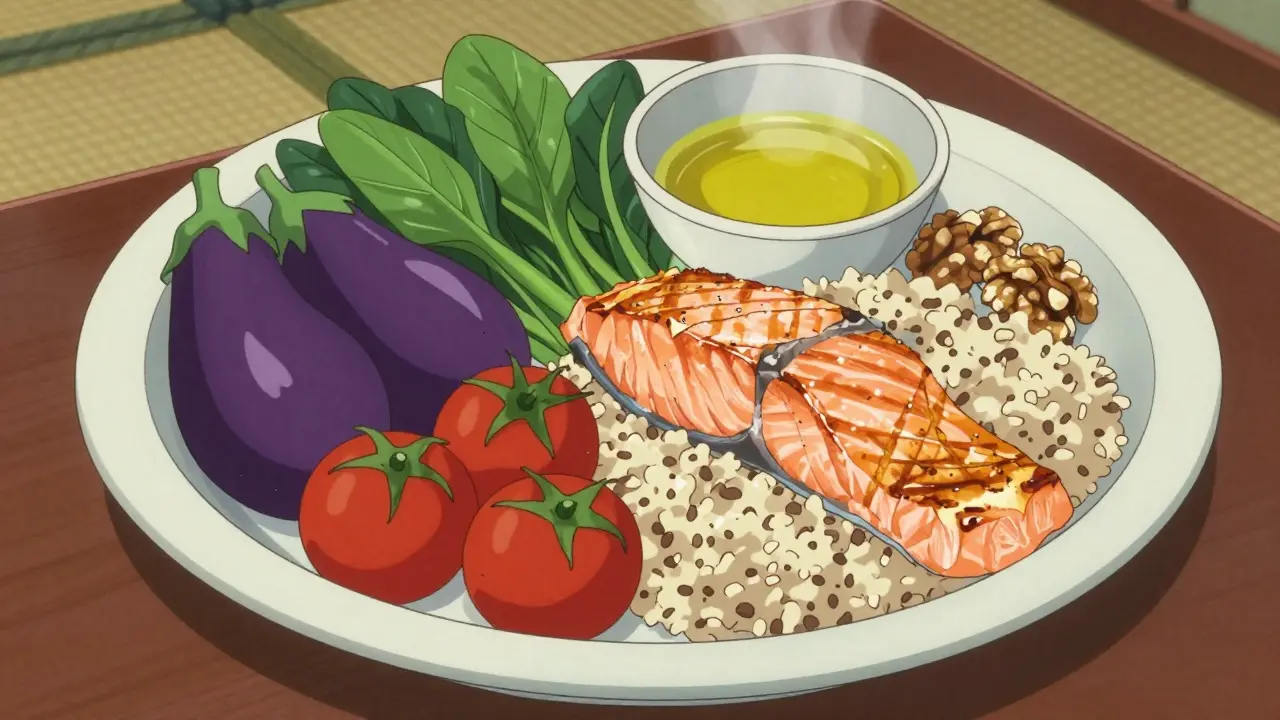
- One-quarter of the plate: Lean protein. Think fish, chicken, tofu, or legumes. About three ounces per meal is ideal-roughly the size of a deck of cards.
- One-quarter of the plate: Whole grains. Brown rice, quinoa, oats, or whole-wheat pasta. These provide steady energy without spiking insulin.
Don’t forget your fats. Use extra virgin olive oil as your primary cooking fat. It should make up a significant portion of your daily calorie intake from fats. Add a small handful of walnuts (about 30 grams) daily; studies show they can decrease LDL cholesterol by 15% in patients with NAFLD.
Foods to Avoid: The Silent Killers
If adding good foods is half the battle, removing bad ones is the other half. Certain foods actively harm your liver by driving inflammation and fat accumulation. Here is what needs to go:
- Sugary beverages: Soda, sweetened teas, and fruit juices are the worst offenders. A single 12-ounce serving can contribute 150-200 empty calories, mostly from fructose, which the liver processes directly into fat. Switch to water, herbal tea, or black coffee. Coffee, in particular, has been shown to protect liver cells and slow fibrosis progression.
- Refined carbohydrates: White bread, white rice, pastries, and crackers act like sugar in your body. They cause rapid spikes in blood glucose and insulin, signaling your liver to store fat.
- Trans fats: Often hidden in processed snacks, fried foods, and margarine under names like 'partially hydrogenated oils.' These increase inflammation and oxidative stress in the liver. Avoid them entirely.
- Excess sodium: If you have advanced liver disease or cirrhosis, salt retention can lead to fluid buildup (ascites). Limit sodium to under 2,000mg daily. Flavor your food with herbs, spices, lemon juice, or vinegar instead of salt.
Protein: More Than Just Muscle
There is a common misconception that people with liver disease should restrict protein. This is outdated advice. Unless you have severe hepatic encephalopathy (a rare complication where toxins affect the brain), you need adequate protein to prevent muscle wasting. Muscle loss worsens prognosis in liver disease because muscles help regulate glucose and metabolism.
Current guidelines recommend that protein should comprise 15-20% of your total energy intake. For most adults, this means eating lean sources like salmon, skinless poultry, eggs, Greek yogurt, and beans. Plant-based proteins are especially beneficial because they come with fiber, which supports gut health. A healthy gut microbiome is crucial for liver function, as the gut-liver axis plays a major role in filtering toxins.
Practical Tips for Sticking to the Plan
Knowing what to eat is easy. Doing it every day is hard. Many people struggle with the cost and time required for fresh cooking. Here are some real-world strategies from patient communities and nutrition experts:
- Batch cook on Sundays: Prepare large portions of grilled chicken, roasted vegetables, and quinoa for the week. Store them in glass containers for quick assembly during busy weekdays.
- Use frozen vegetables: Frozen veggies are just as nutritious as fresh ones, often cheaper, and save prep time. They are perfect for stir-fries or soups.
- Read labels carefully: Hidden sugars are everywhere. Check for ingredients like high-fructose corn syrup, dextrose, and maltose. If a product has more than five ingredients, scrutinize it closely.
- Start small: Don’t overhaul your entire diet overnight. Start by swapping one meal a day for a Mediterranean-style option. Gradually increase to two, then three. This prevents burnout.
- Plan for social situations: Dining out can be tricky. Choose grilled options over fried, ask for dressings on the side, and prioritize vegetable-heavy dishes. Most restaurants will accommodate reasonable requests.
Patient forums reveal that while 76% of people adhere to these changes at three months, only 48% stick with it after a year. The biggest hurdles are social isolation and meal prep fatigue. To combat this, involve family members in the process. When everyone eats healthier, it becomes a lifestyle, not a restriction.
| Diet Type | Liver Fat Reduction | Inflammation Control | Sustainability | Best For |
|---|---|---|---|---|
| Mediterranean Diet | High (25-40%) | Excellent | High | General NAFLD/MASLD management |
| Low-Fat Diet | Moderate | Moderate | Moderate | Short-term weight loss |
| Ketogenic Diet | Variable | Low (potential risk) | Low | Not recommended for long-term liver health |
| DASH Diet | Moderate | Good | High | Hypertension + mild liver issues |
| Detox/Cleanse Diets | None | Poor | Very Low | Avoid completely |

Special Considerations for Advanced Liver Disease
If you have cirrhosis or advanced fibrosis, your nutritional needs change. You may require more frequent, smaller meals to maintain energy levels. Nighttime snacks, particularly those containing complex carbohydrates, can help prevent the body from breaking down muscle tissue for fuel while you sleep.
In cases of hepatic encephalopathy, doctors might temporarily adjust protein types, favoring plant-based and dairy proteins over red meat, as they produce fewer ammonia-producing byproducts. However, never restrict protein without medical supervision. Malnutrition is a serious risk in advanced liver disease and can accelerate decline.
Also, consider timing. Emerging research suggests that time-restricted eating-consuming all meals within a 10-hour window-combined with the Mediterranean diet may offer additional benefits. Pilot data indicates a 27% greater reduction in liver fat compared to diet alone. However, consult your hepatologist before starting intermittent fasting, as it may not be suitable for everyone.
Monitoring Your Progress
How do you know if it’s working? You won’t feel immediate changes, but lab tests will tell the story. Work with your healthcare provider to monitor:
- ALT and AST levels: These liver enzymes indicate inflammation. Improvements can be seen within 6 months.
- Triglycerides and Cholesterol: Healthy fats improve lipid profiles.
- FibroScan results: This non-invasive test measures liver stiffness and fat content. A drop in kPa values signifies reduced fibrosis.
Remember, consistency beats intensity. You don’t need to be perfect. Aim for progress. Even small shifts toward whole, unprocessed foods can reverse early-stage liver damage. Your liver has an incredible ability to regenerate. Give it the right tools, and it will thank you.
Can I drink alcohol on a liver-healthy diet?
If you have diagnosed liver disease, including NAFLD or MASLD, it is best to avoid alcohol completely. Alcohol is toxic to liver cells and accelerates fibrosis. Even moderate drinking can hinder healing. Water, herbal teas, and black coffee are safer alternatives.
Are supplements necessary for liver health?
Most people do not need supplements if they follow a balanced Mediterranean diet. Some studies suggest Vitamin E may help in specific NAFLD cases, but only under doctor supervision. High-dose supplements can sometimes harm the liver. Focus on getting nutrients from food first.
How long does it take to see improvements in liver enzymes?
With consistent dietary changes, many patients see improved ALT and AST levels within 3 to 6 months. Significant reductions in liver fat content typically occur between 6 and 12 months. Regular monitoring with your healthcare provider is essential to track progress.
Is coffee really good for the liver?
Yes, multiple studies show that drinking 2-3 cups of black coffee daily is associated with a lower risk of liver fibrosis and cancer. Coffee contains antioxidants that protect liver cells. Just avoid adding sugar or heavy cream, which counteract the benefits.
What if I can't afford fresh organic foods?
You don’t need expensive organic foods to benefit. Canned beans, frozen vegetables, and store-brand olive oil are affordable and nutritious. Prioritize whole grains over processed ones. Community programs and batch cooking can also help reduce costs while maintaining a liver-friendly diet.
Anna Bartle
July 4, 2026 AT 12:02Great summary! The coffee tip is huge.
Divya Prakash
July 6, 2026 AT 10:15It is truly disheartening to observe the general populace's continued reliance on such pedestrian dietary advice, which barely scratches the surface of hepatic pathophysiology. One must understand that the Mediterranean diet, while aesthetically pleasing and culturally romanticized, is merely a superficial band-aid applied to a wound inflicted by decades of systemic metabolic negligence and corporate-sponsored nutritional misinformation. The reduction in liver fat cited here is statistically significant, yes, but it fails to account for the epigenetic alterations induced by environmental toxins that no amount of olive oil can simply 'wash away.' Furthermore, the notion that one can simply 'swap' meals without addressing the underlying hormonal dysregulation caused by modern living is a simplistic fallacy that ignores the complex interplay between gut microbiota diversity and liver enzyme expression. We are not just eating food; we are ingesting chemical signals that dictate cellular behavior, and treating this with the casualness of a 'meal prep Sunday' is an insult to the biological complexity of human metabolism. True healing requires a fundamental re-evaluation of one's relationship with consumption, not just a change in grocery list items.
Moreover, the dismissal of detox protocols as mere 'myths' is intellectually lazy. While juice cleanses may be ineffective, the concept of supporting phase I and phase II liver detoxification pathways through specific phytochemicals is well-documented in biochemistry. By reducing everything to 'Mediterranean vs. Low-Fat,' we ignore the nuanced benefits of targeted nutrient interventions that could accelerate regeneration far beyond the modest gains described here. It is a tragedy that evidence-based medicine often conflates 'popular' with 'effective,' leaving patients with half-truths rather than holistic solutions.
Isis Fleming
July 8, 2026 AT 01:14I would like to gently clarify that while individual experiences vary, the clinical consensus strongly supports the Mediterranean approach due to its anti-inflammatory properties. It is important to consult with a healthcare provider before making significant dietary changes, especially if you have existing health conditions. The information provided is based on current research guidelines from reputable medical organizations.
Peter Sverla
July 9, 2026 AT 00:59I've been trying to cut down on refined carbs, but I'm curious about the protein aspect. Does the type of plant protein matter more than animal protein for liver health? I read somewhere that red meat is bad, but what about poultry?
Sydney Jarrett
July 9, 2026 AT 19:57Let’s deconstruct this narrative because it’s riddled with oversimplifications that serve to pacify rather than empower. The article suggests that the Mediterranean diet is the 'clear winner,' yet it conveniently omits the socioeconomic barriers that make such a diet inaccessible to the majority of the population struggling with metabolic dysfunction. This isn't just about willpower; it's about structural inequality. Moreover, the claim that 'food is powerful medicine' is a platitude that ignores the pharmacological interventions necessary for advanced fibrosis. Relying solely on dietary modification for someone with significant steatosis is akin to putting out a forest fire with a water pistol.
Furthermore, the emphasis on 'batch cooking' assumes a level of temporal freedom and kitchen infrastructure that many do not possess. The guilt-tripping language regarding 'silent killers' like sugary beverages is also problematic. It places the burden of disease entirely on the individual consumer, absolving corporations of their role in marketing hyper-palatable, nutrient-poor products. We need to talk about policy changes, not just plate composition. The data on MUFAs is cherry-picked to support a specific agenda, ignoring studies that show mixed results depending on baseline genetic markers. It’s a toxic mix of victim-blaming and pseudo-scientific certainty.
Lorena Suarez
July 10, 2026 AT 03:55i think its really nice that people are sharing info like this. its hard to know where to start sometimes so having a simple guide helps a lot. i try to eat more veggies and less sugar and it feels good. dont stress too much about being perfect tho
Fred Stone
July 10, 2026 AT 12:08hey guys, just wanted to say that frozen veggies are a lifesaver for me. they cost less and dont go bad fast. also coffee is great but dont add too much sugar or it defeats the purpose. keep it simple and consistent is key imo
Dawn Renee
July 11, 2026 AT 01:22The pharmaceutical industry has a vested interest in promoting 'lifestyle changes' as insufficient to delay the inevitable push for new drugs targeting NAFLD. Notice how the article mentions 'medication' only to dismiss it, yet subtly prepares the ground for future pharmacological dependence. The 'Mediterranean diet' is largely funded by European agricultural lobbies to boost olive oil exports. The real cause of liver disease is environmental toxicity and genetically modified crops that disrupt our microbiome. Trust the process of natural healing, not these corporate-backed guidelines. They want you sick enough to need treatment but healthy enough to pay for it. Wake up to the truth behind the 'healthy eating' propaganda.
Mohit Patil
July 12, 2026 AT 02:11this is all fake news designed to control us. big pharma wants you to eat their pills not real food. the government hides the real cures. stop listening to these lies and take charge of your body now!!!
Chandan Sharma
July 12, 2026 AT 17:32One cannot help but admire the elegance of the Mediterranean culinary tradition, which harmonizes flavor with physiological benefit. However, the reductionist approach of quantifying liver fat reduction percentages fails to capture the holistic essence of nourishment. It is not merely about avoiding 'silent killers' but embracing the vibrant tapestry of whole foods that have sustained civilizations for millennia. The art of dining should be a celebration of life, not a punitive regimen of restriction. Let us elevate our discourse beyond mere caloric accounting and appreciate the aesthetic and spiritual dimensions of a balanced diet.
Katie Dixon
July 14, 2026 AT 11:18Listen, folks, it’s time we stopped blaming our diets for everything and started looking at the bigger picture. Our ancestors didn’t have 'liver disease' because they lived naturally. Now we’re sitting in offices, breathing polluted air, and wondering why our bodies fail. It’s not just about what you eat; it’s about reclaiming our sovereignty over our health. Don’t let these experts tell you who you are. Stand up, move your body, and eat real food. Your liver knows what to do if you let it.
Chris Munton
July 15, 2026 AT 21:25The moral failing here is clear: society has abandoned discipline in favor of convenience. To suggest that one can 'start small' is to encourage mediocrity. If your liver is compromised, it is a reflection of your lack of self-control. You must commit fully to the eradication of all processed substances. There is no middle ground in the battle against metabolic decay. Half-measures lead to half-lives. Embrace the austerity of true health and reject the seductive poison of modern indulgence. Only through rigorous adherence to strict dietary laws can one hope to purify the vessel of the body.
Amrithaa Thayaparan
July 16, 2026 AT 01:39typical western ignorance. u think eating some fancy olives fixes ur soul? the real problem is ur disconnected lifestyle. u need to cleanse ur mind first then ur liver will follow. stop trusting these fake doctors and listen to ur inner voice. they are poisoning u with their 'science'. wake up!!!
Paul Diamond
July 17, 2026 AT 00:49In contemplating the nature of hepatic health, we must ask ourselves: what does it mean to be truly nourished? Is it merely the absence of disease, or is it a state of harmonious existence with our biological imperatives? The liver, as a symbol of transformation, mirrors our own capacity for change. Perhaps the diet is less important than the intention behind each meal. Let us seek wisdom in simplicity and find peace in the act of sustenance.