
Motion Sickness Medications: Scopolamine and Sedative Interactions

Scopolamine Sedation Risk Checker
Check Your Risk
Select all substances you're using with your scopolamine patch. This tool shows potential risks based on medical evidence.
Results
Scopolamine is one of the most effective drugs for preventing motion sickness, but it comes with a quiet danger: its powerful sedative effects can turn dangerous when mixed with other calming drugs. If you’ve ever felt drowsy after applying a patch behind your ear before a cruise or flight, you’re not alone. But what happens when that drowsiness meets alcohol, sleep aids, or even CBD? The risks aren’t theoretical-they’re documented, measured, and sometimes life-threatening.
How Scopolamine Works (And Why It’s So Effective)
Scopolamine, also known as hyoscine, blocks acetylcholine in your brain and nervous system. This stops the signals that trigger nausea and vomiting during motion. Unlike over-the-counter options like Dramamine or Bonine, which wear off in a few hours, the scopolamine patch (Transderm Scōp) delivers a steady dose for up to 72 hours. That’s why it’s the go-to choice for Navy pilots, long-haul fishermen, and cruise passengers on multi-day trips.
It’s not just about duration-it’s about potency. A 2019 study in the Journal of Travel Medicine showed scopolamine reduced motion sickness symptoms in 78% of users, compared to 64% for dimenhydrinate and 60% for meclizine. For people who get violently ill on boats or planes, that difference isn’t just comfort-it’s safety.
The Sedation Problem
But here’s the catch: scopolamine doesn’t just block nausea. It crosses the blood-brain barrier easily, slowing down brain activity. About 45% of users report significant drowsiness. Another 67% get dry mouth, and 32% experience blurred vision. These aren’t mild side effects-they’re disabling.
One Reddit user, CruiseLover87, described it this way: “Worked amazingly for seasickness… knocked me out completely the first day.” Many people don’t realize how strong the sedation is until they’ve already applied the patch. The American Academy of Neurology now recommends putting the patch on the night before travel so you can sleep through the worst of the drowsiness.
And here’s the thing: you can’t just stop the effect. Once the patch is on, the drug keeps releasing. Unlike pills, which you can skip or vomit up, the patch keeps working for days. If you feel too sleepy to drive or operate machinery, you’re stuck waiting it out.
Why Sedatives Are a Dangerous Mix
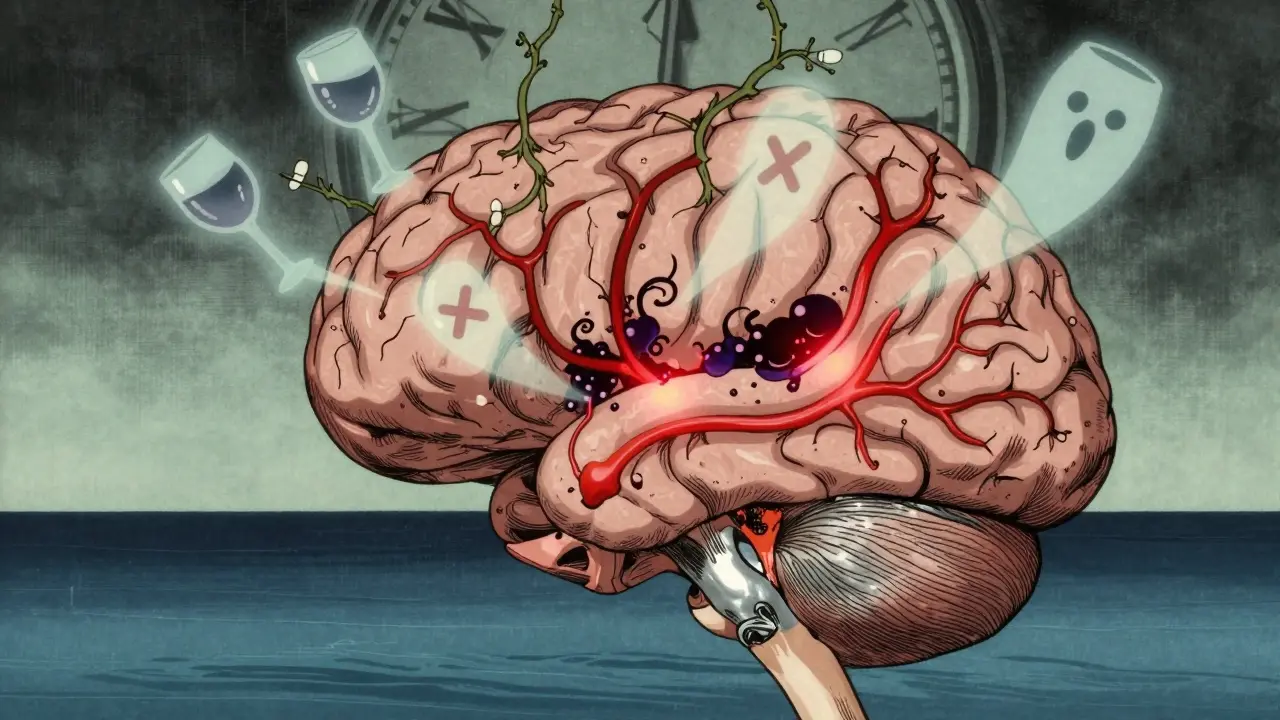
Combining scopolamine with other sedatives isn’t just risky-it’s a multiplier. Alcohol, benzodiazepines (like Xanax or Valium), opioids (like oxycodone), and even sleep aids like zolpidem all depress the central nervous system. When layered on top of scopolamine, they don’t just add up-they multiply.
Research from Dr. Cohen’s team at the Israel Institute for Biological Research found that mixing scopolamine with sedatives increases the risk of respiratory depression by more than three times. That means slower, shallower breathing-and in severe cases, not breathing at all. Elderly patients are especially vulnerable. The American Society of Anesthesiologists reports a 40% higher chance of delirium in people over 65 who use scopolamine with benzodiazepines.
Even over-the-counter products can be dangerous. A 2024 review from MarineBio, a research vessel crew member with 12 years of patch use, said: “I’ve seen colleagues become severely disoriented after one beer while wearing the patch.” One beer. That’s all it took.
And it’s not just alcohol. New data shows CBD-increasingly used for anxiety or sleep-can inhibit the liver enzyme CYP3A4, which breaks down scopolamine. This causes more of the drug to stay in your system, boosting sedation by 22-35%. The American Medical Association flagged this risk in its 2024 Clinical Update, warning that many users don’t even realize CBD interacts with prescription medications.
Real-World Consequences
It’s not just about feeling tired. People have crashed cars, fallen off ladders, and been hospitalized after mixing scopolamine with sedatives. On Drugs.com, 73% of negative reviews mention excessive drowsiness. A 2023 Consumer Reports survey found that while 61% of travelers would consider scopolamine, only 38% actually used it-mostly because of fear of sedation.
One user on Amazon, SailorMike42, had a different take: “The drowsiness actually helped me sleep through rough seas.” For some, the sedation is a benefit. But that’s the problem-it’s unpredictable. What helps one person could incapacitate another.
And the patch isn’t cheap. At $45-$60 per patch in the U.S., it’s a significant investment. Wasting it-or worse, risking health because you didn’t understand the risks-is a real concern.
What You Should Do
If you’re considering scopolamine:
- Apply it at least 4 hours before travel-preferably the night before.
- Avoid alcohol entirely while the patch is on. Even one drink can be too much.
- Don’t combine it with any prescription or OTC sedatives unless your doctor explicitly says it’s safe.
- Watch for CBD products-including gummies, oils, or topicals. They’re not harmless.
- Remove the patch immediately if you feel too drowsy, confused, or have trouble breathing. Symptoms usually fade within 12-24 hours.
Some people try cutting the patch in half to reduce the dose. This is off-label, not approved by manufacturers, and inconsistent-there’s no guarantee you’ll get half the dose. Don’t do it without medical supervision.

What’s Coming Next
The FDA approved a new lower-dose scopolamine patch (0.5 mg over 3 days) in April 2024. Early data suggests it reduces sedation while keeping anti-nausea effectiveness. That could be a game-changer.
Researchers are also testing a patch with slow-release caffeine to counteract drowsiness. Results from the NIH’s Phase III trial (NCT05678901) are expected in late 2025. If it works, it could make scopolamine safer for drivers, pilots, and anyone who needs to stay alert.
Meanwhile, newer drugs like penehyclidine hydrochloride are being studied. They target the same receptors but with less sedation-37% less, according to a 2023 study. But they’re still years away from being available.
The Bottom Line
Scopolamine works better than anything else for motion sickness. But it’s not a casual choice. It’s a tool that demands respect. If you’re planning a long trip and you’ve tried everything else, it might be worth it. But if you’re drinking, taking sleep aids, or using CBD, don’t risk it.
The patch doesn’t just prevent nausea. It changes how your brain works. And when you mix it with other depressants, you’re playing with fire.
Can I drink alcohol with a scopolamine patch?
No. Drinking alcohol while using a scopolamine patch significantly increases the risk of severe drowsiness, confusion, slowed breathing, and even loss of consciousness. Even one drink can be dangerous. The combination has been linked to hospitalizations and accidents. Avoid alcohol completely while the patch is in place.
How long does scopolamine stay in your system?
The half-life of scopolamine is about 4-6 hours, but the patch releases the drug slowly over 72 hours. Even after removing the patch, it can take 12-24 hours for side effects like drowsiness and blurred vision to fully fade. In older adults or people with liver issues, it may take longer.
Is scopolamine safe for older adults?
It’s riskier. Older adults are more sensitive to scopolamine’s effects on the brain. The risk of delirium increases by 40% when combined with other sedatives. Many doctors avoid prescribing it to people over 65 unless absolutely necessary. If used, start with the lowest possible dose and monitor closely.
Can I use scopolamine with CBD oil?
Not without caution. Early research shows CBD can inhibit the liver enzyme that breaks down scopolamine, causing higher drug levels and stronger sedation. This interaction isn’t widely known, but the American Medical Association has issued warnings. If you use CBD, talk to your doctor before using scopolamine.
What should I do if I feel too drowsy?
Remove the patch immediately. Drowsiness, confusion, or trouble breathing are signs you’ve had too much. Symptoms usually improve within 12-24 hours after removal. Do not drive, operate machinery, or make important decisions until you’re fully alert. If symptoms are severe-like difficulty breathing or fainting-seek medical help right away.
Are there alternatives to scopolamine with fewer side effects?
Yes. Over-the-counter options like dimenhydrinate (Dramamine) and meclizine (Bonine) are less effective but cause less sedation. For short trips, they’re often preferred. Newer drugs like penehyclidine hydrochloride show promise with 37% less drowsiness, but they’re not yet available. The FDA’s new lower-dose scopolamine patch (0.5 mg) may offer a better balance and should be available soon.
Thomas Anderson
December 15, 2025 AT 10:38Just got back from a 5-day cruise with the patch. Worked like magic. Didn’t throw up once. But yeah, I slept 18 hours the first day. No jokes - I woke up confused, thought it was Tuesday. Don’t drink. Don’t take melatonin. Just let it do its thing and rest.
Rich Robertson
December 16, 2025 AT 03:51As someone who’s sailed through the Indian Ocean in monsoon season, I’ve tried everything. Scopolamine is the only thing that kept me functional. But I learned the hard way - one beer after the patch went on, and I had to be carried off the deck. No regrets, just respect for the drug. It’s not a party aid. It’s a medical tool.
Daniel Wevik
December 18, 2025 AT 02:25Let’s be clear: scopolamine is a potent anticholinergic agent with a narrow therapeutic index. The pharmacokinetic profile of transdermal delivery creates sustained plasma concentrations, and concurrent CYP3A4 inhibition - whether from CBD, grapefruit, or azole antifungals - can precipitate anticholinergic toxicity. This isn’t anecdotal; it’s pharmacology 101. The FDA’s 2024 label update reflects this risk profile. If you’re combining it with anything that depresses CNS activity, you’re not being adventurous - you’re being reckless.
Natalie Koeber
December 19, 2025 AT 20:36Anyone else notice how Big Pharma loves pushing this patch? They know people will take it with CBD ‘for anxiety’ and then get hooked on the drowsiness. It’s all part of the sleep-industrial complex. And don’t get me started on the ‘lower-dose patch’ - that’s just a Trojan horse for more dependency. The FDA is in their pocket. Remember thalidomide? This is the same playbook.
Rulich Pretorius
December 19, 2025 AT 21:32I’ve used this patch in South Africa on rough boat rides. It’s life-changing - but only if you treat it like a grenade with a pin. I always tell my crew: patch on the night before, sleep through the worst, and don’t touch alcohol or painkillers. Simple. No drama. Just safety. And if you’re over 60? Talk to your doctor first. Your brain isn’t what it used to be.
Jonny Moran
December 21, 2025 AT 19:26My dad used this patch for his fishing trips. He swore by it. But he also swore off beer after the first time he woke up in the hospital. He didn’t even remember how he got there. I think he’s still mad he missed the catch of the season because he was out cold. So yeah - it works. But it doesn’t care if you’re ready for it.
Sinéad Griffin
December 23, 2025 AT 06:44AMERICA FIRST! 🇺🇸 This patch is made in the USA and it’s the BEST for motion sickness. Other countries? They’re still using dumb pills. We’ve got science. We’ve got innovation. And if you can’t handle a little drowsiness? Maybe you shouldn’t be on a boat. #ProudlyAmerican #ScopolamineWins
jeremy carroll
December 25, 2025 AT 02:06yo i used this patch for a road trip and thought i was fine till i tried to make coffee and spilled it all over my shirt. i was like a zombie. but hey - no vomit so i call it a win. just dont be like me and try to cook after. sleep. that’s the secret.
Edward Stevens
December 26, 2025 AT 03:07Oh wow, a 78% success rate? That’s basically a miracle. Next you’ll tell me the patch also cures cancer and makes your ex text you back. I’m just glad someone finally wrote a post that doesn’t sound like a pharmaceutical ad. For once, the warnings are clear. Maybe now people will stop treating it like a magic sleep potion.
Wade Mercer
December 26, 2025 AT 12:56People don’t realize that scopolamine isn’t just a drug - it’s a moral test. If you combine it with alcohol or CBD, you’re choosing temporary comfort over responsibility. You’re not just risking your life - you’re risking others’. This isn’t about personal freedom. It’s about basic human decency. Don’t be the reason someone gets hurt.
Dwayne hiers
December 28, 2025 AT 11:52Pharmacokinetic considerations: scopolamine’s transdermal bioavailability is approximately 75%, with peak plasma concentration at 24–36 hours. CYP3A4 inhibition by CBD increases AUC by 22–35%, per the 2024 AMA update. The new 0.5 mg patch reduces Cmax by ~40% while maintaining efficacy - a significant advance. Avoid concomitant use with benzodiazepines or opioids. The risk of respiratory depression is dose-dependent and synergistic. Always check for polypharmacy.
Sarthak Jain
December 30, 2025 AT 06:02i used this patch in india on a bumpy train ride and it saved me… but i was so out of it i missed my stop. had to sleep on a bench till morning. lol. also tried cbd oil after and felt like my brain was in slow motion. dont mix. seriously. the patch is strong. your body will thank you later.
Alexis Wright
January 1, 2026 AT 01:15Let’s be honest - the entire medical establishment is terrified of real autonomy. They push this patch like it’s a sacred relic, then slap on warnings like they’re trying to scare you into submission. But here’s the truth: if you’re smart, you know your body. You don’t need a 12-point checklist from a doctor who’s never been on a rocking boat. The sedation? It’s a feature, not a bug. If you’re too weak to handle it, maybe you shouldn’t be traveling. Stop infantilizing people with regulations. Let adults make their own damn choices.
Daniel Thompson
January 1, 2026 AT 01:37As a physician who’s prescribed this for 18 years, I’ve seen patients come in with respiratory depression after combining it with OTC sleep aids. One woman thought melatonin was ‘natural’ so it was safe. It wasn’t. She spent three days in ICU. The patch is not a toy. It’s a potent CNS depressant. If you’re reading this and thinking, ‘I’ll just have one drink,’ you’re already in danger. I’m not here to judge. I’m here to warn you: you’re not invincible. And this isn’t a gamble you can afford to lose.