
Online Reviews: How Patient Experiences Shape Trust in Generic Medications
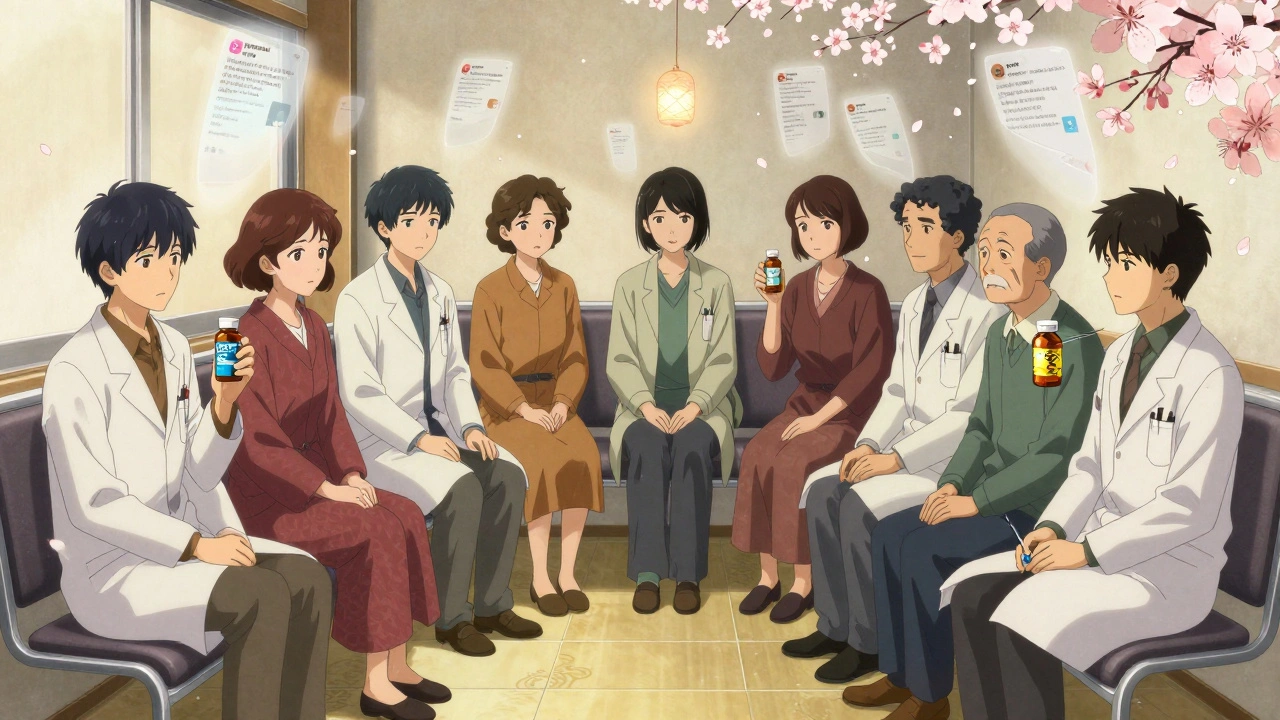
When you pick up a prescription, you might not think twice about whether it’s the brand name or the generic. But for millions of people, that choice isn’t just about price-it’s about trust. And that trust is being shaped less by FDA guidelines and more by online reviews, Reddit threads, and stories shared in doctor’s waiting rooms.
Generics Are the Norm. So Why Do People Doubt Them?
Nearly 9 out of 10 prescriptions filled in the U.S. are for generic drugs. They’re cheaper-often 80% to 85% less than brand names-and they contain the exact same active ingredient. The FDA requires them to meet strict bioequivalence standards: their absorption rate in the body must fall within 80% to 125% of the brand-name version. For most medications, that’s a perfect match. But here’s the disconnect: even though generics are scientifically proven to work the same, nearly 36% of patients still believe they’re less effective. That’s more than one in three people. And it’s not because they’re misinformed-it’s because they’ve felt something different. A study in the European Journal of Public Health showed patients given identical tramadol pills labeled as “generic” were more likely to stop taking them early, report more pain, and even take extra pills from other sources. The pills were the same. The label changed everything.What Patients Are Saying Online
Look at Reddit’s r/chronicpain or PatientsLikeMe. Scroll through thousands of posts about generic medications, and you’ll see the same patterns over and over. - “My doctor switched me to generic Lyrica. My nerve pain came back worse than before.” - “Generic sertraline made me feel like a zombie. Brand name never did.” - “I saved $200 a month with the generic. No side effects. Zero problems.” These aren’t outliers. A 2023 analysis of over 6,000 posts found that 47% of complaints mentioned “different side effects,” and 33% said the generic “just didn’t work.” Meanwhile, positive reviews focused on savings and consistency-24% of them. The emotional weight of these stories is powerful. One person’s bad experience becomes a warning sign for others. And because online reviews are often emotional, vivid, and personal, they stick in people’s minds more than clinical data ever could.Why Cost Feels Like a Red Flag
It’s not just about side effects. The price itself triggers doubt. In a PLOS ONE study, 32% of patients were skeptical of generics simply because they were cheap. There’s a hidden assumption: if it costs so little, it must be lower quality. That’s brand psychology at work. We’ve been conditioned to equate price with value-especially in healthcare. Brand-name drugs have decades of advertising, sleek packaging, and recognizable logos. Generics come in plain white pills with no name on them. To someone unfamiliar with how drugs are made, that looks like a knockoff. Even doctors and pharmacists aren’t immune. While only 29% of doctors and 28% of pharmacists believe generics are less effective, that small percentage still influences patients. If your pharmacist says, “I’d stick with the brand myself,” you’re going to listen.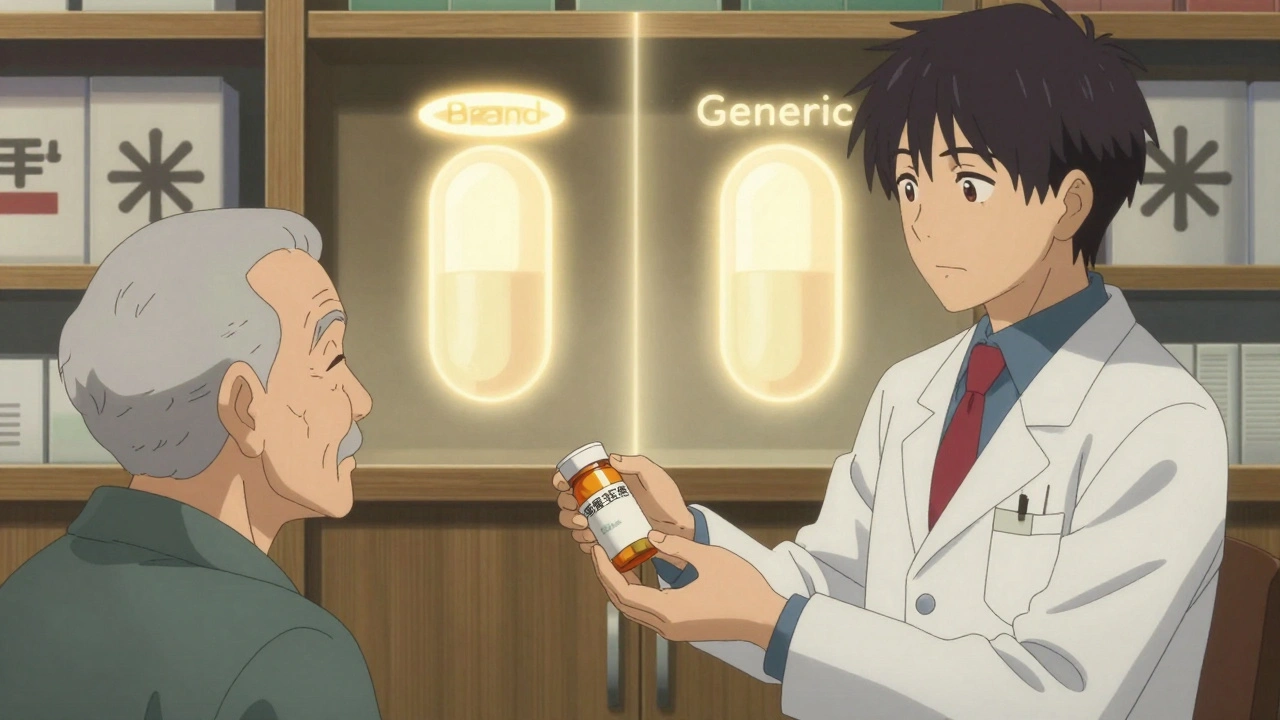
The Nocebo Effect: When Expectations Make You Sick
There’s a real, measurable phenomenon called the nocebo effect: when you expect something to hurt you, your body responds as if it already has. A 2015 review of 52 studies found that patients who believed generics were inferior reported 27% more side effects-even when the drug was identical to the brand name. Their minds created symptoms that didn’t exist in the pill. This isn’t “in their head” in the dismissive sense. It’s neuroscience. Stress, anxiety, and expectation activate real biological pathways. If you think the generic won’t work, your body may respond with increased pain, fatigue, or nausea-not because the drug changed, but because your brain did.Who Can Fix This?
The answer isn’t more ads. It’s better conversations. When pharmacists take just 90 seconds to explain how generics are approved-“It’s the same active ingredient, same FDA standards, just no marketing costs”-patient acceptance jumps by 39%. That’s not magic. That’s clarity. Kaiser Permanente tried something simple: they printed a one-page handout explaining generics in plain language. Within six months, patient questions about generics dropped by over half. Adherence went up 19%. Doctors who use motivational interviewing-asking open questions like, “What’s your experience been with generics?” instead of saying, “It’s the same”-see better outcomes. Patients feel heard. That builds trust faster than any brochure.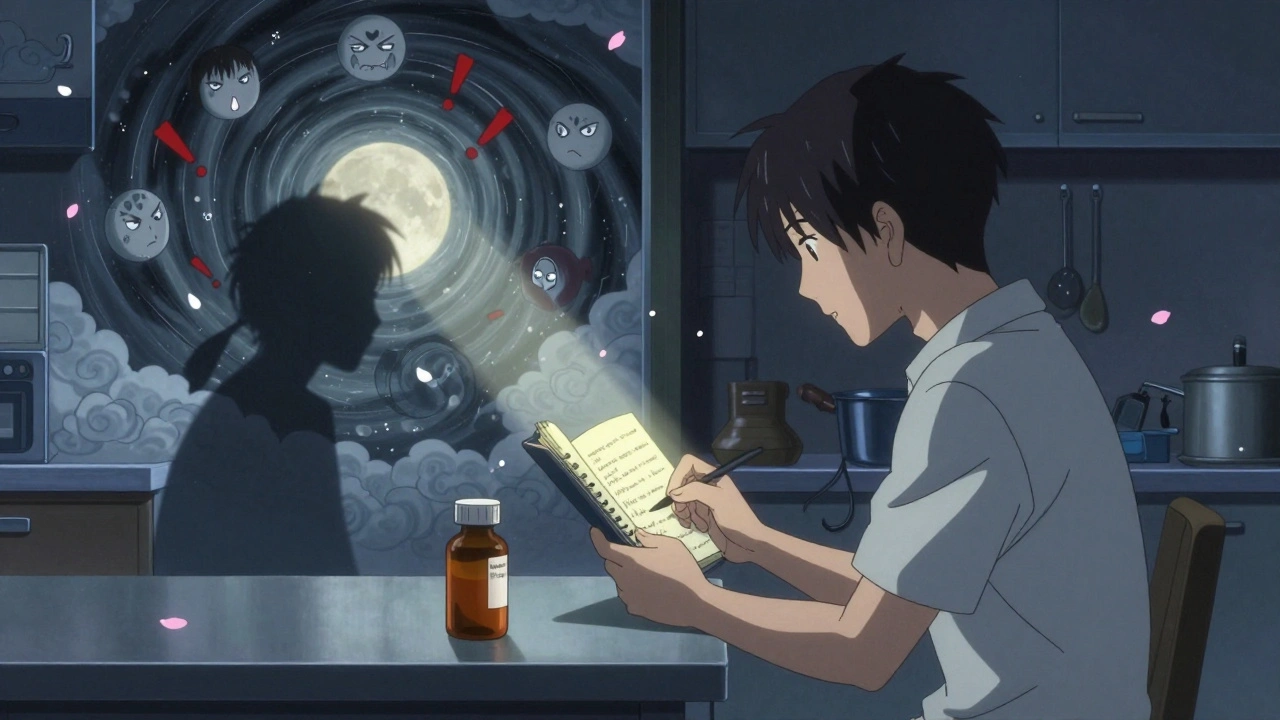
Authorized Generics: The Trust Bridge
Some drug companies are now selling “authorized generics”-the exact same pill as the brand, just without the brand name or logo. These are made by the original manufacturer, under the same conditions. In 2023, prescriptions for authorized generics grew 38% year-over-year. Why? Because they’re a psychological workaround. They give patients the reassurance of the brand name-without the price tag. For people who’ve had bad experiences with generics, an authorized version can be the first step back to trust.What You Can Do
If you’re on a generic medication and feel something’s off:- Don’t assume it’s the drug. Talk to your pharmacist. Ask: “Is this the same active ingredient as the brand?”
- Check if it’s an authorized generic. The label will say the brand name underneath the generic name.
- Track your symptoms. Write down when you started the generic, what changed, and how you feel. This helps your doctor spot real patterns-not placebo effects.
- If you’re switching back to brand, ask why. Is it because you feel worse? Or because you’re worried?
The Bigger Picture
The U.S. spends $14.3 billion extra every year because people avoid generics out of fear. That money could pay for insulin, cancer treatments, mental health care. The problem isn’t the science. It’s the story. And stories are told by people-not regulators. Online reviews aren’t the enemy. They’re a signal. They show where communication has failed. When patients feel ignored, they turn to the internet. When they’re heard, they stay on their meds. The future of affordable healthcare doesn’t depend on cheaper pills. It depends on rebuilding trust-one honest conversation at a time.Are generic medications really as effective as brand-name drugs?
Yes. By law, generic medications must contain the same active ingredient, strength, dosage form, and route of administration as the brand-name version. The FDA requires them to meet strict bioequivalence standards, meaning they deliver the same amount of medicine into your bloodstream at the same rate as the brand. For over 90% of prescriptions, generics work just as well. The only differences are in inactive ingredients-like color, shape, or fillers-which don’t affect how the drug works.
Why do some people say generic drugs don’t work for them?
Sometimes, it’s the nocebo effect-when expecting a drug to be less effective leads to real physical symptoms. Other times, it’s a change in inactive ingredients that affects how the pill is absorbed, especially with narrow therapeutic index drugs like warfarin or levothyroxine. In rare cases, patients may have had a bad batch from a poorly made generic. But most often, the issue isn’t the drug-it’s the perception. Studies show patients who believe generics are inferior report more side effects, even when taking the exact same pill as the brand.
Can switching between generic brands cause problems?
For most people, no. But for a small group-especially those on drugs with a narrow therapeutic index-switching between different generic manufacturers can sometimes cause minor fluctuations in blood levels. That’s why doctors may recommend sticking with one generic brand if you’re stable. If you notice changes after switching generics, talk to your pharmacist. They can check if you’ve been switched to a different manufacturer and advise whether it matters.
What’s the difference between a generic and an authorized generic?
A regular generic is made by a different company, using the same formula as the brand. An authorized generic is made by the original brand-name company, but sold without the brand name or logo. It’s the exact same pill, same factory, same quality control-just cheaper. Many people trust authorized generics more because they’re produced by the same manufacturer as the brand.
How can I tell if my generic is an authorized generic?
Check the label. Authorized generics often list the brand name under the generic name-for example, “Sertraline (Zoloft).” You can also ask your pharmacist directly. They can tell you if your generic is made by the original manufacturer. If you’re unsure, call the pharmacy and ask for the manufacturer’s name. You can then look it up online to see if it’s the same company that makes the brand.
Should I avoid generics if I have a chronic condition?
Not necessarily. For most chronic conditions-like high blood pressure, depression, or diabetes-generics are safe and effective. The FDA has approved them for long-term use. But if you’re on a drug with a narrow therapeutic index-like warfarin, thyroid meds, or seizure drugs-talk to your doctor before switching. These require precise dosing, and even small changes can matter. For most others, generics are a smart, safe choice.
Why do some doctors still prefer brand-name drugs?
Some doctors stick with brands out of habit, or because they’ve seen a patient react poorly to a generic in the past. Others may be influenced by pharmaceutical reps or unaware of how strict FDA standards are. But research shows doctors who explain the science behind generics-like bioequivalence and FDA approval-see higher patient trust and adherence. It’s not about the drug. It’s about the conversation.
Are online reviews about generics reliable?
They’re real, but not always representative. Online reviews capture strong emotions-both good and bad. One person’s bad experience might be due to a bad batch, a placebo effect, or a change in their condition. They don’t prove generics are ineffective. Look for patterns: if hundreds say the same thing, investigate. But if it’s just one or two stories, remember that most people who are fine on generics don’t post online. The silent majority isn’t on Reddit.
Iris Carmen
December 9, 2025 AT 23:43so i switched to generic lexapro last year and honestly? zero issues. saved like $150 a month. my anxiety didn’t care what the pill looked like. weird how people think the color change = broken medicine lol
Rich Paul
December 10, 2025 AT 03:22bro the nocebo effect is real af. i’ve seen patients on sertraline go full panic mode after switching to generic, then swear up and down it’s ‘not working’-then get switched back and magically feel better. same damn molecule. it’s all in the packaging and the brain’s expectation bias. FDA bioequivalence is tight as hell-80-125% range is scientifically validated for 99% of drugs. stop treating pills like crypto coins.
Delaine Kiara
December 10, 2025 AT 06:34okay but have you ever heard the story of janice from ohio? she took generic citalopram and woke up screaming at 3am because she thought her soul was being sucked out through her left ear. she filed a complaint with the FDA. the pharmacy sent her a new batch. same exact pill. same exact manufacturer. she still swears it was ‘the generic.’ i’m not even kidding. this isn’t just psychology-it’s horror movie material. also her cat died the same week. coincidence? i think not.
Ruth Witte
December 11, 2025 AT 04:07GENERICS ARE AWESOME 🙌💖 I’ve been on them for 8 years for my BP and depression and never looked back! Save $$$, feel great, live better. Stop letting ads and fear dictate your health! Your wallet and your future self will thank you! 💊✨ #GenericWin #TrustTheScience
Noah Raines
December 12, 2025 AT 11:36you people are ridiculous. if your generic makes you feel weird, go check the manufacturer. sometimes it’s a bad batch from some overseas plant with sketchy QA. not the generic’s fault-just bad supply chain. but don’t blame the whole system because you got a dud. also, if you’re paying $200 for a brand name when the generic’s $12? you’re literally throwing money into a void. grow up.
Katherine Rodgers
December 13, 2025 AT 01:11oh wow so now it’s our fault we feel worse on generics? because we’re ‘too emotional’? lol. what’s next? ‘your migraine isn’t real, you just think it is’? sure, doc. let me know when the pharma execs stop getting their bonuses while we’re stuck with pills that taste like chalk and make us dizzy. #PharmaLies
Mona Schmidt
December 13, 2025 AT 21:50It’s important to recognize that while the nocebo effect is well-documented, dismissing patient experiences as ‘all in their head’ undermines trust in the healthcare system. For some individuals-especially those with chronic conditions or sensitivities to inactive ingredients-small variations in formulation can have measurable clinical impacts. The solution isn’t to shame patients for their concerns, but to improve transparency: clearly label manufacturers, provide access to authorized generics, and empower pharmacists to have those 90-second conversations. Empathy + evidence = better outcomes.
Andrea Petrov
December 15, 2025 AT 20:40you know what’s really happening? the FDA lets generics through with 80-125% bioequivalence-that’s a 45% swing in absorption rate. that’s not ‘same drug.’ that’s a gamble. and the ‘authorized generics’? those are just the brand’s way of keeping their monopoly while pretending they’re helping you. the real truth? big pharma owns the generic manufacturers too. they’re just selling you the same pill with a different label. you’re not saving money-you’re being manipulated.
Guylaine Lapointe
December 17, 2025 AT 06:37Why do people still fall for this? The science is clear. The FDA doesn’t play games. If you’re having issues, it’s either your mental state or you’re not taking it properly. Stop blaming the system because you’re too lazy to read the label or talk to your pharmacist. This isn’t a conspiracy-it’s basic pharmacology. And if you’re spending your time on Reddit complaining about pills instead of fixing your lifestyle? That’s your real problem.