
Pruritus in Cholestasis: Bile Acid Resins and New Options

Imagine an itch that doesn't stop. It’s not a bug bite you can scratch away or a dry patch of skin you can moisturize. It is deep, relentless, and often worse at night. For people with cholestatic liver diseases, which are conditions where bile flow from the liver is blocked or slowed down, this symptom is known as cholestatic pruritus. This type of itching affects between 20% and 70% of patients depending on the specific condition, such as primary biliary cholangitis (PBC) or primary sclerosing cholangitis (PSC). It is more than just discomfort; it disrupts sleep, causes anxiety, and significantly lowers quality of life.
The frustrating part? Standard antihistamines usually do nothing. That’s because this itch isn’t caused by histamine, the chemical your body releases during an allergic reaction. Instead, it involves a complex mix of bile acids, opioids, and other substances building up in your blood. For decades, doctors relied on old-school treatments like bile acid resins, specifically cholestyramine. While these work for some, they come with major downsides. Today, however, we have new options that target the root causes of the itch more effectively. Here is what you need to know about managing this difficult symptom, from traditional resins to the latest breakthrough therapies.
Why Traditional Antihistamines Fail
If you’ve ever been prescribed Benadryl or Zyrtec for liver-related itching, you might wonder why it didn’t help. The reason lies in biology. In typical allergies, mast cells release histamine, which triggers nerve endings to signal "itch." Antihistamines block this signal.
In cholestasis, the mechanism is completely different. Research published in PubMed Central (PMC4952797) highlights that the itch is multifactorial. Key players include:
- Bile Acids: These accumulate in the blood when bile cannot flow properly into the intestines.
- Endogenous Opioids: Natural pain-relieving chemicals in the body that can paradoxically trigger itching when their receptors are overstimulated.
- Lysophosphatidic Acid (LPA): A lipid molecule that activates itch-sensing nerves. Its production is driven by an enzyme called autotaxin, which is upregulated in cholestatic liver disease.
Because histamine isn’t the main driver here, blocking it has little effect. Dr. Keith Lindor, a hepatology specialist at Mayo Clinic, emphasizes that recognizing this non-histaminergic mechanism is crucial. Sticking with antihistamines delays effective treatment and prolongs suffering. Understanding this shift in science opens the door to therapies that actually work.
First-Line Defense: Bile Acid Resins
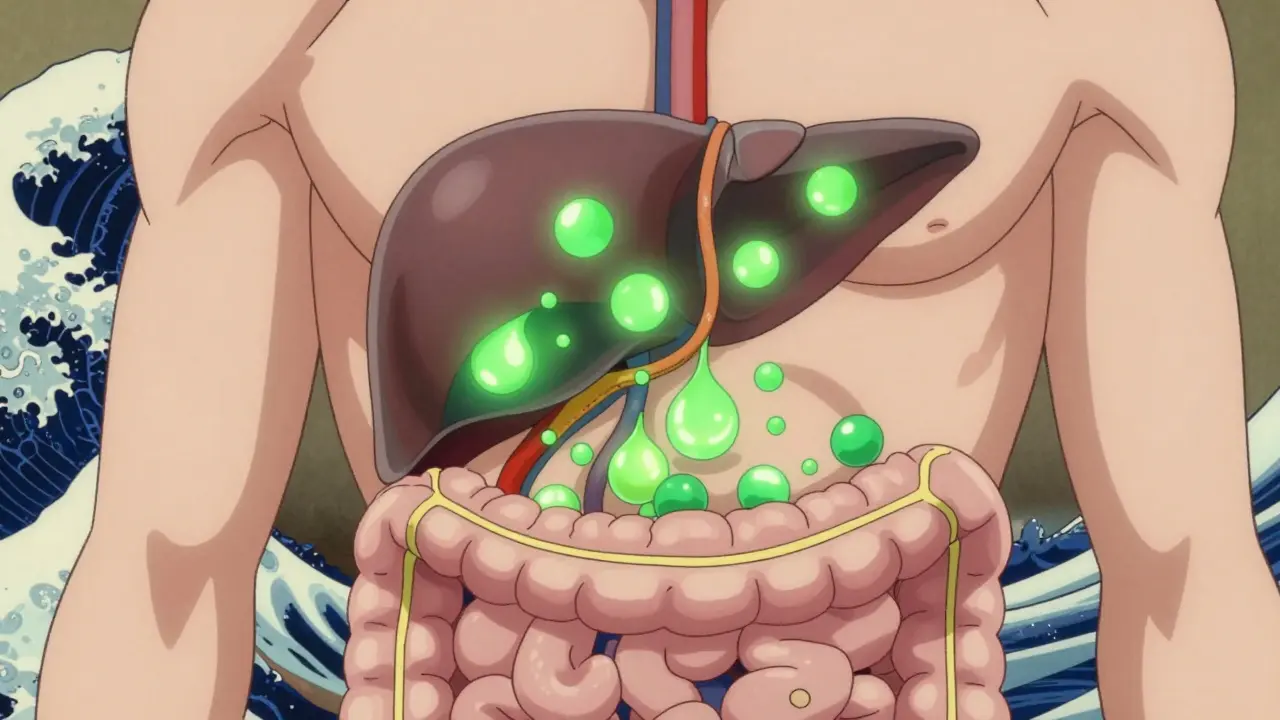
For years, Cholestyramine (Questran) has been the standard first-line treatment recommended by the American Association for the Study of Liver Diseases (AASLD). It is a strongly basic anion exchange resin. Think of it as a sponge in your gut. When you take it, it binds to bile acids in your intestinal lumen, preventing them from being reabsorbed into your bloodstream. Instead, they are excreted in your stool.
How it works: By trapping bile acids in the gut, cholestyramine reduces the amount circulating in your blood, which can lower the itch intensity. Dosing and Timing: The standard starting dose is 4 grams once or twice daily. Doctors may titrate this up to 16-24 grams per day if needed. However, timing is critical. You must take cholestyramine at least 1 hour before or 4-6 hours after any other medication. Why? Because it binds to everything, including other drugs, rendering them ineffective. This interaction risk is a major hurdle for patients on multiple medications.
The Downside: Despite its efficacy in 50-70% of responsive patients, cholestyramine has a high discontinuation rate of 25-35%. A 2020 survey in *Liver International* found that 78% of patients reported poor taste. Many describe it as gritty, chalky, and nauseating. Additionally, it can cause bloating, constipation, and gas. If you try it, mixing it with strong-flavored juices or applesauce can help, but for many, the side effects outweigh the benefits.
Second and Third-Line Options: Rifampin, Naltrexone, and Sertraline
When cholestyramine fails or isn’t tolerated, guidelines suggest moving to second-line therapies. These drugs work through entirely different mechanisms.
| Medication | Mechanism | Typical Dose | Efficacy | Key Side Effects |
|---|---|---|---|---|
| Rifampin | Hepatic enzyme inducer | 150-300 mg/day | 70% response in PBC | Orange urine, hepatotoxicity risk |
| Naltrexone | Opioid receptor antagonist | 12.5-50 mg/day | 50-60% response | Withdrawal-like symptoms, nausea |
| Sertraline | SSRI (Serotonin reuptake inhibitor) | 75-100 mg/day | 40-50% in PBC | Gastrointestinal upset, sexual dysfunction |
Rifampin: Originally an antibiotic, rifampin induces liver enzymes that help clear pruritogens. It shows impressive results, with a 2019 *Journal of Hepatology* review noting efficacy in 70% of PBC patients within four weeks. However, it carries a risk of liver toxicity (elevated transaminases in 15-20% of patients) and interacts with over 50 other medications by speeding up their metabolism. Patients should expect their urine and sweat to turn bright orange-a harmless but startling side effect.
Naltrexone: This drug blocks opioid receptors in the brain, interrupting the itch signal. It is dosed carefully, starting low (6.25 mg) and increasing weekly to avoid severe initial side effects. About 30% of patients experience nausea, anxiety, or flu-like symptoms during initiation, mimicking opioid withdrawal even if they’ve never used opioids. Despite this, it remains a powerful tool for those who don’t respond to rifampin.
Sertraline: An antidepressant that also modulates serotonin pathways involved in itching. It is particularly useful for patients with comorbid depression. However, its efficacy is limited mostly to PBC patients and does not work well for other types of cholestasis.
New Frontiers: Targeted Therapies Like Maralixibat
The landscape is changing rapidly. The biggest breakthrough comes from targeting the ileal bile acid transporter (IBAT) and the autotaxin-LPA pathway. These are precision medicines designed specifically for the biology of cholestatic pruritus.
Maralixibat (Mytesi) was approved by the FDA in September 2021 for pruritus associated with Alagille syndrome, a rare genetic liver disorder. It inhibits IBAT, stopping bile acids from being reabsorbed in the intestine-similar to cholestyramine but much more potent and targeted. In the phase 3 MARCH trial (2022), maralixibat reduced itch scores by 47% compared to 42% for cholestyramine. Crucially, it had a much better tolerability profile, with only a 12% discontinuation rate versus 35% for cholestyramine. Patients appreciate the once-daily liquid dose and the lack of gritty texture.
Another emerging option is Volixibat, another IBAT inhibitor. Phase 3 data from the VISION study presented at AASLD 2023 showed a 52% reduction in itch at six months. Meanwhile, researchers are testing antisense oligonucleotides like IONIS-AT332-LRx, which directly suppresses autotaxin production. Early phase 2 trials show a 58% improvement in pruritus, marking a potential game-changer for refractory cases.

Stepwise Management Protocol
Managing cholestatic pruritus requires patience and a structured approach. The AASLD and EASL guidelines recommend a stepwise protocol to maximize relief while minimizing side effects.
- Step 1: Lifestyle and First-Line Therapy Start with non-pharmacological measures: cool showers, loose cotton clothing, and fragrance-free emollients to soothe dry skin. Begin cholestyramine at 4g daily, titrating up to 16g over two weeks if needed. Monitor for GI side effects.
- Step 2: Second-Line Therapy If no significant relief after 4 weeks, add rifampin 150mg daily, increasing to 300mg after two weeks. Check liver function tests regularly due to hepatotoxicity risks.
- Step 3: Third-Line Therapy If rifampin fails or is contraindicated, switch to naltrexone (starting at 6.25mg and titrating up) or sertraline (50-100mg/day). Naltrexone requires slow titration to manage initial side effects.
- Step 4: Novel Agents and Referral For eligible patients (e.g., Alagille syndrome), consider maralixibat. For all others with refractory pruritus, consult a hepatologist for access to clinical trials or specialized care. In extreme cases, liver transplantation offers definitive resolution, with 95% of patients reporting complete itch relief post-transplant.
Practical Tips for Daily Life
Living with cholestatic pruritus is challenging, but small adjustments can make a big difference. Keep your home cool; heat worsens itching. Use a humidifier in dry climates. Avoid hot water baths, which strip natural oils from the skin. Stick to gentle, soap-free cleansers.
Patient communities, such as forums on HealthUnlocked and Reddit’s r/liverdisease, share valuable coping strategies. Many find that mixing cholestyramine with chocolate milk or fruit smoothies masks the taste. Others report that rifampin’s orange discoloration of urine is a small price to pay for relief. Remember, you are not alone. Over 1.5 million Americans live with cholestatic liver diseases, and support networks are growing.
Does cholestyramine work for everyone with cholestatic pruritus?
No, cholestyramine is effective in only 50-70% of patients. Additionally, about 25-35% of patients discontinue use due to gastrointestinal side effects like bloating, constipation, and poor taste. If it doesn’t work or is too uncomfortable, there are several alternative treatments available.
Can I take cholestyramine with my other medications?
You must be very careful. Cholestyramine binds to many drugs in the gut, preventing them from being absorbed. Always take cholestyramine at least 1 hour before or 4-6 hours after any other medication. Consult your doctor or pharmacist to create a safe schedule.
What is maralixibat, and who is it for?
Maralixibat (Mytesi) is a newer, targeted therapy that inhibits the ileal bile acid transporter (IBAT). It was FDA-approved in 2021 specifically for pruritus associated with Alagille syndrome. It is more effective and better tolerated than cholestyramine but is currently indicated only for this specific genetic condition. Research is ongoing for its use in other cholestatic diseases.
Why don't antihistamines help with liver-related itching?
Antihistamines block histamine, which causes itching in allergic reactions. Cholestatic pruritus is not mediated by histamine. Instead, it involves bile acids, opioids, and lysophosphatidic acid (LPA). Therefore, antihistamines are largely ineffective for this type of itch, despite being commonly prescribed.
Is liver transplantation a cure for cholestatic pruritus?
Yes, for patients with end-stage liver disease and refractory pruritus, liver transplantation is the definitive solution. Studies show that 95% of patients experience complete resolution of itching after a successful transplant. It is considered a last resort when all medical therapies fail.
Anna Bartle
July 6, 2026 AT 12:11I have been dealing with PBC for five years and this article saved me so much frustration! I tried cholestyramine first and hated the taste and the bloating! My doctor switched me to rifampin after four weeks because the itch was still terrible at night! It took some time to adjust but now I can finally sleep through the night without scratching my arms raw! If you are struggling please ask your hepatologist about the stepwise protocol mentioned here! Do not give up hope!
Mohit Patil
July 8, 2026 AT 11:13the government knows about the bile acid toxins in our water supply but says nothing they want us sick so we buy their expensive treatments naltrexone is just another way to control the population by messing with your opioid receptors why do they not tell us that the liver disease is caused by environmental poisoning instead of blaming genetics
Chandan Sharma
July 8, 2026 AT 20:01One must appreciate the nuanced elegance of the autotaxin-LPA pathway elucidation herein presented. It is rather quaint how laypersons dismiss the sophisticated pharmacokinetics of IBAT inhibitors as mere 'new options' when in reality they represent a paradigm shift in hepatological therapeutics. The granularity of the MARCH trial data suggests a level of scientific rigor that is sadly absent in contemporary discourse. Truly, the transition from brute-force resin binding to targeted molecular inhibition is a triumph of modern medicine.
Katie Dixon
July 10, 2026 AT 09:00It makes me so angry that people think they can just fix this with pills without thinking about their lifestyle choices. You need to take care of your body like a temple not a dumping ground. I always say that if you eat clean and live right you will never get liver disease. But sure let's talk about maralixibat while ignoring the root cause which is poor personal responsibility and lack of discipline in daily habits.
Sydney Jarrett
July 10, 2026 AT 23:45The pruritic cascade involves complex neuroimmune interactions that are frequently misunderstood by the general populace. The upregulation of autotaxin leading to lysophosphatidic acid accumulation is a critical pathophysiological mechanism that necessitates precise therapeutic intervention. Maralixibat's inhibition of the ileal bile acid transporter represents a significant advancement in targeting the enterohepatic circulation of bile acids. Furthermore the reduction in pruritus scores observed in clinical trials underscores the efficacy of blocking IBAT compared to traditional anion exchange resins which merely bind bile acids nonspecifically in the intestinal lumen.
Lorena Suarez
July 12, 2026 AT 23:28i really wish more doctors would explain why antihistamines dont work because i wasted so much money on zyrtec before realizing it was useless for my condition it feels good to know there are actual options now even if they have side effects at least they target the real problem
Amrithaa Thayaparan
July 14, 2026 AT 01:34its absolutely disgusting how the medical industry profits off suffering while pushing these chemical cocktails into vulnerable patients who are desperate for relief. the moral bankruptcy of prescribing drugs with such severe side effects like hepatotoxicity and withdrawal symptoms shows a complete lack of empathy for human dignity. we should be focusing on holistic healing not just masking symptoms with toxic substances that further degrade our bodies.
Chris Munton
July 15, 2026 AT 05:24The ethical implications of relying on liver transplantation as a definitive solution for refractory pruritus are deeply troubling when considering the scarcity of donor organs and the potential for exploitation within the healthcare system. While the 95% resolution rate post-transplant is statistically significant it raises questions about resource allocation and whether we are prioritizing symptomatic relief over addressing the underlying societal determinants of health that contribute to liver disease prevalence in marginalized communities.
Paul Diamond
July 16, 2026 AT 14:12To consider the itch merely as a physical symptom is to ignore the profound existential distress it imposes upon the individual. The relentless nature of cholestatic pruritus forces one to confront the fragility of the body and the limits of medical intervention. In this sense the search for relief becomes a metaphor for the human condition itself where we strive against inevitable decay yet find only temporary solace in transient remedies.
Dawn Renee
July 17, 2026 AT 09:17Thye are watching us through our smart devices too. They know when we scratch and they send ads for creams that dont work. Its all part of the plan to keep us dependent on their system. Dont trust the new drugs either they are probably tracking us with microchips in the pills.
Divya Prakash
July 17, 2026 AT 11:37It is rather amusing how the masses flock to discuss such mundane pharmaceutical interventions without any regard for the intellectual depth required to truly comprehend the biochemical intricacies involved. One would assume that engaging in a discourse regarding the modulation of endogenous opioids and lysophosphatidic acid pathways would attract a more discerning audience rather than those content with superficial summaries of clinical trial data. The pretension of believing that a simple internet post can adequately convey the complexities of hepatology is laughable.
Isis Fleming
July 18, 2026 AT 00:50It is important to note that while maralixibat shows promise it is currently indicated only for Alagille syndrome. Patients with other forms of cholestasis should consult their hepatologists to determine the most appropriate treatment plan based on current guidelines. The stepwise approach remains the standard of care for managing cholestatic pruritus effectively.