
REMS Programs: Risk Evaluation and Mitigation Strategies Explained
REMS Eligibility Checker
Drug Risk Assessment Tool
This tool helps determine if a drug might require a Risk Evaluation and Mitigation Strategy (REMS) program based on its risks and characteristics.
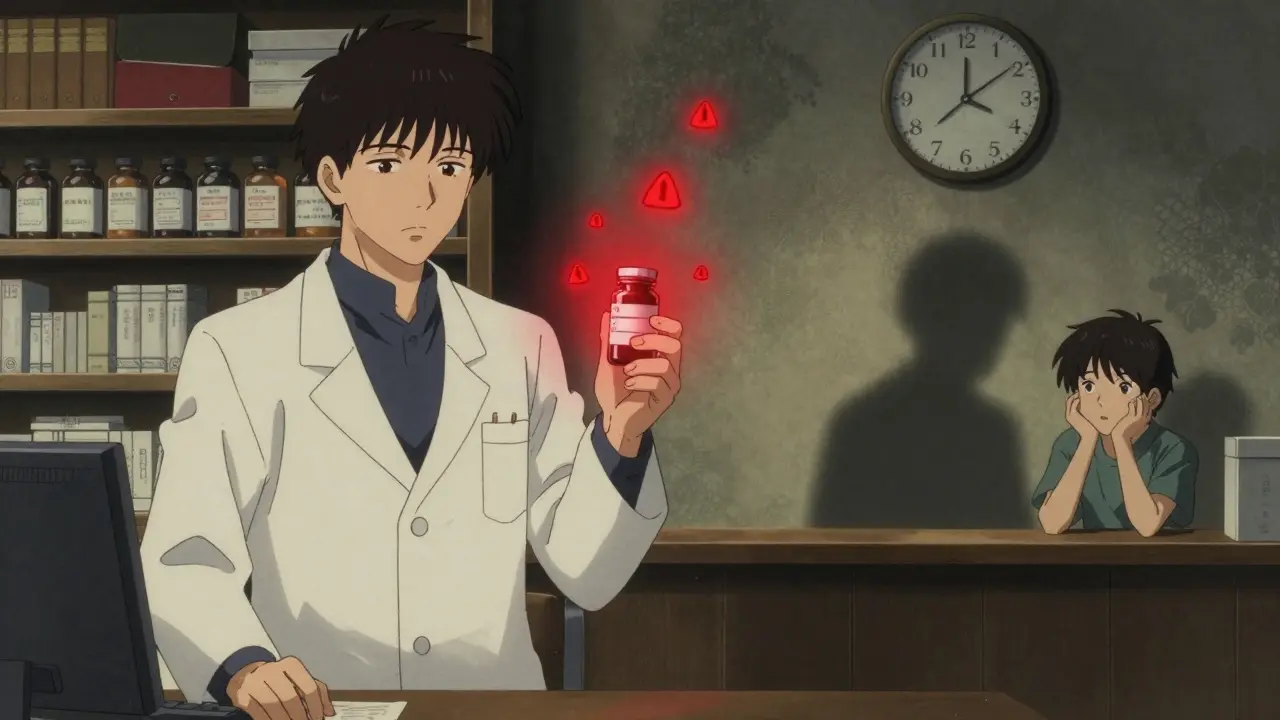
When a drug can save lives but also carry serious, even deadly, risks - like causing birth defects, dangerous drops in white blood cells, or sudden loss of consciousness after injection - how do you make it available without putting patients in danger? That’s the exact problem the U.S. Food and Drug Administration (FDA) set out to solve with REMS programs. These aren’t just extra warnings on a label. They’re legally required, tightly controlled systems designed to manage the most dangerous medications on the market. If you’ve ever waited weeks to get a prescription filled, or had your doctor jump through hoops just to prescribe a medication, you’ve felt the real-world impact of REMS.
What Exactly Is a REMS Program?
REMS stands for Risk Evaluation and Mitigation Strategies. It’s a formal FDA program created in 2007 under the Food and Drug Administration Amendments Act (FDAAA). It doesn’t apply to most drugs. In fact, about 95% of FDA-approved medications don’t need one. REMS is only used when a drug has a serious, known risk that can’t be managed with standard prescribing rules or warning labels alone.
Think of it this way: standard drug labels tell you what side effects to watch for. REMS goes further. It forces specific actions - like mandatory training, patient registries, or restricted dispensing - to make sure the drug is used safely. For example, the drug isotretinoin (used for severe acne) can cause severe birth defects. The REMS program for this drug, called iPLEDGE, requires both the patient and the prescriber to register, complete counseling, and use contraception before and during treatment. No registration? No prescription. No exceptions.
How REMS Works: The Core Elements
Not all REMS programs are the same. Each one is built around the specific danger of the drug. The FDA uses three main tools to control risk:
- Medication Guides: These are printed handouts given to patients explaining the risks in plain language. They’re required for nearly all REMS drugs.
- Communication Plans: These are targeted training or outreach efforts for doctors and pharmacists. For example, prescribers of clozapine - a powerful antipsychotic that can wipe out white blood cells - must complete training on blood monitoring before they can write the prescription.
- Elements to Assure Safe Use (ETASU): This is the strictest layer. It can include:
- Only certified prescribers can order the drug.
- Patient enrollment in a national registry.
- Dispensing only at specially certified pharmacies or clinics.
- Required lab tests before and during treatment.
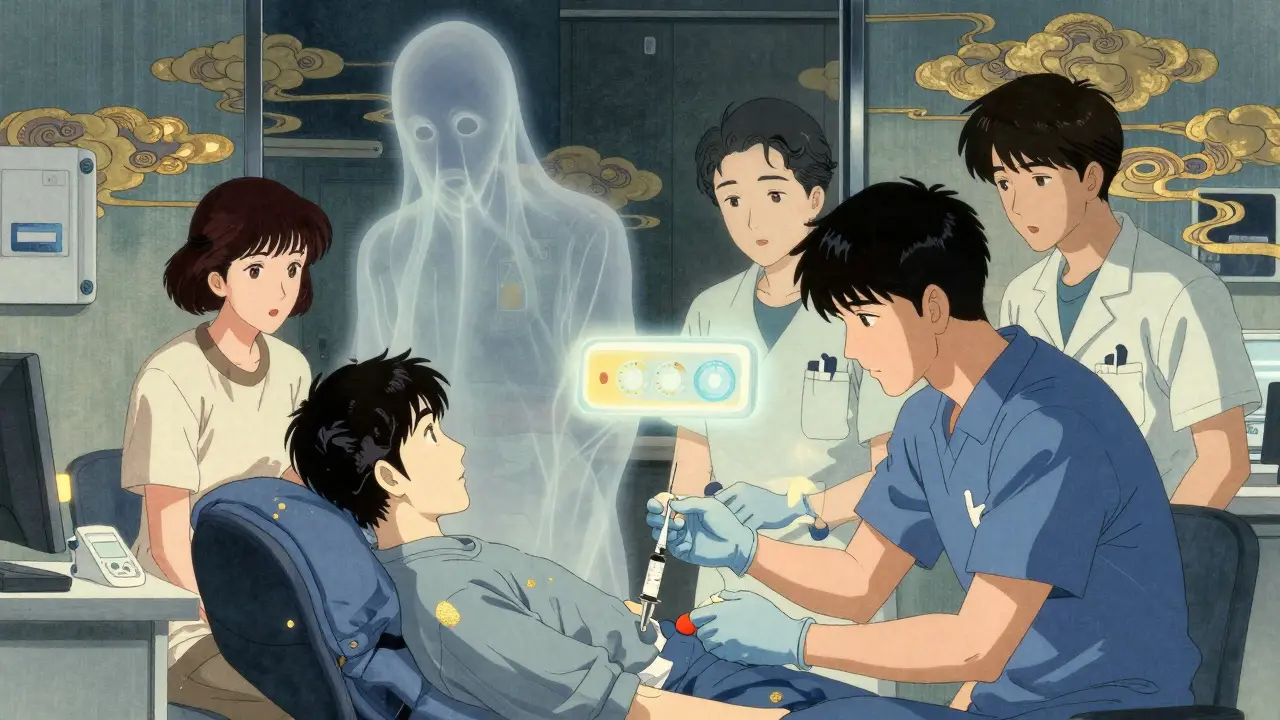
Take Zyprexa Relprevv, a long-acting injectable for schizophrenia. Because it can cause sudden sedation or delirium within minutes of injection, the REMS rules say it must be given in a certified clinic, and the patient must be observed for at least three hours afterward. If a clinic doesn’t meet these standards, they can’t give the shot - even if the patient needs it urgently.
Why REMS Exists: Balancing Risk and Benefit
The FDA doesn’t use REMS to block drugs. It uses REMS to let life-saving drugs reach patients who need them. Drugs like thalidomide (used to treat leprosy and multiple myeloma) and clozapine (for treatment-resistant schizophrenia) would never have been approved without REMS. These drugs are dangerous, but for some patients, they’re the only option.
Dr. Robert Temple, a former top official at the FDA, put it simply: "REMS has been essential for bringing critical therapies to market that would otherwise be too risky for approval." Without REMS, many of the most advanced treatments for cancer, autoimmune diseases, and mental illness wouldn’t exist.
Who Runs REMS? The Sponsor’s Responsibility
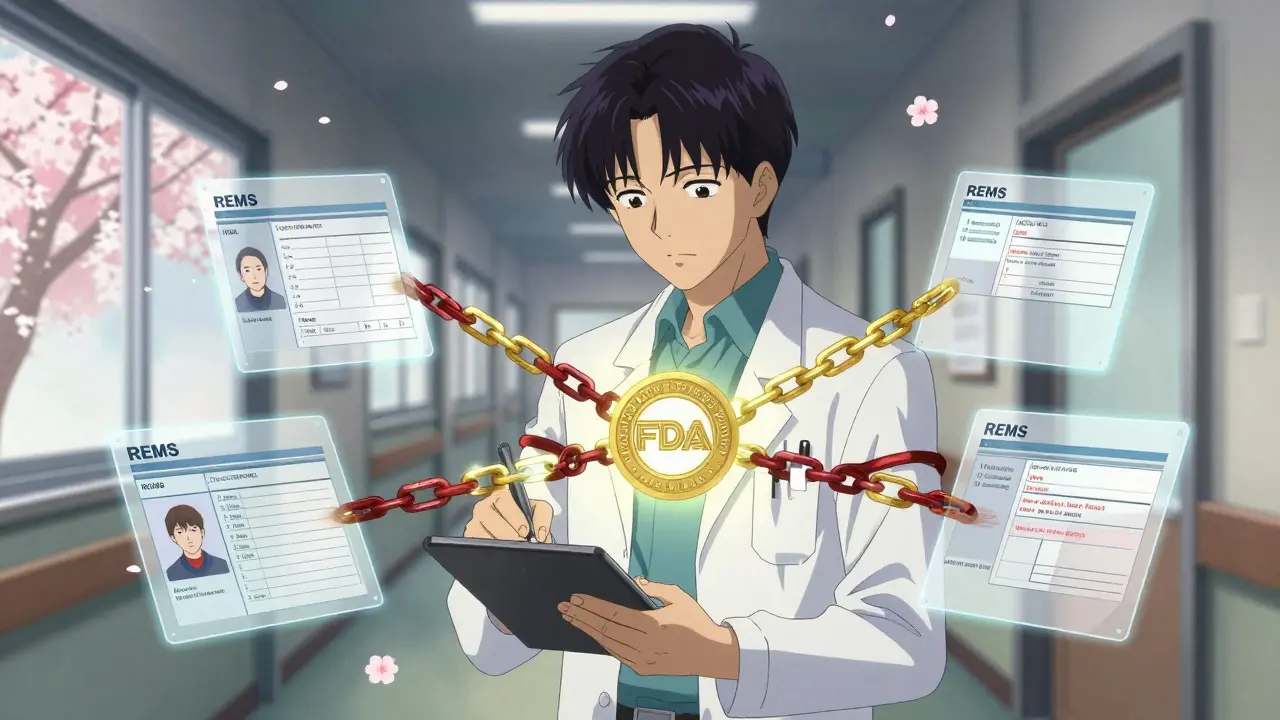
Unlike general drug safety monitoring - which is handled by the FDA - REMS is the responsibility of the drug’s manufacturer. The company must design, pay for, and run the entire program. This includes:
- Building secure online portals for prescriber certification.
- Setting up patient registries with tracking systems.
- Training pharmacy networks on how to verify eligibility.
- Reporting data back to the FDA regularly.
It’s expensive. The pharmaceutical industry spends about $1.2 billion a year on REMS programs. Simple programs with just a medication guide cost $500,000 per year. Complex ones with registries and certified dispensing can cost over $15 million annually. That’s why you’ll see REMS mostly on high-cost drugs - especially in oncology, neurology, and immunology.
Real-World Problems: Delays, Burdens, and Broken Systems
While REMS saves lives, it also creates real pain for patients and providers.
A 2022 survey of 1,250 U.S. doctors found that 68% reported delays in starting REMS-required medications. For 42% of them, those delays hurt patient outcomes. One oncologist told a reporter: "I had a patient with aggressive lymphoma. The drug worked wonders, but we lost three weeks getting the REMS paperwork approved. She didn’t respond as well because we waited." Pharmacists are stuck in the middle. A 2022 survey by the American Society of Health-System Pharmacists found that hospital pharmacists spend 2-5 extra hours per week just managing REMS requirements. For clozapine, that means checking weekly blood results, verifying prescriber certification, and confirming patient registry status - all before the pill can leave the pharmacy.
The iPLEDGE system for isotretinoin is a classic example. A Reddit thread from September 2023 had 147 comments from pharmacists describing how the system fails patients. One wrote: "I had a 17-year-old girl with scarring acne. Her dermatologist approved it. Her mom signed up. But the system flagged her as "incomplete" because her insurance didn’t auto-populate her birth date. We had to call three offices. She got her script 5 days late. Her acne got worse."
REMS vs. Other Systems: What Makes It Unique?
Other countries have similar systems, but the U.S. REMS program is different. The European Union requires a Risk Management Plan (RMP) for every new drug. In the U.S., REMS is only used for the top 5% of drugs with the most dangerous side effects.
Also, in the EU, the government often runs the monitoring. In the U.S., the drug company does. This creates a conflict: the company has to prove its drug is safe - while also making money from selling it. Critics say this leads to over-cautious systems that protect the company more than the patient.
Changes in 2023-2026: Is REMS Getting Better?
The FDA knows REMS isn’t perfect. In 2023, they made major changes:
- Sunset clause: The FDA removed REMS for thalidomide after 20 years. Why? Because doctors learned how to manage the risks without strict controls.
- Standardized platform: 22 out of 78 active REMS programs were moved to a single digital system to reduce paperwork.
- Access review: Sponsors now must prove their REMS doesn’t unfairly block access - especially for rare disease patients who travel long distances.
- Digital pilots: The FDA is testing smartphone apps to monitor patients on anticoagulants in real time, replacing manual check-ins.
By 2027, experts predict 45% of new cancer drugs will need REMS - up from 38% today. But the FDA also admits: 63% of current REMS programs don’t have clear data to show they’re actually working. That’s a red flag.
What’s Next? The Push for Smarter, Not Just Stricter
The future of REMS isn’t more rules - it’s smarter rules. The goal is to keep patients safe without making them wait weeks for treatment. That means:
- Using EHRs (electronic health records) to auto-check prescriber certification.
- Letting patients submit lab results digitally instead of calling pharmacies.
- Removing REMS when risks are better understood - like with thalidomide.
- Focusing on outcomes: Did the REMS prevent harm? Or just slow down care?
For patients with rare diseases, this matters deeply. The National Organization for Rare Disorders (NORD) says: "REMS is critical - but it can’t ignore the reality that many patients live 200 miles from a specialist clinic."
REMS programs are not perfect. But they’re necessary. The challenge now is to make them work better - not just harder.
What drugs require a REMS program?
Drugs that carry serious, life-threatening risks that can’t be managed with standard labeling alone. Examples include isotretinoin (for acne), clozapine (for schizophrenia), thalidomide (for cancer and leprosy), and Zyprexa Relprevv (an injectable antipsychotic). The FDA currently has 78 active REMS programs covering about 150 medications, mostly in oncology, neurology, and immunology.
Who is responsible for running a REMS program?
The pharmaceutical company that makes the drug. They must design, fund, and operate the entire system - including prescriber training, patient registries, pharmacy certification, and reporting to the FDA. The FDA oversees compliance but doesn’t run the day-to-day operations.
Can a REMS program be removed?
Yes. In August 2023, the FDA removed REMS for thalidomide after 20 years, because better risk management practices became standard. The FDA now requires sponsors to prove REMS is still necessary - and to propose a "sunset" plan if the risks are better understood over time.
Why do REMS programs cause delays in getting medication?
Because they require multiple manual steps: prescriber certification, patient registration, lab result verification, pharmacy enrollment, and system checks. Many systems don’t connect to electronic health records, so staff must log into separate portals, call offices, or mail paperwork. A 2019 study found REMS drugs took 5.4 days longer to fill on average.
Do REMS programs actually make drugs safer?
For some drugs, yes - like isotretinoin, where birth defects dropped dramatically after iPLEDGE launched. But for others, there’s little evidence. A 2023 FDA-PhRMA report found 63% of REMS programs lack clear metrics to prove they reduce harm. Some, like opioid prescriber training, may add paperwork without improving safety.
Sarah B
February 8, 2026 AT 21:49Heather Burrows
February 9, 2026 AT 02:49Savannah Edwards
February 10, 2026 AT 17:50Gouris Patnaik
February 12, 2026 AT 16:28AMIT JINDAL
February 13, 2026 AT 19:02Amit Jain
February 13, 2026 AT 22:01Eric Knobelspiesse
February 15, 2026 AT 14:13Jesse Lord
February 16, 2026 AT 04:46Ariel Edmisten
February 18, 2026 AT 02:01Marcus Jackson
February 19, 2026 AT 13:59Natasha Bhala
February 20, 2026 AT 17:33