
Sensorineural Hearing Loss: What Causes Inner Ear Damage and Permanent Deafness
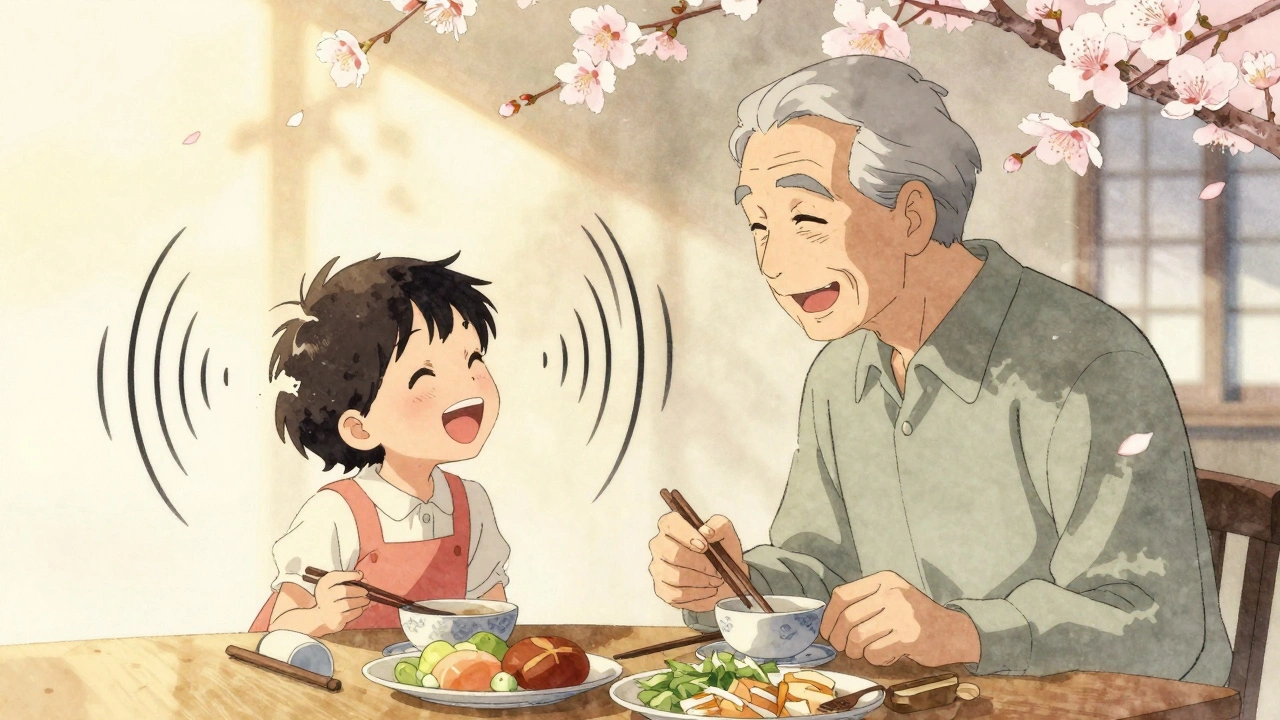
When you can’t hear your grandkid laugh over the dinner table, or you’re constantly asking people to repeat themselves in noisy restaurants, it’s not just frustration-it could be sensorineural hearing loss. This isn’t a simple earwax blockage or a temporary muffled sound. It’s damage deep inside your inner ear, often permanent, and it affects nearly 30 million adults in the U.S. alone. Unlike conductive hearing loss, where something physically blocks sound, sensorineural hearing loss (SNHL) means the tiny hair cells in your cochlea or the nerve that carries sound to your brain are broken-and they don’t heal on their own.
How Your Inner Ear Turns Sound Into Signals
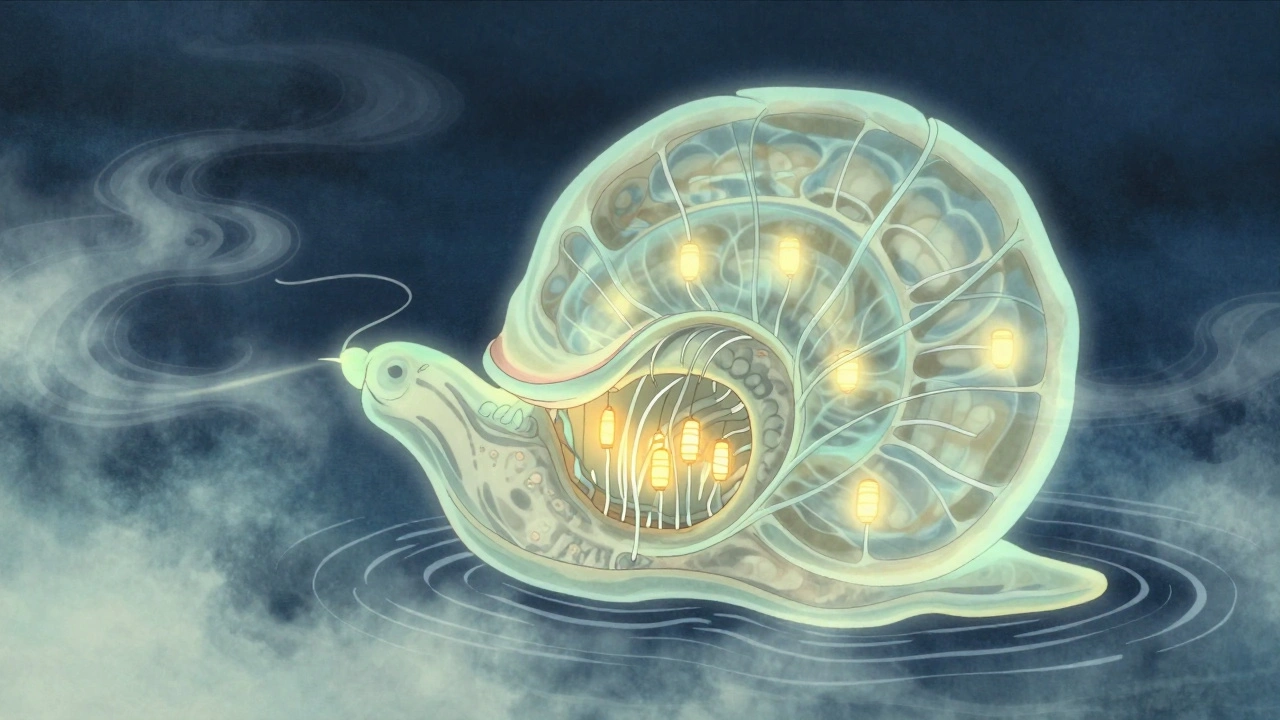
Your inner ear isn’t just a cavity; it’s a precision instrument. Inside the cochlea, shaped like a snail shell, are about 15,000 microscopic hair cells. These aren’t actual hairs-they’re sensory cells with tiny bristles called stereocilia. When sound waves enter your ear, they make fluid in the cochlea ripple. That ripple bends the stereocilia, which triggers electrical signals. Those signals travel through the auditory nerve to your brain, where they’re interpreted as speech, music, or a door slamming.There are two types of these hair cells: inner hair cells (IHCs) that send the main signal to your brain, and outer hair cells (OHCs) that amplify quiet sounds. Damage usually starts with the outer ones. That’s why high-pitched sounds-like birds chirping, children’s voices, or the word “th” in speech-go first. By the time you notice trouble with normal conversation, the damage has already spread.
What Actually Causes This Damage?
The most common cause? Age. About 25% of Americans between 65 and 74 have SNHL. By 75, it’s half of them. This is called presbycusis, and it’s not just “getting old”-it’s the slow, steady death of those hair cells over decades.Noise is the second biggest culprit. Exposure to sounds above 85 decibels-like lawnmowers, power tools, or loud concerts-for more than eight hours can start killing hair cells. A single blast from fireworks or a gunshot can do it instantly. The damage adds up. You might not notice it until you’re in your 40s or 50s, but the harm began years earlier.
Other causes include:
- Genetics-some people inherit a vulnerability to hearing loss
- Medications-certain antibiotics, chemotherapy drugs, and high-dose aspirin can be toxic to the inner ear
- Meniere’s disease-a condition involving fluid buildup and pressure changes in the inner ear
- Head trauma or skull fractures that damage cochlear structures
- Viral infections like mumps, measles, or meningitis
- Tumors on the auditory nerve, like acoustic neuromas
Unlike ear infections or wax buildup, these causes don’t reverse themselves. Once the hair cells die, they’re gone for good. No cream, no pill, no supplement brings them back.
Why Is It Called “Permanent”?
The word “permanent” scares people. But here’s the truth: in 90% of cases, it is. That’s because your body doesn’t regenerate these hair cells. Birds and fish can regrow them. Humans? Not so much. That’s why researchers at Stanford and other labs are pouring millions into stem cell therapies and gene editing experiments. But don’t hold your breath-clinical treatments are still 5 to 10 years away.The only exception? Sudden sensorineural hearing loss (SSHL). This is when hearing drops dramatically-sometimes overnight-over just a few hours or days. It’s rare, affecting 5 to 20 people per 100,000 each year. But if caught within 48 to 72 hours, steroid treatment (oral or injected) can restore hearing in 32% to 65% of cases. Delay treatment beyond two weeks, and the chance of recovery drops sharply. That’s why if you wake up with muffled hearing or ringing in one ear, you need to see an audiologist or ENT right away.
What Does It Feel Like?
People with SNHL don’t just hear less. They hear differently.- Speech sounds muffled. You can hear people talking, but you can’t make out the words. “Can you pass the salt?” sounds like “Can you pass the… blah?”
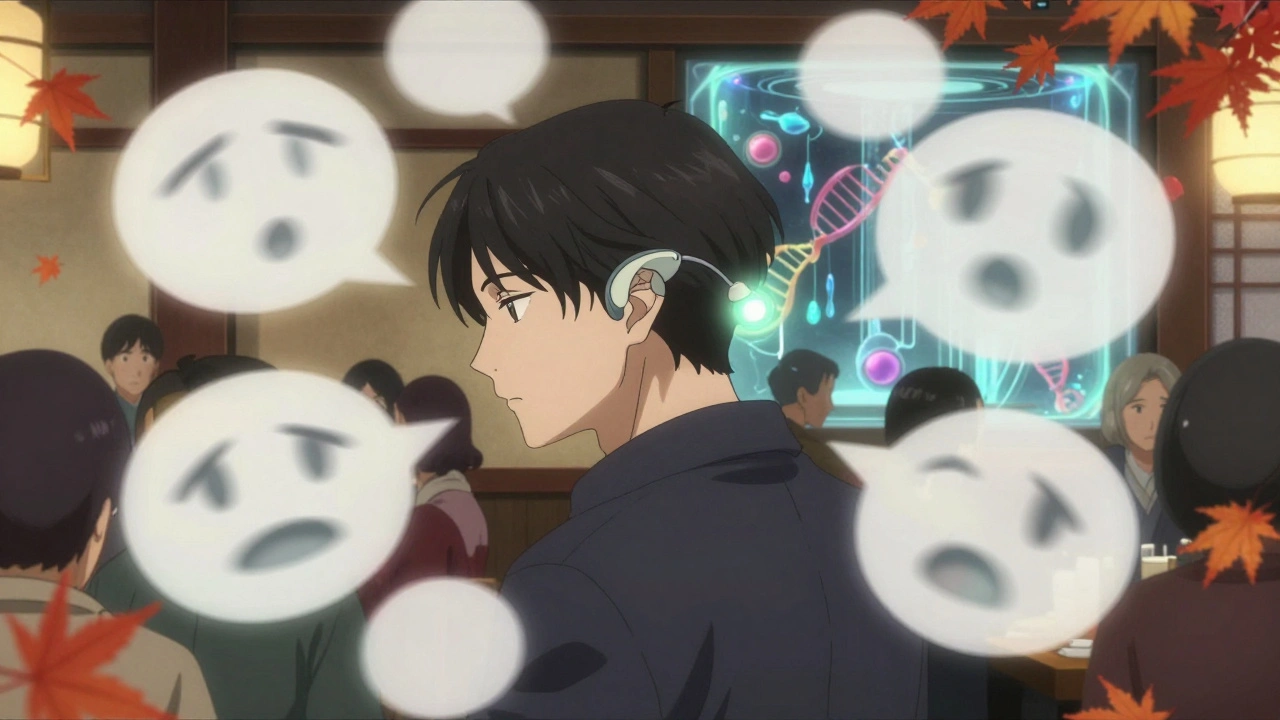
- Noise is overwhelming. In a crowded room, your brain can’t separate voices. That’s not your fault-it’s your ears. Studies show 87% of SNHL patients struggle with speech in background noise.
- Recruitment. Soft sounds are inaudible. Loud sounds are painfully loud. Someone whispering? Nothing. Someone laughing? It feels like they’re screaming.
- Tinnitus. Ringing, buzzing, hissing-80% of people with SNHL have it. It’s not dangerous, but it’s exhausting.
- Dizziness or imbalance. If the damage extends to the vestibular system, you might feel off-balance.
Many people think they’re just “not listening.” But if you’re turning up the TV, avoiding group chats, or feeling tired after conversations, it’s likely your ears, not your attention.
How Do You Know For Sure?
A simple hearing test can confirm it. Audiologists use an audiogram-a graph that shows what frequencies you can hear and at what volume. In SNHL, bone conduction and air conduction thresholds are nearly the same (no air-bone gap). That’s the key difference from conductive hearing loss, where sound can’t physically reach the inner ear.If your audiogram shows a “ski-slope” pattern-good hearing on the left, dropping sharply on the right-you’re likely dealing with age- or noise-related SNHL. If it’s flat across all frequencies, it might be genetic or due to a different cause.
What Can You Do?
There’s no cure. But there are powerful tools.Hearing Aids
They’re not magic. But modern digital hearing aids can make a huge difference. They don’t restore normal hearing-they amplify the frequencies you’ve lost. Most SNHL affects high pitches (2,000 to 8,000 Hz), so today’s devices target those ranges precisely.Brands like Widex Moment, Phonak Paradise, and Costco’s Kirkland Signature are top-rated. Users report 78% improvement in speech clarity. But here’s the catch: they only help 30% to 50% in noisy environments. And they cost $2,500 to $7,000 per pair. Insurance rarely covers them.
Many people try them, then quit because they’re disappointed. But that’s usually because they didn’t give them time. It takes 4 to 8 weeks for your brain to adapt. You’ll hear your own voice too loudly at first (occlusion effect). You might get feedback whistling. That’s fixable. Work with your audiologist. Get three to five adjustments. Don’t give up after a week.
Cochlear Implants
If you have severe-to-profound SNHL-meaning you can’t hear even loud speech without aids-a cochlear implant might be the answer. It doesn’t fix your ear. It bypasses it.A surgeon implants a small device under your skin behind the ear. An external processor picks up sound and sends electrical pulses directly to the auditory nerve. After surgery, you need 6 to 12 months of therapy to learn how to interpret these new signals.
Eighty-two percent of recipients achieve open-set speech recognition-that means understanding sentences without lip-reading. But it’s not instant. One user on a hearing forum said: “Everyday sounds felt like knives. My own footsteps were deafening.” That’s normal. Your brain needs to relearn what a door closing sounds like.
What Doesn’t Work
Don’t waste money on:- Herbal supplements claiming to “repair hearing”
- Essential oils or ear candling
- “Natural” hearing aids sold online without FDA clearance
There’s zero scientific proof these help SNHL. The only proven methods are hearing aids, cochlear implants, and (in rare cases) steroids for sudden loss.
What About the Future?
Research is moving fast. In 2023, Cochlear Limited released the Nucleus 8 processor-30% smaller, with smarter noise filters. Oticon’s Real-X uses AI to recognize environments and adjust sound automatically. Bose got FDA approval for its first prescription hearing aid app in 2019. Now, OTC hearing aids are booming.But the real hope is biological. Stanford and other labs are testing stem cell therapies to regrow hair cells in animals. Early results are promising. But as Dr. Alan Cheng says, “Clinical applications are still 5 to 10 years away.”
For now, the best defense is prevention. Wear ear protection in loud environments. Keep volume under 60% on headphones. Get your hearing checked every few years after 50. Catching SNHL early means better outcomes with hearing aids.
Where to Get Help
You’re not alone. The Hearing Loss Association of America has 300+ local chapters. ASHA offers free online hearing aid orientation. Many audiologists offer 30- to 90-day trials. You can test a device before buying.And if cost is a barrier, look into nonprofit programs, state assistance, or hearing aid financing. Some clinics offer payment plans. Don’t let price stop you from hearing your family again.
Sensorineural hearing loss isn’t a death sentence. It’s a condition you manage. With the right tools and support, you can still laugh at jokes, enjoy music, and hear your grandkids say “I love you.” The damage might be permanent-but your quality of life doesn’t have to be.
Anthony Breakspear
December 2, 2025 AT 04:06Man, this post hit different. I’ve been wearing hearing aids for five years now, and honestly? I thought I was just getting old. Turns out, my brain forgot how to filter out the noise-like my dog barking became a chainsaw, and my wife’s voice? A whisper in a hurricane. The first time I heard birds again? I cried in the grocery store. No joke. It’s not about volume-it’s about clarity. And yeah, the price sucks, but if you can afford even one decent pair, do it. Your family won’t have to yell ‘WHAT?’ every five seconds. Also, don’t sleep on the 30-day trials. I returned three before I found the right one. Patience > pride.
Eddy Kimani
December 3, 2025 AT 01:47From a neurotology standpoint, the outer hair cell (OHC) vulnerability is a direct consequence of mitochondrial oxidative stress in the stria vascularis, particularly in the basal turn of the cochlea where high-frequency tonotopy is encoded. The metabolic demand on OHCs exceeds their antioxidant capacity over time-hence the presbycusis phenotype. Noise trauma accelerates this via glutamate excitotoxicity and ROS-mediated apoptosis. Fascinating that the IHCs remain relatively spared until late-stage degeneration. Current research into Atoh1 gene therapy in murine models shows 40% regeneration potential, but human translation remains hampered by immune response and synaptic reintegration issues. Still, the Nucleus 8’s AI beamforming is a game-changer for SNHL management.
Genesis Rubi
December 4, 2025 AT 12:46Ugh. I can’t believe people still fall for this ‘hearing aids are expensive’ nonsense. You want to hear your grandkids? Then PAY FOR IT. We’re not in the 1990s anymore. There’s OTC stuff now for under $500. If you’re too lazy to save up for something that lets you hear your own family, maybe you don’t deserve to. Also, stop blaming ‘age’-it’s just laziness and bad habits. I wore earplugs at concerts in my 20s. You didn’t? Too bad. Now you get to live in silence.
Chelsea Moore
December 6, 2025 AT 12:26THIS. IS. TRAGIC. 😭 I just found out my mom has SNHL and she’s been pretending she’s ‘just tired’ for TWO YEARS. She missed her granddaughter’s first words. TWO YEARS. And now? She’s too embarrassed to get hearing aids because ‘they make you look old.’ WHAT? You look old when you can’t hear your own child say ‘I love you’! I’m taking her to an audiologist this week. No more excuses. No more ‘I’m fine.’ If you’re reading this and you’re ignoring your hearing? STOP. Right now. Call someone. Don’t wait. Don’t. Wait.
John Biesecker
December 7, 2025 AT 02:35Man… this is wild. 🤯 I used to think hearing loss was just ‘turning up the TV.’ But reading this? It’s like your brain gets stuck in a bad Zoom call-everyone’s muted, but the noise is still blasting. I’ve had tinnitus since my 20s after a concert (stupid, I know). Now I wear earplugs everywhere-even to the movies. It’s not glamorous, but I’d rather hear my dog bark than a constant ring. Also, the part about ‘recruitment’? YES. My cousin’s laugh used to be cute. Now? It’s like a foghorn. 😅
Elizabeth Farrell
December 8, 2025 AT 23:42I’ve spent the last year helping my dad adjust to his hearing aids. He’s stubborn. Thought they were ‘useless.’ But after four weeks of working with his audiologist-adjusting volume, learning how to clean them, letting his brain relearn sound-he started laughing at TV shows again. He didn’t even realize how much he’d stopped enjoying them. It’s not about fixing your ears. It’s about fixing your connection to the world. I wish I’d pushed harder sooner. Don’t wait until you’re missing birthdays, holidays, or quiet moments. Your loved ones don’t want you to shout. They just want you to be there.
John Morrow
December 10, 2025 AT 08:31Let’s be brutally honest: the entire hearing aid industry is a profit-driven charade. Companies exploit the emotional vulnerability of aging populations to sell $6,000 devices that, in real-world noise, still fail 70% of the time. The ‘improvement’ metrics are cherry-picked from lab conditions. Meanwhile, cochlear implants are marketed as ‘miracles’ while ignoring the psychological toll of relearning basic auditory input-like the fact that your own voice sounds like you’re speaking through a tin can. And don’t get me started on the OTC ‘hearing aids’ that are just amplified earbuds. The science is real, but the market is a scam. If you’re going to spend that kind of money, demand peer-reviewed data-not testimonials.
william tao
December 11, 2025 AT 06:23While the clinical presentation of sensorineural hearing loss is well-documented, the author's conflation of anecdotal user experiences with evidence-based outcomes undermines the scientific rigor of this exposition. The assertion that 'hearing aids improve speech clarity by 78%' lacks citation from peer-reviewed literature, and the reference to 'Stanford stem cell therapies' is presented with undue optimism, given the absence of Phase III trials. Furthermore, the dismissal of alternative therapies as 'quackery' without acknowledging ongoing research into antioxidants (e.g., N-acetylcysteine) and neurotrophin modulation is methodologically unsound. A more balanced discourse would be warranted.