
Verbal Prescriptions: Best Practices for Clarity and Safety in Healthcare
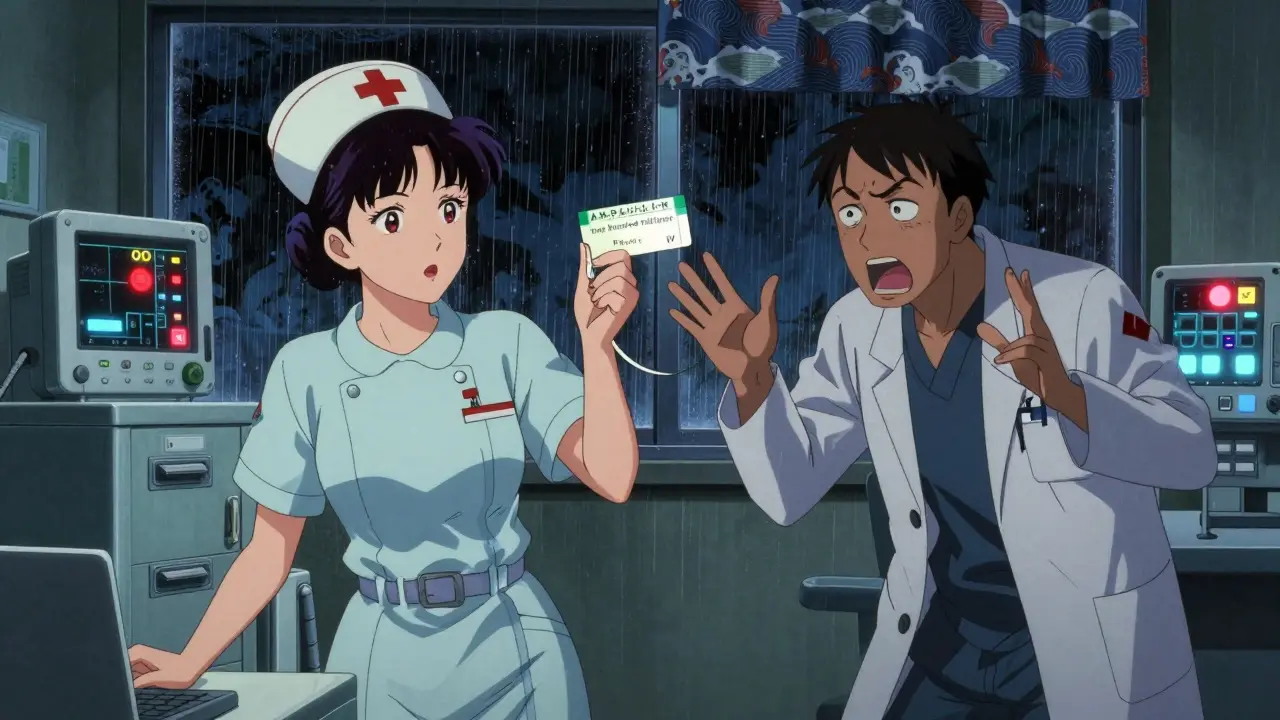
When a doctor says verbal prescriptions out loud over the phone or in a busy ER, lives hang in the balance. One misheard word - Hydralazine instead of Hydroxyzine - can turn a life-saving dose into a fatal mistake. Despite the rise of electronic systems, verbal orders are still everywhere: in operating rooms, ambulances, nursing homes, and after-hours clinics. They’re not going away. But they don’t have to be dangerous.
Why Verbal Prescriptions Still Exist
You might think we’d have eliminated verbal prescriptions by now. After all, electronic prescribing cuts errors by up to 95%. But real life doesn’t wait for a login screen. Surgeons in the middle of an operation can’t pause to type. Paramedics racing to the hospital need to get orders to the ER team fast. A nurse holding a crying infant with sepsis needs antibiotics now, not in 10 minutes when the computer system syncs. That’s why verbal prescriptions still make up 10-15% of all medication orders in hospitals - and up to 25% in emergency and outpatient settings. The problem isn’t that they’re used. It’s that they’re often used carelessly.The Hidden Danger: Sound-Alike, Look-Alike Drugs
One of the biggest killers in verbal orders isn’t bad handwriting - it’s bad hearing. Drug names that sound alike cause nearly a third of all errors. Celebrex and Celexa. Zyprexa and Zyrtec. Hydralazine and Hydroxyzine. These aren’t theoretical risks. They’re documented causes of death. In 2006, a premature baby in Pennsylvania died after a nurse heard “ampicillin 200 mg” and “gentamicin 5 mg” as one jumbled order - and gave both at the wrong doses. The prescriber didn’t spell anything out. The nurse didn’t repeat it back. The system failed on every level. The fix is simple: always spell out drug names phonetically. Say “A-M-P-I-C-I-L-L-I-N,” not just “ampicillin.” Say “H-Y-D-R-A-L-A-Z-I-N-E,” not “hydra.” This isn’t extra work - it’s the difference between life and death.The Read-Back Rule: Your Lifeline
The single most effective safety step in verbal prescriptions is the read-back. The person receiving the order must repeat it back word-for-word to the prescriber before acting. Not “I think you said amoxicillin 500 mg.” Not “Was it twice a day?” Full repetition. Exact phrasing. Units included. Route specified. The Joint Commission made this mandatory in 2006. Studies show it cuts errors by up to 50%. Yet, a 2020 survey found 63% of nurses said some prescribers still resist read-backs. Why? Time pressure. Ego. Habit. But here’s the truth: if you skip read-back, you’re not saving time - you’re gambling. Use a script. Say: “Dr. Lee, I’m repeating your order. You want ampicillin, spelled A-M-P-I-C-I-L-L-I-N, two hundred milligrams IV, every six hours, for suspected sepsis. Is that correct?” If they say yes - document it immediately. If they say no - correct it right then.What You Must Never Say Verbally
Some medications are too dangerous to order verbally unless it’s a true emergency. These are called “high-alert medications.” They include:- Insulin
- Heparin
- Opioids like morphine or fentanyl
- Chemotherapy drugs
- IV potassium chloride

Numbers Matter - Say Them Twice
A dose of “15 mg” can become “150 mg” if someone mishears. To prevent this, say numbers in two ways. Say “fifteen milligrams” and then “one-five milligrams.” Say “five hundred micrograms” and then “five-zero-zero micrograms.” This isn’t just protocol - it’s cognitive insurance. Your brain processes spoken numbers differently when they’re repeated in different formats. It reduces the chance your mind auto-corrects “1.5” to “15.”Document Immediately - Or It Never Happened
The only real record of a verbal order is in the memory of the people who heard it. That’s why documentation must happen before you give the drug. Not after. Not when you have time. Now. Your note must include:- Patient’s full name and date of birth
- Medication name spelled out phonetically
- Dose with units (e.g., “200 milligrams,” not “200 mg”)
- Route (IV, IM, PO)
- Frequency (e.g., “every eight hours”)
- Indication (why you’re giving it - e.g., “for fever”)
- Name and title of the prescriber
- Time and date the order was received
- Time and date it was authenticated by the prescriber
Who Can Take Verbal Orders?
Not everyone can legally receive and transcribe verbal prescriptions. In most states, only licensed clinicians - nurses, pharmacists, physician assistants - can do it. Administrative assistants can enter orders into the system, but only if they’re acting under direct supervision and the prescriber verifies the entry immediately. A 2022 CMS update clarified this: authorized assistants can input orders, but the prescriber must confirm them in real time. No “I’ll sign it later.” No “I trust you.” If you’re not licensed to prescribe, you’re not licensed to interpret a verbal order.
How to Train Your Team
Most errors happen because people haven’t been trained properly. You can’t assume someone knows how to spell “vancomycin” or when to say “one-five” instead of “fifteen.” Run short, monthly drills. Role-play a high-risk scenario: “You’re on the phone with a surgeon. He orders epinephrine 1 mg IV for cardiac arrest. How do you respond?” Use real case studies. Show the NICU error from 2006. Show the nurse who caught a 10-fold hydralazine error because she asked for phonetic spelling. Require 3-5 supervised verbal order transactions before someone is cleared to take them alone. ECRI’s 2021 guidelines say this is the minimum for competency.What to Do When Something Goes Wrong
Even with perfect protocols, mistakes happen. If you realize you gave the wrong drug because of a misheard order:- Stop. Don’t give another dose.
- Notify the prescriber immediately.
- Monitor the patient for signs of harm.
- Report it through your facility’s safety system - even if no harm occurred.
- Document everything: what was said, what was heard, what was done, what was corrected.
The Future: Less Verbal, But Never None
Voice recognition tech and AI-assisted EHRs are reducing verbal orders. KLAS Research predicts they’ll drop to 5-8% by 2025. But Dr. Robert Wachter, a leading patient safety expert, says something important: “Some situations will always need a voice.” A trauma patient bleeding out. A child seizing in the hallway. A dialysis patient crashing during a power outage. No computer can replace a human voice in those moments. So the goal isn’t to eliminate verbal prescriptions. It’s to make them safe. Every time. Every order. Every word.Final Checklist: Verbal Prescription Safety
Before you give any medication based on a verbal order, ask yourself:- Did I spell out the drug name phonetically?
- Did I say the dose with units and repeat it in two formats?
- Did I avoid all abbreviations?
- Did I confirm the indication?
- Did I read back the entire order exactly?
- Did I document it before giving the drug?
- Did I verify the prescriber’s identity?
- Did I check if this is a high-alert drug? If yes, was it an emergency?
Are verbal prescriptions still legal?
Yes. Verbal prescriptions are still legal under CMS and The Joint Commission regulations. But they must follow strict safety rules: read-back verification, no abbreviations, immediate documentation, and authentication within 48 hours. Some states and hospitals ban them for high-risk drugs like insulin or chemotherapy unless it’s an emergency.
Why can’t we just use electronic prescriptions all the time?
Because not every situation allows time for typing. Surgeons in the OR, paramedics in ambulances, and ER teams during mass casualties need instant orders. Electronic systems are faster and safer - but they’re not always possible. Verbal orders fill the gaps where technology can’t reach fast enough.
What’s the biggest mistake people make with verbal orders?
Skipping the read-back. Many providers think they’re being efficient by skipping repetition. But errors happen most often when someone assumes they heard correctly. Read-back isn’t bureaucracy - it’s a safety net. It’s the only way to catch a misheard drug name or wrong dose before it’s given.
Can a nurse take a verbal order from a non-physician provider?
Yes - if that provider is licensed to prescribe in your state. Physician assistants, nurse practitioners, and certified nurse-midwives can legally give verbal orders. But you must verify their credentials and title. Never assume. Always confirm: “Dr. Lee, you’re a nurse practitioner licensed in Washington, correct?”
What should I do if a prescriber refuses to spell out a drug name?
Say: “I need to spell that out to ensure patient safety - it’s hospital policy.” If they push back, say: “I’m sorry, but I can’t proceed without confirming the exact spelling. I’ll need you to repeat it phonetically.” If they still refuse, escalate to a supervisor. No order is worth a patient’s life.
Is it okay to write down a verbal order on a sticky note?
No. Sticky notes, napkins, and handwritten scraps are not acceptable documentation. They can be lost, misread, or destroyed. All verbal orders must be entered directly into the electronic health record immediately. If your system is down, use a standardized paper form - not random paper.
How often should staff be retrained on verbal prescription safety?
At least every six months. Skills fade. New staff join. Protocols change. Monthly 10-minute safety huddles with real case reviews are more effective than annual one-hour lectures. Keep it practical. Keep it real. Keep it ongoing.
Usha Sundar
December 24, 2025 AT 11:49Read-back saves lives. Period.
claire davies
December 25, 2025 AT 05:19I’ve seen this play out in the UK NHS - one nurse saved a toddler from a 10x insulin overdose just by saying, ‘You said one-five units? Not one point five?’ That pause? That’s the difference between a birthday party and a funeral. We need to stop treating safety steps like paperwork and start treating them like oxygen.
Austin LeBlanc
December 25, 2025 AT 19:06Oh please, let’s not pretend this is a new problem. I’ve worked in three hospitals and every single one had the same guy - the ‘I’m too busy for read-backs’ attending who rolls his eyes and says ‘I’m a doctor, I know what I’m doing.’ Spoiler: he’s the reason we have mandatory training. And yes, he still does it.
Chris Buchanan
December 25, 2025 AT 23:59Y’all are acting like this is rocket science. It’s not. Spell the drug. Say the dose twice. Read it back. Document it before you push the plunger. If you can’t do that, maybe don’t touch meds. Simple. No drama. No excuses. Just do the damn thing.
Jeffrey Frye
December 27, 2025 AT 22:50ok but like… have y’all ever tried spelling out vancomycin in a 3am code blue? v-a-n-c-o-m-y-c-i-n? sounds like a dragon sneezing. no one’s gonna catch that. and who’s gonna remember to say ‘one-five’ instead of ‘fifteen’ when the monitor’s beeping and the family’s screaming? this is all very nice on paper but real life ain’t a checklist.
Rachel Cericola
December 28, 2025 AT 04:49Jeffrey, you’re right - real life is chaos. But that’s exactly why we need the checklist even more. When everything’s falling apart, your brain defaults to patterns. If you’ve trained yourself to say ‘A-M-P-I-C-I-L-L-I-N’ every single time, even under stress, it becomes muscle memory. It’s not about perfection - it’s about building a habit so strong that when the world explodes, your hands still do the right thing. I’ve seen nurses who’ve been doing this for 20 years still pause and spell it out - and yes, it still feels awkward. But it’s saved lives. Including mine, once, when a resident said ‘heparin 1000’ and I asked ‘is that units or ml?’ He said ‘units.’ I said ‘spell it.’ He didn’t. I refused to give it. Turned out he meant 100 units. He was exhausted. We didn’t kill the patient. We didn’t even get yelled at. We just did our job.
EMMANUEL EMEKAOGBOR
December 29, 2025 AT 11:39In Nigeria, we don’t always have electronic systems. But we have something better - community. Nurses, pharmacists, and even cleaners who know the ward well will say, ‘Wait, that sounds wrong.’ We don’t have protocols on paper, but we have protocols in trust. Maybe the answer isn’t just more rules - it’s more listening.
Payson Mattes
December 30, 2025 AT 11:35Let me tell you what they don’t want you to know - the real reason verbal orders still exist is because Big Pharma doesn’t want you using the EHR. Why? Because if you type in the drug, the system flags interactions, dosages, allergies - and they lose billions. So they quietly fund ‘efficiency’ programs that push doctors to talk faster. It’s not negligence - it’s profit-driven sabotage. And the read-back? That’s your only shield. Don’t let them take it from you.
Rosemary O'Shea
December 30, 2025 AT 16:31Oh darling, how quaint. You speak of ‘read-backs’ as if they’re some noble ritual. In Paris, they use a three-tone verification protocol - voice, echo, and written confirmation with timestamped audio. Here? We’re still arguing over whether ‘QID’ is acceptable. Honestly, it’s like watching a medieval scribe try to use a typewriter. The gap between best practice and reality isn’t a chasm - it’s a canyon lined with corpses.
Raja P
January 1, 2026 AT 12:13Appreciate the detailed breakdown. I’ve been a med tech for 12 years and I’ve seen both sides - the ones who cut corners and the ones who treat every order like it’s their kid’s life. I’m in the latter group. I always spell it out. Always read back. Always document before I move. It’s not about being a hero. It’s about being someone your teammate can rely on. That’s the real culture we need to build.
Lindsey Kidd
January 1, 2026 AT 22:48Just wanted to say - I had a near-miss last week. Ordered ‘morphine 10 mg IV’ - I heard ‘100 mg’. Didn’t say anything. Almost gave it. Then I paused. Said ‘can you spell morphine?’ He did. Then I said ‘repeat the dose.’ He said ‘ten’. I said ‘ten what?’ He said ‘milligrams’. I said ‘thanks, I got it.’ We didn’t say a word about it after. But I wrote it down. And I’m telling you now - thank you for this post. 🙏
Bret Freeman
January 2, 2026 AT 06:40Let’s be real - this isn’t about safety. It’s about liability. Hospitals don’t care if you spell out drugs. They care if you sign the form. If you get sued, they’ll say ‘you didn’t follow protocol’ - even if the doctor refused to say it twice. This system is rigged. You’re not protecting patients. You’re protecting the hospital’s insurance policy. And if you’re lucky, you’ll survive the paperwork.
niharika hardikar
January 3, 2026 AT 10:35Per CMS 42 CFR 482.24(b)(2) and Joint Commission Standard IC.03.01.01, verbal orders must be authenticated by the prescriber within 48 hours. Failure to comply constitutes a Level 1 deficiency under the Conditions of Participation. Furthermore, the use of non-standard abbreviations violates NABP Model Drug Order Standard 3.2.2, which mandates full nomenclature for all controlled substances. Your anecdotal ‘read-back’ is insufficient without documented audit trails and dual verification for high-alert agents as per ISMP guidelines.
Joseph Manuel
January 3, 2026 AT 11:17The author’s assertion that verbal prescriptions are ‘not going away’ is empirically inaccurate. According to the 2023 ONC National Health IT Survey, 92% of acute care facilities now mandate e-prescribing as the default, with verbal orders reduced to 3.8% of total orders. The cited 10-15% figure is outdated and conflates rural, understaffed, and non-accredited settings with mainstream practice. This article risks perpetuating a false narrative that undermines investment in digital infrastructure.