
When Expired Medications Become Toxic: Risks, Safety Rules & Disposal
Check your medicine cabinet right now. How many bottles have dates that already passed? You might be tempted to pop a pill or two, thinking, "It's only a few months old." But here is the hard truth: some expired drugs don't just stop working-they can actually turn into poisons.
We often hear conflicting advice. One study says most drugs are fine for years; another warns of deadly toxins. The reality sits somewhere in the middle, and getting it wrong can cost you more than just a failed treatment. It could cost your health. Let’s cut through the noise and look at exactly which medications become dangerous, why they do it, and how to handle them safely.
The Myth vs. The Reality of Expiration Dates
First, let’s clear up a big misconception. An expiration date isn’t necessarily the day a drug turns into poison. Legally, since 1979, manufacturers must guarantee full potency and safety until that date under specific storage conditions. That’s it.
For decades, the U.S. Department of Defense ran the Shelf Life Extension Program (SLEP). They tested over 100 different medications stored properly. Guess what? About 90% of those drugs retained their full strength for five to fifteen years past the printed date. So, is an expired ibuprofen tablet going to kill you? Almost certainly not.
However, "safe" doesn't mean "effective." And for a small but critical group of medications, "expired" means "toxic." The difference lies in chemistry. Some molecules break down into harmless dust. Others break down into harmful compounds. Knowing which bucket your medicine falls into is the key to staying safe.
The Rare But Real Cases of Toxicity
You’ve probably heard that expired meds rarely cause poisoning. You’d be right. In fact, there are very few documented cases of true toxicity from expired drugs in modern history. But when it happens, it’s serious.
The most famous case involves Tetracycline, an antibiotic used for acne and infections. In 1963, three patients developed Fanconi syndrome-a kidney condition-after taking expired tetracycline. The drug degraded into toxic byproducts called epitetracycline and anhydro-4-epitetracycline, which damaged their kidneys. While packaging has improved since then, this remains the textbook example of why we shouldn't ignore expiration dates on certain antibiotics.
Another rare instance occurred in 2001 with Clindamycin, where degradation led to acute kidney injury. These aren't common occurrences, but they prove that chemical breakdown can create new, dangerous substances inside the bottle.
The Silent Killer: Loss of Potency
If toxicity is the loud bang, loss of potency is the silent killer. This is the far more common risk. When a drug loses strength, it fails to treat your condition. If you’re treating a minor headache, maybe nothing bad happens. But if you’re relying on that drug to save your life, failure is catastrophic.
- Nitroglycerin: Used for chest pain (angina), this drug decomposes quickly. Research shows it can lose 50% of its effectiveness within three months of expiration. If you take an expired nitroglycerin tablet during a heart attack warning sign, it might not work, leading to a fatal outcome.
- Epinephrine (EpiPen): For severe allergic reactions, every second counts. A 2017 study found EpiPens lost 85% of their potency after one year past expiration. Relying on a weak auto-injector during anaphylaxis is a gamble you cannot afford.
- Insulin: People with diabetes need precise dosing. Expired insulin forms clumps (dimers) that don’t absorb well into the blood. Studies show a 20-30% drop in bioavailability annually after expiration. This leads to uncontrolled blood sugar spikes, which can cause long-term organ damage or diabetic ketoacidosis.
Liquids and Eye Drops: A Breeding Ground for Bacteria
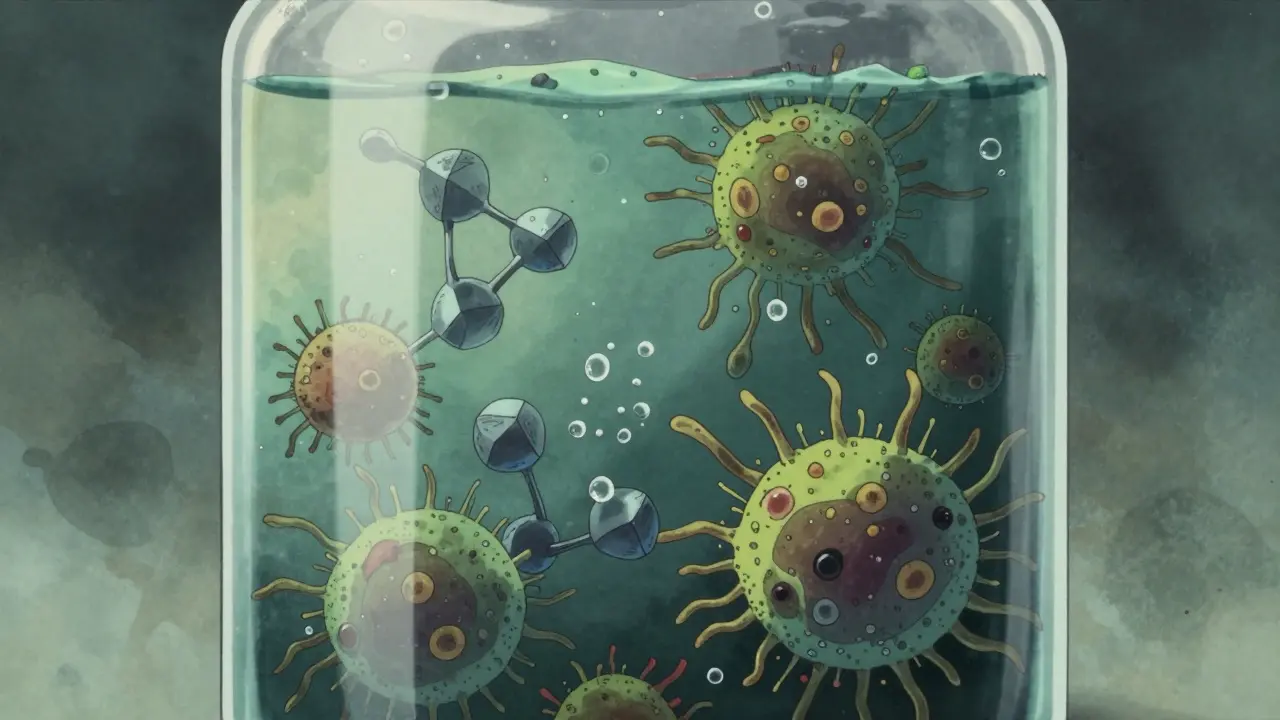
Solid pills are generally stable. Liquids are not. Once you open a bottle of liquid antibiotic, like amoxicillin, the clock starts ticking-not just on potency, but on contamination.
Liquid formulations undergo hydrolysis, breaking down chemically. Worse, preservatives fail over time. After 14 days of being opened, the risk of bacterial growth in liquid antibiotics increases by 400%. Drinking a bottle of expired liquid medicine isn't just ineffective; you might be introducing bacteria directly into your system.
Eye drops are even more sensitive. Most eye drops contain preservatives to keep them sterile once opened. After 28 days, these preservatives often fail. Using expired eye drops can lead to serious eye infections because the solution is no longer sterile.
Storage Matters More Than You Think
Where you store your medicine changes everything. The FDA defines a "cool, dry place" as 15-25°C (59-77°F) with 35-45% humidity. Does your bathroom meet that criteria? Probably not.
Bathrooms are hot and humid. Showers raise the temperature and moisture levels significantly. EPA measurements show that only 22% of U.S. home bathrooms meet proper storage conditions. Storing nitroglycerin in a plastic container in a humid bathroom will degrade it much faster than storing it in its original glass amber bottle in a cool closet.
Heat accelerates chemical reactions. Humidity causes tablets to crumble and liquids to spoil. If you want your medications to last as long as possible-and stay safe-keep them in a dark, dry cupboard away from sinks and windows.
| Medication Type | Primary Risk | Safety Verdict |
|---|---|---|
| Nitroglycerin | Potency loss (up to 50% in 3 months) | Dangerous - Do not use |
| Epinephrine (EpiPen) | Potency loss (85% in 1 year) | Dangerous - Replace immediately |
| Insulin | Inconsistent absorption/clumping | Risky - Avoid for tight control |
| Liquid Antibiotics | Bacterial growth/Chemical breakdown | Toxic Risk - Discard after opening |
| Eye Drops | Infection (Preservative failure) | Risky - Discard after 28 days |
| Tetracycline | Kidney toxicity (Rare) | Toxic - Never use expired |
| Aspirin/Ibuprofen | Reduced efficacy/Stomach irritation | Low Risk - Generally safe but weaker |
| Antidepressants | Minimal potency loss | Low Risk - Stable for years |
How to Dispose of Expired Meds Safely
So, you’ve decided to toss the old stuff. Great. But don’t just throw them in the trash or flush them down the toilet. Flushing contaminates water supplies. Throwing them in the bin risks accidental ingestion by kids or pets.
The best option is a Drug Take-Back program. The DEA hosts National Prescription Drug Take-Back Days twice a year, collecting millions of pounds of unused meds. Many local pharmacies and police stations also have permanent drop-off boxes.
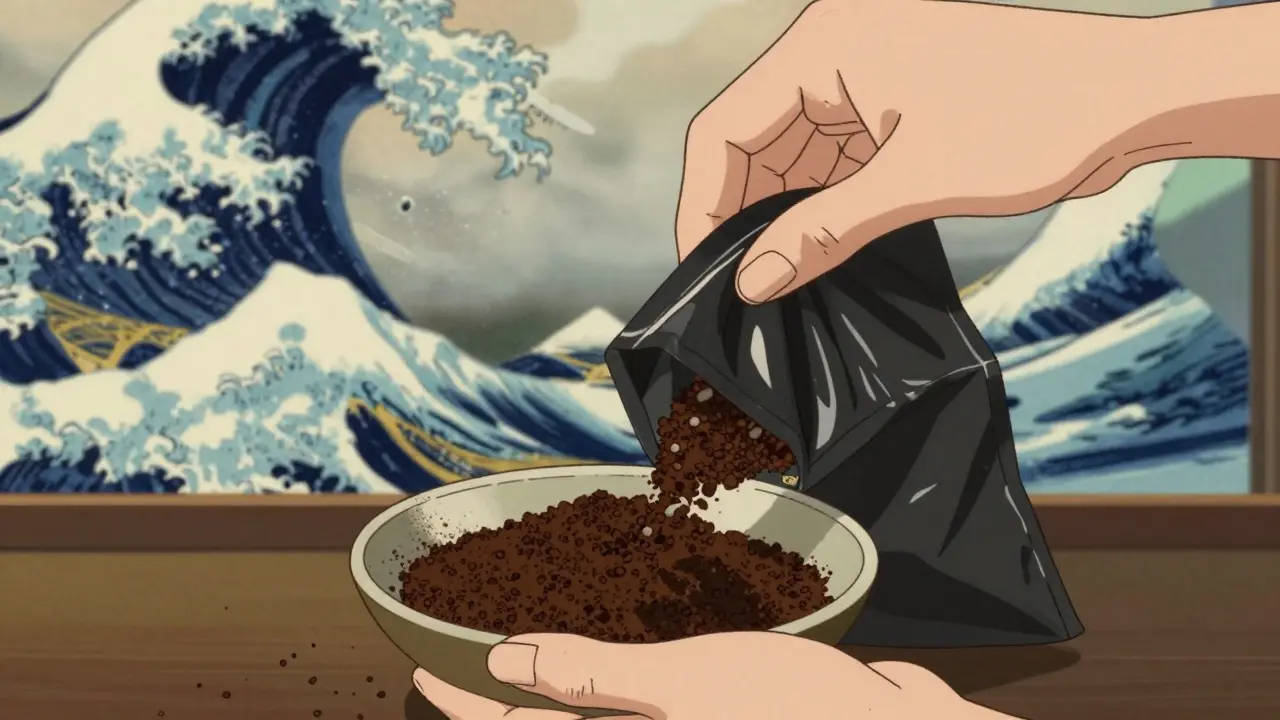
If you can’t find a take-back site, the FDA suggests mixing the medicines (do not crush tablets) with an unappealing substance like dirt, cat litter, or used coffee grounds. Put this mixture in a sealed plastic bag and throw it in your household trash. Scratch out any personal information on the prescription label before discarding the bottle.
Bottom Line: When to Keep and When to Toss
Here is your simple rule of thumb. If it’s a solid pill for a non-life-threatening condition (like daily vitamins or occasional allergy meds), a few months past the date is likely fine, provided it looks normal. If it’s a liquid, an eye drop, or a life-saving emergency drug (insulin, nitroglycerin, epinephrine), respect the date. The risk of failure or toxicity is too high.
Don’t rely on the "smell test." Chemical changes often happen without odor. Check the date. Store it correctly. When in doubt, ask your pharmacist. They are your best resource for navigating the complex world of drug stability.
Can expired medication make you sick?
In most cases, no. Expired solid medications usually just lose strength. However, specific drugs like expired tetracycline can break down into toxic compounds that harm the kidneys. Liquid antibiotics can also grow bacteria, causing infection rather than curing it.
Is it safe to take expired Tylenol or Ibuprofen?
Generally, yes. These solid pain relievers are stable for years. The main risk is that they might not work as well as fresh ones. Aspirin can degrade into acetic acid, which might irritate your stomach, but it is rarely toxic.
Why are liquid medications more dangerous when expired?
Liquids are prone to hydrolysis (chemical breakdown) and bacterial growth. Preservatives in eye drops and liquid antibiotics fail over time, turning the medicine into a breeding ground for germs or creating allergenic compounds.
Should I flush expired medications down the toilet?
No, unless the package specifically instructs you to do so (usually for highly addictive opioids). Flushing pollutes water systems. Instead, use a drug take-back box or mix the meds with coffee grounds/cat litter and seal them in a bag for the trash.
Does storing medicine in the bathroom ruin it?
Yes, often. Bathrooms are hot and humid due to showers. This environment accelerates chemical degradation. Most medications should be stored in a cool, dry place like a bedroom closet, away from direct sunlight and moisture.