
Why Brand Companies Launch Authorized Generics: Strategy Explained
When a brand-name drug’s patent runs out, most people assume the company loses everything. That’s not true. Many big pharmaceutical companies don’t just sit back and watch their sales vanish. Instead, they launch something called an authorized generic - a version of their own drug sold under a generic label, at a lower price, but with the exact same ingredients. It sounds strange. Why would a company undercut itself? The answer isn’t about charity. It’s about survival.
What Exactly Is an Authorized Generic?
An authorized generic is not a copy. It’s the real thing. Same active ingredient. Same inactive ingredients. Same pill shape, same manufacturer, same factory. The only difference? No brand name on the bottle. It’s the same drug your doctor prescribed, just sold without the marketing, without the fancy packaging, and without the premium price. Unlike regular generics, which go through a separate FDA approval process called an ANDA, authorized generics are made under the original brand’s New Drug Application (NDA). That means no extra testing. No delays. The brand company just says to the FDA: “We’re selling this exact drug, but under a different label.” Done. It can hit the market in weeks, not months. You might have taken one without knowing. Celebrex’s authorized generic is sold as celecoxib. Concerta’s is methylphenidate ER. Colcrys? Its authorized version is colchicine. All made by the same companies that made the brand versions.Why Do Brands Do This? It’s Not About Helping Patients
At first glance, this looks like a win for consumers. Lower prices. Same quality. But the real reason brand companies launch authorized generics is to protect their bottom line. When a patent expires, generic competitors flood the market. Prices drop fast - sometimes 80% to 90% in the first year. If you’re a brand company, that’s a disaster. But here’s the twist: if you’re the brand company, you can launch your own generic. And now you’re not just a victim of competition. You’re the competition. This is especially powerful during the 180-day exclusivity period granted to the first generic company under the Hatch-Waxman Act. That’s a legal loophole that lets one generic manufacturer be the only one on the market for six months. They can charge high prices because no one else can compete. That’s a gold mine. But if the brand company launches an authorized generic during that window? Boom. Suddenly, there are two versions of the same drug on the shelf. The first generic can’t charge monopoly prices anymore. Prices drop faster. And the brand company captures a slice of that market - maybe 15% to 20% - instead of losing everything. The Federal Trade Commission found this in 2011: when authorized generics entered during the 180-day window, prices were significantly lower than in markets without them. Consumers won. The first generic lost its windfall. And the brand company? They kept revenue they otherwise would have lost.It’s a Two-Track Market - and That’s the Point
Brand companies aren’t trying to kill their own brand. They’re splitting the market. On one side: the original brand. Still sold at full price. Still marketed. Still preferred by patients who trust the name, or by insurers who have deals with the manufacturer. On the other side: the authorized generic. Same drug. Same quality. Lower price. Sold to price-sensitive buyers - Medicare Part D patients, Medicaid, cash-paying customers, mail-order pharmacies. This is called price discrimination. It’s legal. It’s common. And it works. Instead of losing 100% of the market to generics, the brand keeps 15% to 30%. For a drug that made $1 billion a year, that’s $150 million to $300 million saved. A 2005 Roper survey found over 80% of Americans wanted the option of authorized generics. Why? Because they knew it was the same drug. No guesswork. No worry about different fillers or coatings that might affect how the medicine works - especially for drugs with narrow therapeutic windows like warfarin or thyroid meds.
It’s Not Just Defensive Anymore - It’s Offensive
In the past, brand companies waited until generics showed up. Then they responded. Between 2010 and 2019, 75% of authorized generics launched after generic competition started. But that’s changing. From 2020 to 2023, companies started launching authorized generics earlier - sometimes before any generic even filed for approval. Why? To scare off potential competitors. If you’re a generic manufacturer thinking about investing millions to challenge a patent, and then you find out the brand company already has an authorized generic ready to drop on day one? You think twice. The risk-reward ratio shifts. The profit window shrinks. The incentive to enter the market fades. Some companies are even using distribution tricks. They sell the authorized generic only through mail-order pharmacies or specific retail chains. That way, it doesn’t sit right next to the brand on the same shelf. Patients don’t see the price difference. The brand keeps its premium image. The generic still gets sold. Everyone gets what they need - except the patient who’s trying to compare prices.Who Makes These Authorized Generics?
You’d think big pharma would outsource this. But many don’t. Pfizer owns Greenstone Pharmaceuticals - a whole subsidiary built just to make authorized generics. Amneal (which bought Impax) does the same. These aren’t side projects. They’re dedicated teams with manufacturing lines, sales reps, and distribution deals. Why? Because the margins are still good. Even at generic prices, you’re selling a drug you already know how to make. You’ve got the equipment. The staff. The supply chain. The cost to produce it is low. And you’re capturing market share you’d otherwise lose. It’s not about maximizing profit per pill. It’s about minimizing total loss.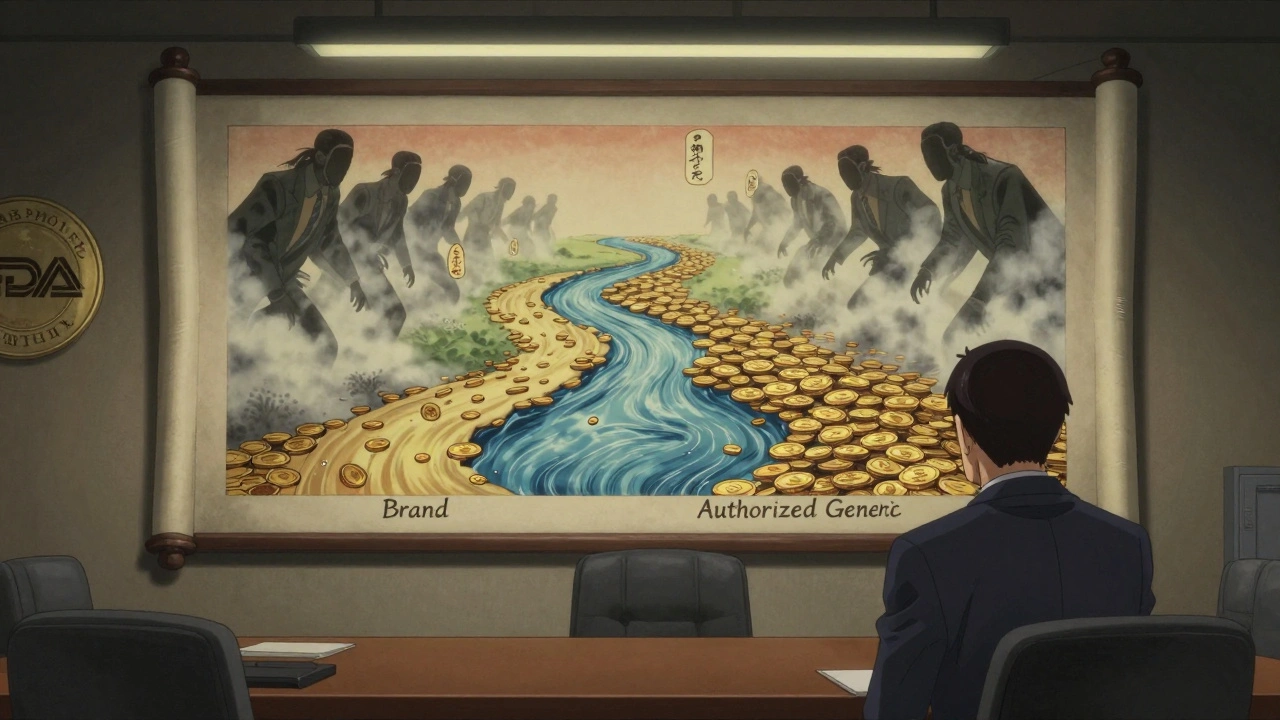
Shayne Smith
December 7, 2025 AT 01:15So basically big pharma is playing chess while everyone else is playing checkers? Wild. I had no idea they could just slap a generic label on their own drug and keep raking in cash. Mind blown.
Nigel ntini
December 8, 2025 AT 18:08This is actually one of the most rational business moves in pharma. Instead of letting generics destroy margins, they split the market intelligently. It’s not perfect, but it keeps drugs affordable without killing innovation.
Myles White
December 10, 2025 AT 16:08I’ve been on a ton of these authorized generics - celecoxib, methylphenidate ER, you name it. I didn’t even realize they were the same pills as the brand until I read this. The packaging is different, the price is half, and I swear I can’t tell any difference in how they work. My pharmacist even says they’re identical down to the dye. It’s insane that so many people pay full price when they don’t have to. Why does this not get more attention? This should be common knowledge.
Imagine if every drug had this option. No more guessing if the generic is ‘good enough.’ You get the exact same thing, just without the marketing hype. I wish my insurance pushed these harder. They’re literally the same drug. No risk. No trade-off. Just savings.
And the part about how brands are launching them BEFORE generics even file? That’s next-level strategy. It’s like setting a trap. You spend millions to develop a generic, and then boom - the brand already has one on the shelf. Who’s gonna risk it? The whole system feels rigged, but in a weirdly efficient way. The FTC’s data proves patients win, but it still feels icky. Like, why can’t we just fix drug pricing instead of letting companies game the system?
Also, the mail-order-only trick? That’s sneaky. Patients never see the price difference. The brand keeps its premium image while quietly siphoning off the cheap market. It’s like they’re two different products in the same bottle. Manipulative? Maybe. Effective? Absolutely.
And biologics? Oh man, we’re about to see this explode. Humira’s biosimilars are coming, and if AbbVie drops their own version on day one? Game over for every other company trying to enter. They’ve got the manufacturing, the supply chain, the regulatory shortcuts. No one else can compete on speed. This isn’t just capitalism - it’s corporate warfare.
But honestly? I’m glad patients get cheaper meds. Even if the system’s dirty, the outcome is good. I just wish we had more transparency. No one should have to dig through 20-page reports to find out they’ve been overpaying for years.
Ashish Vazirani
December 12, 2025 AT 02:56So... America lets pharma giants control EVERYTHING? Even the generics? This is why India is the pharmacy of the world - we don’t play these dirty games. Here, they don’t just undercut themselves - they OWN the game. This is corporate colonialism disguised as capitalism. And you call this innovation? No. This is theft. With a patent.
Meanwhile, Indian generics save millions of lives daily - cheap, safe, accessible. But here? You pay double for the same pill because some CEO wants to keep his bonus. I’m ashamed. And I’m not even American.
Mansi Bansal
December 12, 2025 AT 21:11One must acknowledge, with a degree of intellectual rigor, that the phenomenon of authorized generics constitutes a sophisticated mechanism of market segmentation predicated upon the strategic preservation of monopolistic rents under the guise of consumer welfare. The Federal Trade Commission’s 2011 report, while ostensibly affirming consumer gains, fails to account for the systemic erosion of generic market entry incentives, thereby inducing a latent oligopolistic equilibrium wherein innovation is disincentivized under the pretext of price competition. This is not free-market dynamics - it is regulatory capture masquerading as economic efficiency.
Arjun Deva
December 14, 2025 AT 16:05Wait… so the FDA is in on this? This isn’t just corporate greed - it’s a conspiracy. They let the same company make the brand AND the generic? That’s not regulation - that’s collusion. Who’s really running this? Big Pharma owns the FDA, the Congress, the media… and now they own the generic market too? No wonder drug prices keep rising. This is how they silence competition - by becoming the competition. They’re not just playing the game - they rewrote the rules. And you’re telling me this is legal? It’s not capitalism. It’s fascism with a prescription pad.
Saketh Sai Rachapudi
December 15, 2025 AT 18:24Indian generics are way better than these fake American ones. Why are we letting this happen? We make better medicine for cheaper. This is just another way the West steals our tech and calls it innovation. Shame on you, Pfizer. You’re not a company - you’re a parasite.
Kumar Shubhranshu
December 15, 2025 AT 19:43Kenny Pakade
December 17, 2025 AT 01:45Oh please. ‘Authorized generic’? That’s just corporate doublespeak. They’re not helping anyone. They’re just making it harder for real generics to compete. This isn’t innovation - it’s a monopoly cheat code. And you’re acting like it’s some brilliant strategy? It’s predatory. And you know what? I’m not buying it.
brenda olvera
December 19, 2025 AT 01:01I love how this post just says ‘it’s not about charity’ like that’s the only reason to care. But honestly? I don’t care if it’s strategic or not - if I can get the same medicine for half the price and my blood pressure doesn’t go crazy? That’s a win. My abuela takes celecoxib now instead of Celebrex. She’s saving $80 a month. That’s groceries. That’s bus fare. That’s dignity. Let them have their corporate chess game. We’re just trying to survive.
olive ashley
December 19, 2025 AT 15:26They’re not just making generics - they’re creating a fake alternative to trick you into thinking you’re getting a deal. The brand stays on the shelf, the ‘generic’ is hidden in mail-order. You think you’re saving money? You’re being manipulated. This isn’t capitalism - it’s psychological warfare. And the FDA? They’re complicit. Why else would they allow the same company to make both? This is how you kill competition without breaking the law. Sneaky. Evil. And totally legal. Welcome to America.
Ibrahim Yakubu
December 20, 2025 AT 15:52Let me be clear - this is not a business strategy. This is an act of economic violence against the poor. In Nigeria, we see what happens when drugs are priced out of reach. People die. And here? You have companies that could make medicine affordable, but instead they engineer systems to extract maximum profit while pretending to help. This isn’t innovation. It’s exploitation dressed in white coats. And you call this progress? No. This is the death of healthcare as a human right.
Brooke Evers
December 22, 2025 AT 04:22I’ve had patients come to me crying because they can’t afford their meds - then I tell them about authorized generics and their whole face changes. It’s like a weight lifts. One woman with thyroid issues was terrified her generic wasn’t working - she thought switching brands meant her body was failing. When I told her the authorized generic was the exact same pill, just cheaper? She started crying again - but this time from relief. This isn’t just about money. It’s about trust. And if we can give people that trust without sacrificing quality? We should be shouting this from the rooftops. Why isn’t every pharmacy displaying this option like a sale? Why isn’t it on the prescription label? This should be standard. Not a secret. Not a loophole. A right.
And the fact that companies are launching these before generics even file? That’s not smart - it’s terrifying. It’s like they’re saying, ‘We’ll crush you before you even get off the starting line.’ But if we use this system the right way - if patients and payers demand it - maybe we can turn their weapon into a tool for justice. I’ve seen it work. It’s not perfect, but it’s the closest thing we have to fairness in this broken system.
Clare Fox
December 24, 2025 AT 00:42so like… if the drug is literally identical… why does it cost less? because marketing? that’s wild. like the pill doesn’t change but the price drops because you took the logo off? that’s insane. it’s not like the manufacturing cost changed. it’s the same factory. same workers. same chemistry. just no ads. no fancy bottle. no celebrity endorsements. just… less branding. and that’s worth 80% off? that’s not economics. that’s psychology. we’re paying for a name. not a pill. and the system knows it. and uses it. it’s like buying a t-shirt with a logo vs the same t-shirt with the tag cut out. same fabric. same cut. one costs $100. the other $10. and we’re okay with that? because we think the logo makes it better. but it doesn’t. it just makes us feel better. and that’s the whole scam. and now the company gets to keep both. the $100 version for people who need the comfort. and the $10 version for people who just need to survive. it’s not evil. it’s just… how capitalism works. sad. but true.
Brooke Evers
December 25, 2025 AT 06:27You’re right - the fact that the brand still exists alongside the generic means the system is designed to keep people confused. I had a patient last week who refused the authorized generic because she thought it was ‘lesser.’ She didn’t know it was made in the same factory. Same exact pill. She was scared. And honestly? I get it. We’re trained to equate price with quality. But here’s the thing - if we could just make this information visible. Like, what if every prescription had a little note: ‘This drug is also sold as an authorized generic. Same formula. 60% cheaper.’ Just one line. Would that change behavior? I think so. We’re not fighting bad science. We’re fighting bad messaging.