
Do Doctors Know Prescription Drug Prices? The Reality of Provider Cost Awareness
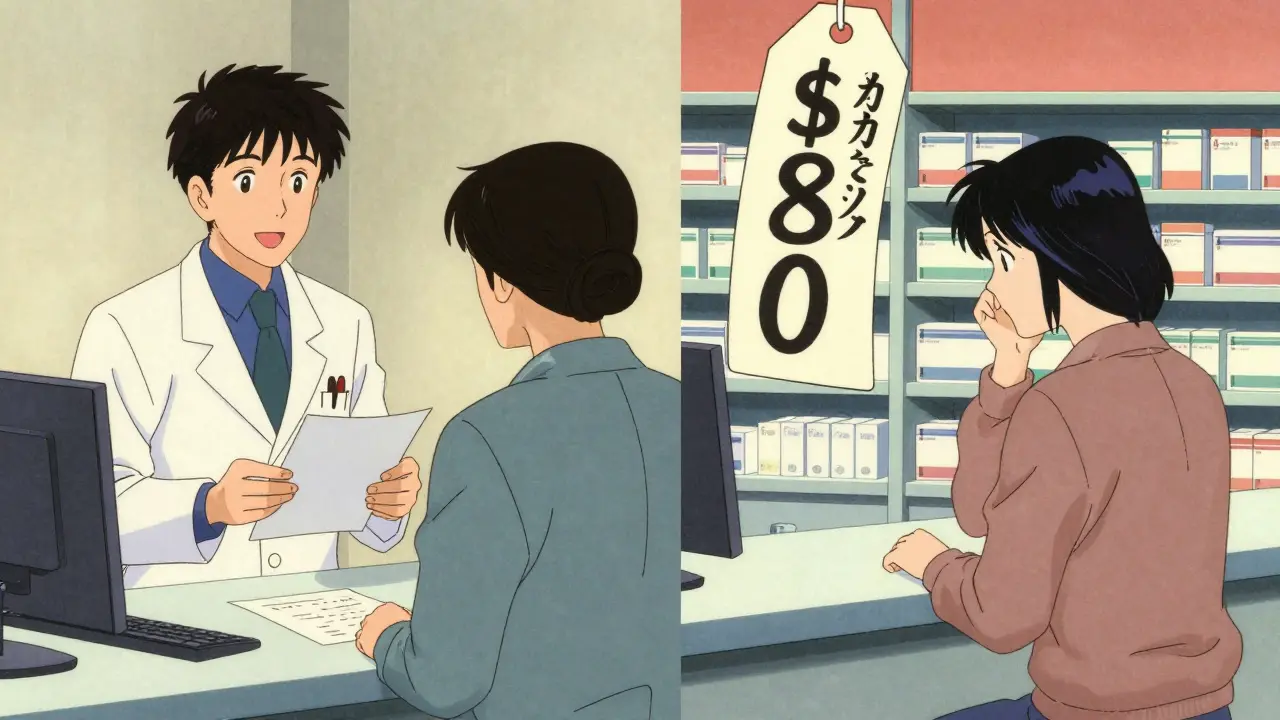
Imagine you're sitting in a clinic, and your doctor hands you a prescription for a new medication. They tell you it's the gold standard for your condition. But when you get to the pharmacy, the pharmacist looks at you with a sympathetic expression and tells you it will cost $800 out of pocket. You leave without the medicine. This is a daily reality for millions, and the root of the problem often starts before you even leave the exam room. The simple truth is that most clinicians are flying blind when it comes to provider cost awareness.
For a long time, the medical culture has been: "prescribe the best drug, and let the insurance company handle the bill." But with the U.S. prescription drug market hitting roughly $621 billion in 2022, that approach is breaking the system. We aren't just talking about a few expensive specialty drugs; we're talking about a systemic gap where the people choosing the treatment have almost no idea what the patient will actually pay.
The Guessing Game: How Wrong Are Clinicians?
You might think doctors have a decent ballpark idea of what drugs cost, but the data shows they are often wildly off. A foundational systematic review by Chren et al. a research group that analyzed physician cost estimation accuracy across multiple countries found a recurring pattern: doctors consistently overestimate the cost of cheap drugs and underestimate the cost of expensive ones. In fact, they underestimated high-cost medications by an average of 74%.
It gets worse when you look at the margins. A study published via Wiley found that only 5.4% of clinicians could estimate the cost of a generic drug within a 25% margin of the actual price. When it came to proprietary brands, that number only rose to 13.7%. This means that in nearly 90% of cases, the clinician is making a therapeutic decision without a realistic understanding of the financial burden they are placing on their patient.
| Drug Type | Estimation Accuracy (Within 25% Margin) | Typical Error Pattern |
|---|---|---|
| Generic Medications | 5.4% | Overestimated 77.5% of the time |
| Proprietary/Brand Name | 13.7% | Underestimated 51.4% of the time |
Why the Knowledge Gap Exists
Why is there such a massive disconnect? First, it's an educational void. About 56% of U.S. medical schools don't even have a formal curriculum on drug pricing. Students are taught how a drug interacts with a receptor, but they aren't taught how it interacts with a patient's bank account. Research shows that while doctors generally have slightly better cost consciousness than medical students, both groups struggle significantly with actual numbers.
Then there's the infrastructure. Pricing in the U.S. is fragmented and chaotic. A single drug might cost $15 at one pharmacy and $320 at another depending on the PBM (Pharmacy Benefit Manager) and the insurer. Expecting a doctor to memorize these shifting variables is unrealistic. In a 2007 review, 92% of physicians said they wanted cost information at the point of care, but it simply wasn't available. This isn't a lack of will; it's a lack of tools.
The Rise of Real-Time Benefit Tools (RTBTs)
The game is changing through Real-Time Benefit Tools software integrated into electronic health records that provides patient-specific drug pricing at the moment of prescribing. Instead of a generic price list, these tools pull data from the patient's specific insurance plan. When a doctor sees a high cost pop up in their Electronic Health Record digital versions of patient charts used in healthcare, they are much more likely to switch to a cheaper, equally effective alternative.
The impact is measurable. Research from the University of Colorado and Harvard showed that about one in eight primary care physicians revised their prescriptions after receiving an electronic cost alert. When the potential savings exceeded $20, that number jumped to one in six. At UCHealth, implementation of these tools led to a 12.5% prescription modification rate. Essentially, when doctors see the price, they act on it.

The Friction of Implementation
If these tools work, why isn't every clinic using them? Because the rollout is expensive and technically draining. Integrating an RTBT system into a platform like Epic can take upwards of 18 months and cost millions of dollars. For example, UCHealth spent an estimated $2.3 million to get their system running.
There's also a human element. Doctors are already burnt out. On forums like r/medicine, physicians have complained that manually checking drug costs can add 30 minutes or more to an already packed day. Even with the tools, there are glitches. Some residents have noted that alerts might show insurer-specific pricing but fail to account for the patient's specific copay or deductible, leading to inaccurate information that can confuse both the provider and the patient.
Moving from Absolute Cost to Clinical Value
There is a tension in the medical community about whether doctors should even care about the price. Some economists argue that clinicians should focus solely on the medical value of a drug, leaving the financial negotiations to the system. However, this view is fading. With the Inflation Reduction Act 2022 U.S. legislation allowing Medicare to negotiate prescription drug prices, the conversation has shifted toward transparency and accountability.
We are seeing a move toward "high-value care," where the goal is to maximize the health outcome per dollar spent. The American College of Physicians (ACP) has been pushing this via their High-Value Care Task Force. The goal isn't just to pick the cheapest drug, but to avoid "clinically unjustified" price hikes. For instance, recent reports showed the price of Humira increasing without any new clinical indications, which makes cost awareness a matter of professional ethics, not just accounting.

What This Means for Patients
When a doctor is cost-aware, the patient wins. It reduces medication non-adherence-the dangerous phenomenon where patients stop taking their meds because they can't afford them. Currently, 28% of adults report skipping doses due to cost. By integrating cost data into the workflow, studies show patients can save an average of $187 annually. More importantly, this helps close the gap in racial and ethnic disparities, as safety-net clinics show higher rates of prescription modification when these tools are used, ensuring that underserved populations get medications they can actually afford.
Do doctors know the price of the drugs they prescribe?
Generally, no. Most clinicians have significant gaps in their knowledge, often overestimating the cost of cheap generics and severely underestimating the cost of brand-name drugs. Without specialized software, they are largely guessing based on outdated or general information.
What are Real-Time Benefit Tools (RTBTs)?
RTBTs are software integrations within a provider's Electronic Health Record (EHR) that allow them to see the actual cost a specific patient will pay for a medication, based on their insurance coverage, before the prescription is sent to the pharmacy.
Why don't all clinics have these tools?
The primary barriers are cost and complexity. Implementing these systems can cost millions of dollars and take over a year of development. Additionally, the fragmented nature of insurance pricing makes it difficult to provide 100% accurate data in every scenario.
Does the cost of a drug relate to its research and development (R&D)?
While many people believe high prices are driven by R&D, research indicates that drug prices are often uncorrelated with the actual cost of research and development. Only a minority of medical students (44%) are aware of this disconnect.
How does cost awareness help patients?
It prevents "sticker shock" at the pharmacy, which reduces the likelihood that a patient will abandon their prescription. It also encourages doctors to prescribe high-value alternatives that provide the same clinical benefit at a lower cost.
Next Steps for Different Roles
For Patients: Don't be afraid to ask your doctor, "Is there a cheaper alternative that works just as well?" Many providers genuinely don't know the price and will be happy to check if they know you are concerned about the cost.
For Clinicians: If your system doesn't have RTBTs, consider using resources like the Mayo Clinic's Drug Cost Resource Guide or similar institutional toolkits to get a baseline understanding of therapeutic classes and their relative costs.
For Healthcare Administrators: Prioritize EHR integrations that provide patient-specific pricing. While the upfront cost is high, the long-term result is higher medication adherence and better health outcomes for your patient population.
john chiong
April 12, 2026 AT 14:44absolutely criminal that these white coat wizards are basically tossing darts in the dark with our bank accounts
complete systemic failure of the highest order
melissa mac
April 14, 2026 AT 13:28It really highlights the need for a more integrated approach to patient care where financial wellness is seen as part of the health outcome. Maybe we can find a middle ground where providers get better tools without adding to their burnout.
Haley Moore
April 14, 2026 AT 18:24Ugh, please. Like I'm actually surprised that doctors don't know the price of a pill 🙄 it's honestly so quaint that people still expect these things to just work logically. Anyway, my doctor is way too fancy to care about my budget 💅
Scott Lofquist
April 14, 2026 AT 18:40Actually, it's not about the tools, it's about the lack of basic accountability in the medical board. 🙄 Why are we blaming the EHR when the real issue is the PBMs rigging the game? 🤡 Totally systemic greed!
Jasmin Stowers
April 15, 2026 AT 22:04totally agree. just need better systems for everyone
Milo Tolley
April 17, 2026 AT 04:50The interoperability of these RTBTs is an absolute nightmare!!! The latency in data retrieval from the PBMs creates a catastrophic failure in the clinical workflow!!!! Completely absurd!!!!
Olivia Lo
April 18, 2026 AT 14:08From a socio-economic perspective, this systemic opacity serves as a mechanism of control. The disconnect between therapeutic efficacy and fiscal accessibility is a classic example of institutional friction in healthcare delivery.
Princess Busaco
April 19, 2026 AT 00:27Honestly, the idea that adding a little piece of software will magically fix the soul-crushing void of the American healthcare system is just laughable. We are talking about a multi-billion dollar industry that thrives on the fact that your doctor is too tired to check a price list. It's not a 'friction of implementation,' it's a calculated decision to keep the money flowing into the pockets of pharma execs while the rest of us just suffer through the bureaucratic theater of it all.
Mary Johnson
April 20, 2026 AT 11:46Wake up people! They don't want the doctors to know the prices because if they did, the whole scam would collapse overnight. These RTBT tools are probably just another way for the insurance companies to track our usage patterns and hike the rates even more behind the scenes. I bet there's a backdoor in that Epic software that sends every search directly to the drug lobbyists in DC to make sure the 'cheaper' alternatives are just as expensive six months later. It's all a coordinated play to keep us sick and broke!
Tabatha Pugh
April 20, 2026 AT 13:59Actually, most doctors who use these tools end up ignoring them anyway because they trust their 'clinical intuition' over a price tag, which is just a fancy way of saying they're out of touch with how people actually live.
Shaylia Helland
April 21, 2026 AT 09:16i remember when i first started seeing my specialist and i just felt so overwhelmed by the cost of everything but then i realized that if i just talked to them like a human being they were actually pretty open to finding a different brand that didnt break my bank account and i think that just shows that most people are just trying their best in a really confusing system where nobody really knows what is going on
Clint Humphreys
April 22, 2026 AT 23:57It's funny how we call it a 'knowledge gap' when it's really just a carefully curated ignorance. I mean, look at the way these PBMs operate, it's practically a shell game where the patient is the only one losing. I'm not saying there's a secret society, but the alignment of interests between the insurers and the brand-name manufacturers is just too perfect to be accidental. Everything is just smoothed over with corporate jargon to keep the masses from realizing they're being fleeced in the name of 'innovation.'
Catherine Mailum
April 23, 2026 AT 11:45oh wow so we're just gonna act like paying millions for a software update is a 'reasonable' business expense while the patients are literally skipping doses. truly a masterpiece of capitalism right here
Rim Linda
April 24, 2026 AT 08:40This is just too much drama for my brain today 😭 but seriously why is it so expensive!!!