
Dry Eye Management from Medications: Lubricants and Humidifiers Guide

Waking up with gritty, burning eyes happens more often than you might think. If you are reading this, chances are you have dealt with that persistent sting after hours on a screen or a windy day outside. Managing Dry Eye Disease is a multifactorial condition characterized by decreased tear production or increased tear evaporation, resulting in DED. You aren't alone; approximately 16.4 million adults in the United States struggle with this, and globally, prevalence rates vary widely depending on where you live and how doctors diagnose it.
The goal isn't just to make your eyes feel wetter for an hour. The real aim is restoring balance to your ocular surface so you can function normally without constant irritation. This involves understanding the difference between tears that aren't being made versus tears that disappear too fast. Once you know which type you have, choosing the right medication becomes less of a guessing game.
Knowing Your Dry Eye Type Matters
Before buying a bottle of drops, it helps to know why your tears are failing. Most dry eye cases fall into two buckets. First, there is aqueous-deficient dry eye. Here, the glands that produce the watery part of the tear film don't work hard enough. Second, and much more common, is evaporative dry eye. In this scenario, your tears are fine, but they vanish too quickly because the oily layer on top of your eye is missing. Research indicates around 86% of dry eye cases involve this evaporative component.
If you have evaporative dry eye, standard water-based drops might not last long enough. They slide off the surface too quickly. Lipid-based formulations address this by adding oil to stabilize the tear layer. Understanding this distinction prevents you from wasting money on products that offer temporary relief at best. Doctors often look at Tear Film Break-Up Time (TBUT) to determine this stability, checking how long your tear layer stays intact before breaking apart.
Over-the-Counter Artificial Tears
For mild symptoms, you don't always need a prescription. Over-the-counter (OTC) artificial tears serve as the first line of defense. These typically contain active ingredients like carboxymethylcellulose, polyethylene glycol, propylene glycol, or sodium hyaluronate. The concentration matters here. Sodium hyaluronate usually sits between 0.1% and 0.4%, while carboxymethylcellulose ranges from 0.5% to 1% in standard formulations.
You also need to consider viscosity, which determines how thick the liquid feels. Low-viscosity options provide immediate relief but often wear off within 1 to 2 hours. High-viscosity gels, like those found in Refresh Celluvisc, can last 4 to 6 hours but might blur your vision temporarily upon application. If you plan to drive immediately after use, stick to the thinner formulas. For nighttime use, thicker ointments prevent symptoms while you sleep, though they aren't suitable for wearing contact lenses unless specified by the label.
| Ingredient | Typical Concentration | Duration of Relief | Best For |
|---|---|---|---|
| Carboxymethylcellulose | 0.5% - 1% | 1-2 Hours | Mild to Moderate Symptoms |
| Polyethylene Glycol | 0.4% | 2-3 Hours | Daily Maintenance |
| Sodium Hyaluronate | 0.1% - 0.4% | 2-4 Hours | Surface Repair |
| Lipid-Based Formulations | Variable | 4-6 Hours | Evaporative Dry Eye |
Prescription Options for Stubborn Cases
When over-the-counter drops fail to control inflammation, prescription medications step in. Unlike simple lubricants, these treat the underlying immune response causing the damage. Two major players dominate this space: Restasis and Xiidra.
Restasis contains cyclosporine 0.05%. It functions as a calcineurin inhibitor immunosuppressant. Its job is to reduce inflammation in the lacrimal gland so it can produce more tears naturally. The catch? It takes time. Clinical studies show noticeable improvements usually appear after 3 to 6 months of consistent use. In the original FDA approval trials, it showed a significant improvement in symptom scores compared to placebo vehicles. Generic versions became available around 2020, helping drop prices significantly for many patients compared to the brand name cost.
Xiidra works differently. It uses lifitegrast 5% to block T-cell mediated inflammation. Patients often report feeling better sooner, sometimes within 2 weeks. However, many users complain about a stinging sensation when the drop hits the eye. This transient irritation affects adherence; if it hurts every time you use it, you might skip doses, which negates the benefits entirely.
Newer entrants include Miebo, approved recently with perfluorohexyloctane 3.5%. It creates a physical barrier over the eye surface to stop evaporation. Early feedback suggests rapid relief compared to older options. Another approach is Tyrvaya, a nasal spray containing varenicline. This avoids the eye altogether, stimulating tear production through nerve pathways instead.
Humidifiers as Environmental Support
Medication manages the biology, but your environment impacts the physics of your eyes. Air conditioning, heating, and screens all accelerate tear evaporation. A humidifier adds moisture back into the air to slow this down. Studies suggest maintaining relative humidity between 40% and 60% yields the best results for symptom reduction overnight.
Don't just place the unit anywhere. Positioning it near your bed or desk ensures the benefit reaches your face directly. Cleanliness is critical, though. Dirty misters can circulate bacteria, making infection risks higher than the dry eye risk itself. Water quality matters too; distilled water reduces mineral buildup inside the machine and prevents white dust from settling on furniture.
Practical Implementation Tips
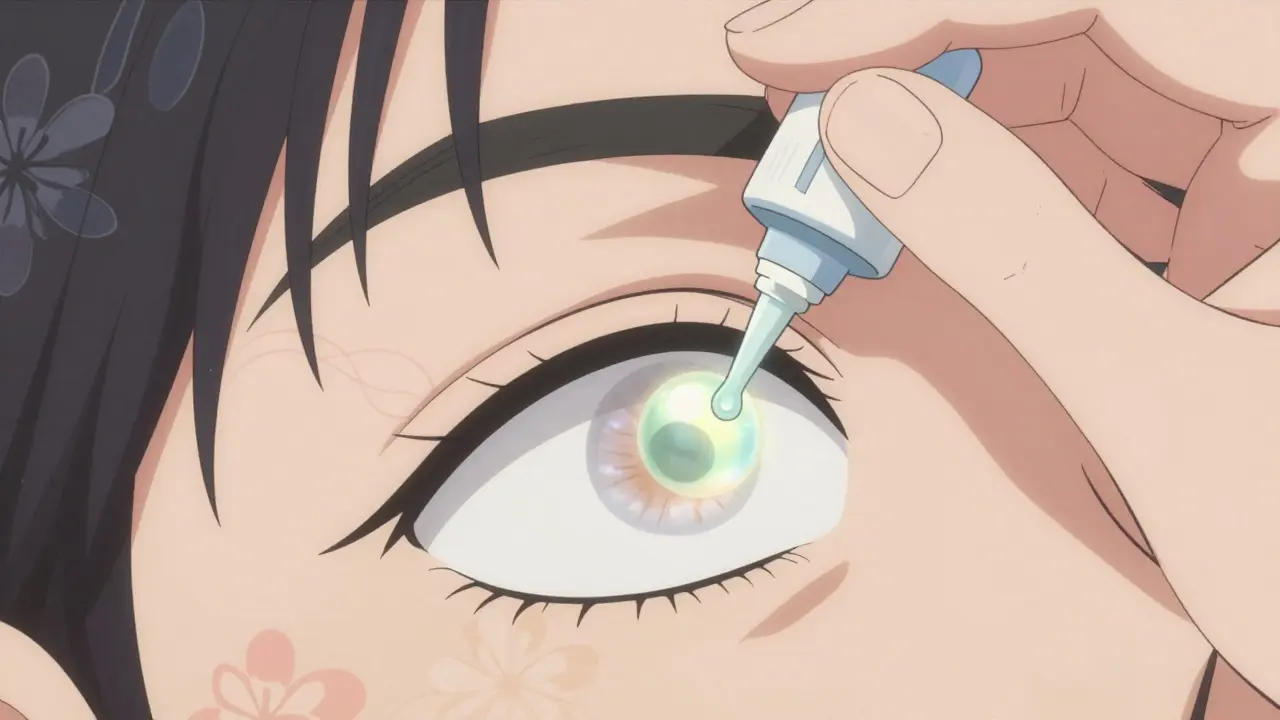
Getting started with a new regimen requires patience. Proper instillation technique takes practice. About half of new users struggle with getting the drop into the eye correctly without poking themselves. To improve this, tilt your head back, pull the lower lid down gently to form a pocket, and squeeze one drop. Avoid touching the tip of the bottle to your eyelid to prevent contamination.
If you wear contact lenses, timing is everything. Remove lenses before applying any drops unless they are specifically labeled "safe for contacts." Wait 10 to 15 minutes before reinserting them. For lipid-based oils like Miebo, wait 30 minutes, as the oil can interact poorly with lens materials. Refrigerating drops can also help reduce that initial burning sting reported by many users, making morning administration less of a battle.
Adherence remains the biggest hurdle. Consistency beats intensity. Using a medication twice daily for six months works better than using it four times daily for three days. Set alarms on your phone for morning and evening reminders. Track your symptoms to see progress; sometimes the change is gradual enough to miss without documentation.

Cost and Access Considerations
Financial barriers are real. Brand-name prescriptions can range from $400 to over $600 per month depending on coverage. Generic cyclosporine offers a cheaper alternative but still costs roughly $150 monthly without insurance. Newer agents like Miebo sit at the premium end, potentially costing $650 for a 30-day supply. Insurance plans often require step therapy, meaning you must try cheaper, older medications before they approve newer ones.
Patient assistance programs exist to bridge these gaps. Many manufacturers offer coupons or enrollment services that can lower out-of-pocket expenses. Discuss payment plans with your ophthalmologist beforehand. Sometimes splitting costs between different modalities-like using a high-viscosity gel at night and a milder drop during the day-provides a budget-friendly middle ground while still managing symptoms effectively.
How long does it take for prescription eye drops to work?
It depends on the medication. Lifitegrast may show results in 2 weeks, while cyclosporine often requires 3 to 6 months of consistent use to reach full effect. Lipid-based drops like Miebo often provide quicker symptom relief, sometimes within days.
Can I use artificial tears with contact lenses?
Only use drops labeled as safe for contact lenses. Otherwise, remove your lenses before application and wait 15 minutes before putting them back in. Oil-based drops generally require longer wait times, sometimes up to 30 minutes.
Why do my eye drops burn when I put them in?
Preservative systems or the active medication can cause stinging on damaged ocular surfaces. Refrigerating the bottle before use often reduces this sensation. If burning persists, consult your doctor to switch preservative-free formulations.
Should I use a humidifier if I live in a dry climate?
Yes. Indoor humidity levels below 40% worsen tear evaporation. Using a humidifier to keep levels between 40% and 60% significantly helps manage evaporative dry eye symptoms, especially while sleeping.
Are expensive eye drops worth the extra cost?
Higher cost doesn't always mean better efficacy. Preservative-free multi-dose vials offer comfort but cost more. Evaluate based on symptom relief and insurance coverage rather than price alone. Often, combining a generic prescription with an OTC lubricant achieves good results.
Next Steps and Troubleshooting
If you follow these guidelines and still struggle, it's time to reassess. Perhaps the diagnosis was incomplete. Sometimes underlying issues like autoimmune disorders contribute to persistent dryness. A corneal specialist can perform mapping tests to identify specific deficiencies in your tear composition.
Troubleshooting involves isolating variables. Try one change at a time. Stop a humidifier for a week, then turn it back on. Switch brands of artificial tears. This method identifies which intervention actually moves the needle for your specific eyes. Keep a symptom journal noting severity scores, weather conditions, and product usage to spot patterns.
Remember, treating dry eye is a marathon, not a sprint. Consistent care maintains the health of the ocular surface, preventing long-term damage. With the right combination of lubricants, environmental tweaks, and medical guidance, you can regain control over your visual comfort.
Debbie Fradin
March 31, 2026 AT 05:02You talk about restoring balance like it's a spa day when inflammation is eating your cornea.
Michael Kinkoph
March 31, 2026 AT 12:42One must realize; the meibomian glands require strict maintenance; otherwise evaporation dominates the clinical picture entirely.
Biraju Shah
April 1, 2026 AT 19:23Don't act like it's rocket science. Just stick to the drops and stop the humidity.
Jonathan Sanders
April 3, 2026 AT 10:10Another month of burning stares at screens for everyone.
dPhanen DhrubRaaj
April 4, 2026 AT 05:42me too. eyes burn in winter here. hard to find good gel
Adryan Brown
April 5, 2026 AT 04:45Managing chronic dry eye is often a test of endurance rather than quick relief. You have to look at the daily habits that contribute to the issue in the first place. Screens are bad but the environment plays a huge part in how we feel each morning. Humidifiers work if you actually clean them and put distilled water inside. Skipping steps on cleaning creates more problems than the dryness itself. It is easy to forget to wipe down the unit when you are feeling tired. Consistency matters far more than the strength of the medication you buy. Some people want instant magic cures that do not really exist in biology. Patience allows the tissue to heal without constant irritation cycles. Insurance hurdles add stress which only makes the perception of pain worse. Financial barriers are real but generic options can bridge the gap effectively. Doctors push certain brands but patient preference dictates long term success rates. Tracking symptoms helps identify triggers that simple observation misses. Weather changes impact the tear film stability regardless of your budget. Small adjustments compound over time to create significant quality of life improvements.
Christopher Curcio
April 6, 2026 AT 22:14Tear film osmolarity is key. Hyperosmolar state triggers cytokines. Lifitegrast blocks the T-cell activation loop.
Angel Ahumada
April 8, 2026 AT 13:21pain is just the mind realizing fragility of self. do you cry when your eyes dry