
FDA Databases: How to Verify Medications and Spot Counterfeit Drugs
Every year, millions of people around the world take medications they believe are safe. But what if the pill in your bottle isn’t what it claims to be? Counterfeit drugs are a real and growing threat - and the U.S. Food and Drug Administration (FDA) runs the only official system in the country that can help you confirm whether a medication is legitimate.
What the FDA Databases Actually Do
The FDA doesn’t just approve drugs - it tracks them from factory to pharmacy. Three main databases work together to make this possible: the NDC Directory, the Drug Establishments Current Registration Site, and the Electronic Drug Registration and Listing System (eDRLS). These aren’t just government files - they’re the backbone of drug safety in the U.S.
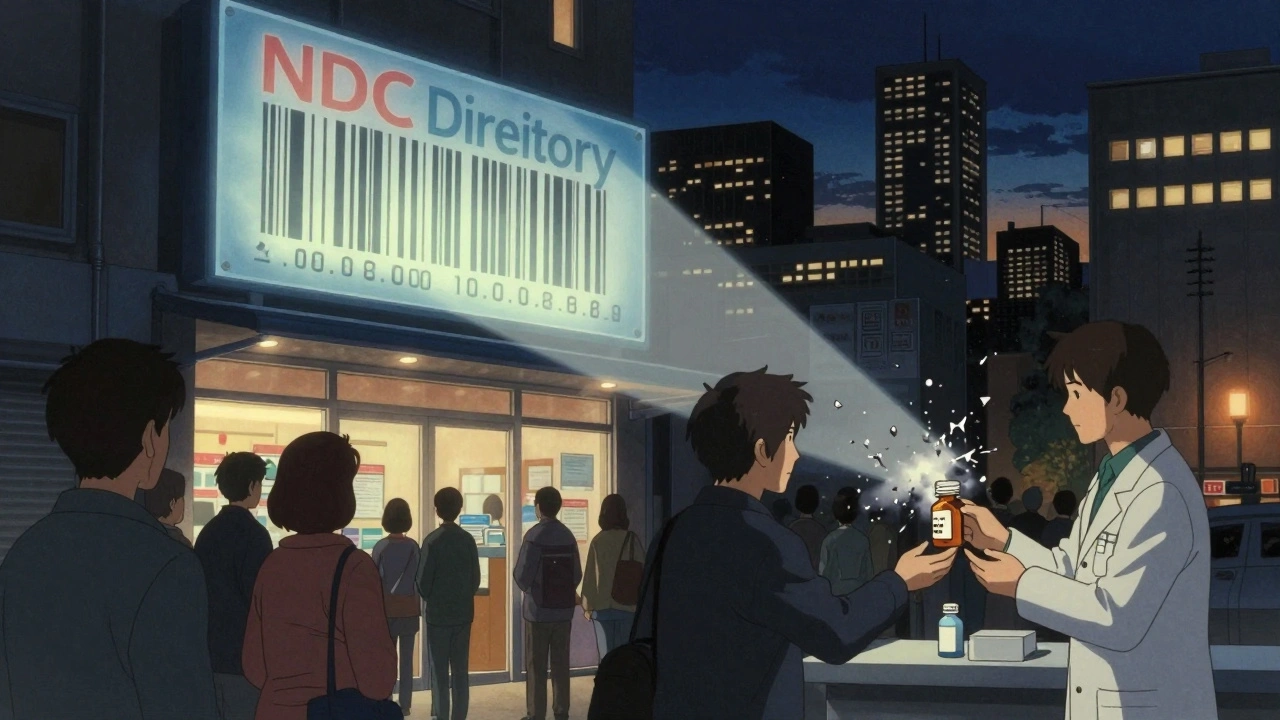
The NDC Directory is the most important tool for verifying a drug. Every FDA-approved medication gets a unique 10- or 11-digit National Drug Code (NDC). This code breaks down into three parts: the labeler code (who makes it), the product code (what the drug is), and the package code (how it’s sold - like 30 tablets or 100 mL). If a drug doesn’t have a matching NDC in the FDA’s database, it’s not approved.
For example, if you see a bottle of metformin labeled as “500 mg tablets” but the NDC doesn’t appear in the NDC Directory, that’s a red flag. The same goes for any drug you buy online or from a foreign pharmacy. The FDA updates this directory every single day, so outdated or fake listings get caught fast.
How to Check a Drug Using the NDC Directory
You don’t need to be a pharmacist to use the NDC Directory. Here’s how to do it:
- Find the NDC on the drug packaging. It’s usually printed near the barcode or in small print on the box or bottle.
- Go to the FDA’s NDC Directory at accessdata.fda.gov/scripts/cder/ndc/.
- Enter the full NDC number - no dashes, no spaces.
- Check the results. If it shows the drug name, manufacturer, dosage, and active ingredient - it’s real.
- If nothing comes up, or the details don’t match what’s on your bottle, the drug may be counterfeit.
Pro tip: Don’t trust the NDC if it’s handwritten or looks smudged. Legitimate manufacturers print NDCs clearly and consistently. If the label looks like it was printed on a home printer, walk away.
Who’s Allowed to Make and Sell Drugs?
Not every company can legally make or distribute medicine in the U.S. The Drug Establishments Current Registration Site lists every facility registered with the FDA. That includes factories, repackagers, and wholesale distributors.
Want to know if your pharmacy’s supplier is legit? Search the establishment’s name or address in the registry. If it’s not there, they’re operating illegally. And here’s something most people don’t realize: even if a drug has a real NDC, if it came from an unregistered facility, it’s still unsafe.
Since June 2009, all drug companies must submit their product information electronically through eDRLS. That means the FDA has a digital paper trail for every approved drug. If a company hasn’t submitted their listing, or their registration expired, their products shouldn’t be on the market.
The Big Change: DSCSA and Product Identifiers
Before 2023, the FDA system could track drugs by type - but not by individual package. That meant two identical bottles of the same drug could come from different sources, and there was no way to tell which was real.
That changed on November 27, 2023, with full implementation of the Drug Supply Chain Security Act (DSCSA). Now, every prescription drug package must have a unique 2D barcode - a product identifier - that links to a digital record. Pharmacies and distributors scan these barcodes to verify each package before it’s sold.
This doesn’t mean you need to scan your pills at home. But it does mean that if you’re buying from a pharmacy, they’re legally required to check the barcode. If they don’t, they’re breaking the law. If you’re buying online, ask if they verify each package. If they can’t answer, don’t buy.
What Counterfeit Drugs Look Like
Counterfeit drugs aren’t always obvious. Some look identical to the real thing. Others have slight differences: wrong color, misspelled name, odd smell, or packaging that feels cheap.
Common red flags:
- Price that’s way lower than normal - if it’s too good to be true, it is.
- Foreign packaging with no English labeling.
- No lot number or expiration date.
- Seals that look tampered with or don’t match the brand’s design.
- Online sellers who don’t require a prescription for controlled drugs.
According to the FDA’s 2022 report, counterfeit drugs are rising 18% per year. Most come from overseas suppliers - especially from countries with weak regulation. Fake versions of diabetes, heart, and cancer drugs are the most dangerous because they can kill silently.
Why This Matters for You
Counterfeit drugs don’t just fail to work - they can poison you. In 2021, the FDA found fake versions of metformin containing toxic chemicals. Another batch of counterfeit blood pressure pills had no active ingredient at all. Patients taking those pills had strokes and heart attacks because their condition went untreated.
Real medications are tested for safety, purity, and effectiveness. Counterfeits aren’t. They might contain rat poison, chalk, or even other drugs. The FDA estimates that 1 in 10 drugs sold online globally are fake. That number is higher for specialty medications like insulin or erectile dysfunction pills.
Using the FDA databases isn’t just about avoiding fraud - it’s about protecting your life.
What You Can’t Do With FDA Databases
These tools are powerful, but they have limits. You can’t check over-the-counter supplements. You can’t verify drugs sold outside the U.S. unless they’re FDA-approved. And you can’t use them to check compounded drugs - those made by pharmacies for individual patients.
Also, the system only works if everyone plays by the rules. About 98% of manufacturers are compliant, but only 65% of small pharmacies are. That means if you’re buying from a small independent pharmacy, they might not be scanning barcodes - even though they’re required to.
If you’re unsure, ask your pharmacist: “Do you verify every prescription using the DSCSA system?” If they hesitate or don’t know what you mean, it’s time to find another pharmacy.
What’s Coming Next
The FDA is upgrading the NDC format to a standardized 12-digit system by 2026. That will make it harder for counterfeiters to guess or fake codes. They’re also adding product photos to the NDC Directory - so you can compare the real image of your drug with what’s on your bottle.
AI tools are starting to help too. Companies like IBM and Google are building machine learning models that scan supply chain data for anomalies - like a sudden spike in orders from an unknown supplier. These tools will help the FDA catch fakes before they reach stores.
But the best defense is still you. Knowing how to check an NDC, asking questions, and avoiding shady online sellers saves lives.
Final Checklist: Are You Safe?
Before taking any prescription or OTC drug, ask yourself:
- Did I get this from a licensed U.S. pharmacy?
- Can I find the NDC in the FDA’s NDC Directory?
- Does the packaging match the FDA’s official product image (when available)?
- Is the price realistic? (Too cheap = too risky.)
- Did the pharmacy scan the barcode before giving me the drug?
If you answered no to any of these, talk to your doctor or pharmacist. Don’t take the risk.
Can I trust online pharmacies that claim to be FDA-approved?
No. The FDA does not approve online pharmacies. Only physical pharmacies licensed by state boards are allowed to sell drugs in the U.S. Websites that say they’re FDA-approved are lying. To verify a pharmacy, check if it’s listed on the National Association of Boards of Pharmacy’s Vetted Pharmacy list. If it’s not, avoid it.
What should I do if I think I have a counterfeit drug?
Stop taking it immediately. Contact your pharmacist or doctor. Then report it to the FDA’s MedWatch program at 1-800-FDA-1088 or online at fda.gov/medwatch. Include the NDC, lot number, expiration date, and where you bought it. The FDA uses these reports to track counterfeit networks and issue warnings.
Are generic drugs more likely to be counterfeit?
No. Generic drugs are held to the same FDA standards as brand-name drugs. The NDC Directory lists both equally. Counterfeiters target popular, expensive drugs - like insulin, blood thinners, or erectile dysfunction pills - because they’re profitable. Generic versions of these are just as likely to be faked, but only if they’re sold outside the regulated supply chain.
Can I use the FDA databases to check supplements or vitamins?
No. The FDA databases only cover prescription and over-the-counter drugs regulated under the Federal Food, Drug, and Cosmetic Act. Supplements are not required to be listed in the NDC Directory or registered through eDRLS. That’s why supplement safety is harder to verify - always choose brands with third-party testing seals like USP, NSF, or ConsumerLab.
How often is the FDA database updated?
The NDC Directory is updated daily. The Drug Establishments Current Registration Site updates every business day. If a company cancels its registration, it’s removed within 24 hours. That means if you search today and find a drug listed, it’s currently approved. If it disappears, it was pulled - possibly because of safety concerns or counterfeiting.
What to Do Next
Take five minutes today. Find one prescription you take. Look up its NDC in the FDA’s database. If you’ve never done it before, you’ll be surprised how easy it is - and how much peace of mind it gives you.
Share this with someone you care about. Someone older. Someone who buys meds online. Someone who doesn’t know how to check if their pills are real. You could save their life.
Saurabh Tiwari
December 3, 2025 AT 17:57Victoria Graci
December 3, 2025 AT 23:20Chris Wallace
December 5, 2025 AT 13:49william tao
December 7, 2025 AT 11:05Sandi Allen
December 8, 2025 AT 15:13Shubham Pandey
December 10, 2025 AT 00:47Elizabeth Farrell
December 11, 2025 AT 08:37Sheryl Lynn
December 11, 2025 AT 19:32Paul Santos
December 12, 2025 AT 09:42Eddy Kimani
December 13, 2025 AT 15:25John Webber
December 13, 2025 AT 19:34