
How Clinician Communication Shapes Patient Trust in Generic Medications
When your doctor switches your prescription from a brand-name drug to a generic, what do you think? If you’ve ever felt uneasy about the change - even if you couldn’t explain why - you’re not alone. But here’s the truth: clinician communication is the single biggest factor deciding whether you’ll stick with that generic or refuse it outright. Not price. Not marketing. Not even how well the drug works. It’s how your doctor or pharmacist talks to you about it.
Studies show that 53.7% of patients say their doctors never or seldom discuss generic options. That silence isn’t harmless. It’s a missed chance - and sometimes, it backfires. Patients who get no explanation are far more likely to stop taking their medication, blame side effects on the generic, or switch back to the more expensive brand. Meanwhile, those who get a clear, confident conversation? They’re 37% more likely to stick with the generic. That’s not a small difference. That’s life-changing for patients and the healthcare system.
Why Patients Doubt Generics - Even When They’re Just as Good
Generic drugs aren’t cheap knockoffs. They’re exact copies of brand-name drugs in every way that matters: same active ingredient, same dose, same strength, same route of delivery. The FDA requires them to meet strict standards - 80% to 125% bioequivalence - meaning they work in the body just like the original. Yet, nearly 30% of patients still believe brand-name drugs are more effective. Where does that belief come from? Not science. It comes from silence.
Think about it. You’ve seen TV ads for a brand-name drug for years. You know its name. You’ve heard stories from friends. Then one day, the pharmacy hands you a pill with a different color, shape, and name. No warning. No explanation. Just a receipt with a lower price. It’s no surprise people panic. Their brain fills the gap with fear: Is this fake? Is it weaker? Did they cut corners?
And here’s the scary part: those fears can become real. A 2019 JAMA study found that patients who received minimal information about their generic medication reported 28% more side effects - headaches, dizziness, nausea - than those who got a clear explanation. Not because the drug was different. Because their expectations changed. This is called the nocebo effect: when believing something will hurt you makes it actually hurt you. Poor communication doesn’t just reduce adherence - it creates symptoms that weren’t there before.
What Effective Communication Actually Sounds Like
Not all talk works. Saying “We’re switching you to a generic because it’s cheaper” isn’t enough. Patients hear: They’re giving me the cheap version. That’s not reassuring. Effective communication has three key parts.
- Authority - Explain the FDA’s 80-125% bioequivalence standard. Don’t say “it’s the same.” Say: “The FDA requires this generic to deliver the same amount of medicine into your bloodstream as the brand, within a very tight range. It’s not guesswork - it’s science.”
- Confidence - Avoid phrases like “Let’s try this and see how it goes.” That sounds like an experiment. Instead, say: “I’ve prescribed this generic to hundreds of patients. It works just like the brand. I take generics myself for my blood pressure.”
- Proactivity - Don’t wait for questions. Say: “Some people worry about side effects when switching. If you feel any changes, let me know right away. It’s often just your body adjusting - not the drug.”
One patient on Reddit shared: “My cardiologist spent 10 minutes showing me the FDA data, explained how the active ingredient is identical, and told me he takes generics too. I’ve been on it for two years. No issues.” That’s not luck. That’s communication done right.
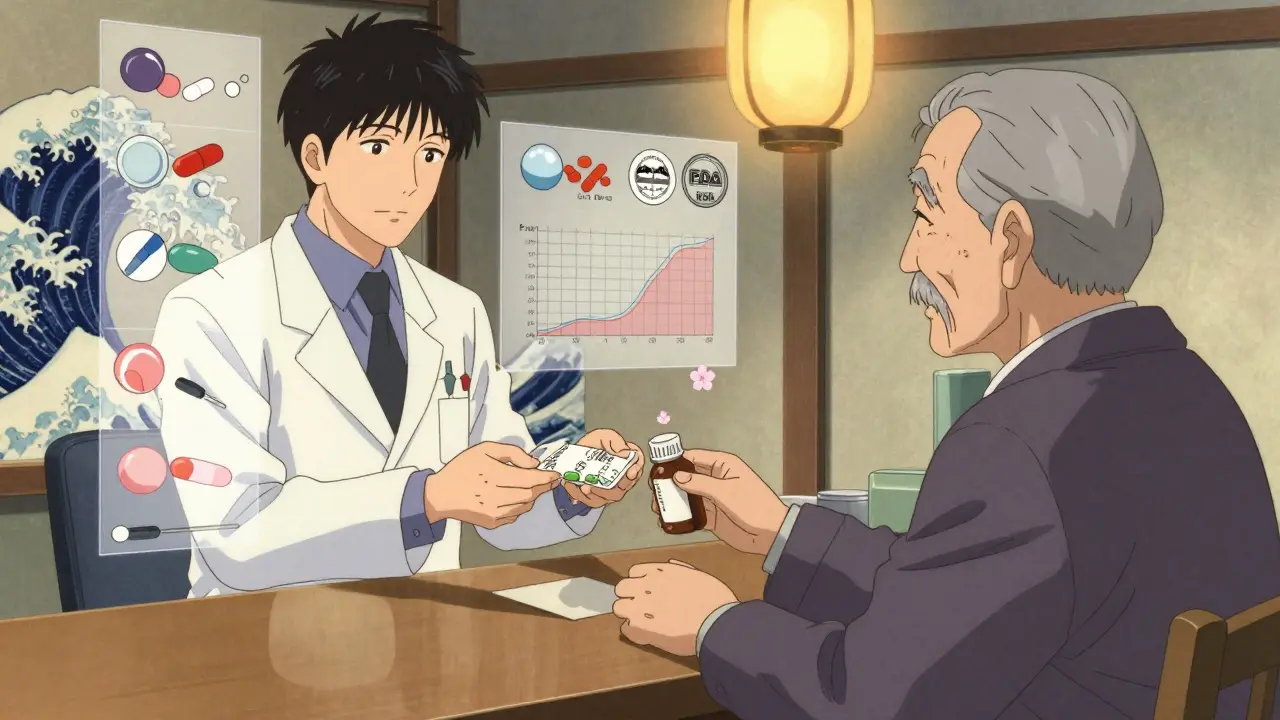
The Numbers Don’t Lie - Communication Changes Behavior
Here’s what the data says about communication impact:
- Patients who get a clear explanation from their pharmacist are 24 percentage points more likely to accept the generic (92% vs. 68%).
- When both doctor and pharmacist communicate, acceptance jumps to 92%. When neither does, it drops to 61%.
- Patients who hear about the FDA standards report fewer side effects - 28% fewer - than those who don’t.
- 78% of positive reviews about generics mention clinician communication as the turning point.
And it’s not just about trust. It’s about money. Generics make up 90% of all prescriptions filled in the U.S. but only 23% of total drug spending. That’s $37 billion saved every year. But if patients stop taking them because they’re scared, those savings vanish. Worse - their health suffers.
It’s Not Just About Language - It’s About Culture
Communication isn’t one-size-fits-all. A 2016 NIH survey found non-Caucasian patients were 1.7 times more likely to distrust generics. Patients earning under $30,000 a year were 2.3 times more likely to insist on brand-name drugs. Why? Past experiences. Lack of access. Historical distrust in medical systems.
Simply repeating the same script won’t work. You need cultural competence. That means:
- Using plain language - no jargon like “bioequivalence.”
- Asking open questions: “What concerns do you have about this change?”
- Validating fears: “It’s totally okay to feel unsure. Let me explain why this is safe.”
- Using visual aids - pictures of the FDA approval process, side-by-side pill comparisons.
A 2021 study showed that culturally tailored communication reduced skepticism by 41% in non-Caucasian patients. That’s not a nice-to-have. It’s essential.
Why So Many Clinicians Still Don’t Talk About It
If this is so important, why aren’t more doctors and pharmacists doing it?
- Time: The average conversation about generics lasts just 1.2 minutes - barely enough to say “hi.”
- Knowledge gaps: Only 54% of physicians could correctly answer a basic question about FDA bioequivalence standards.
- Confidence: 39% of clinicians said they weren’t sure generics worked as well for conditions like epilepsy or thyroid disease.
That’s not incompetence. It’s a system failure. Most clinicians weren’t trained to explain this. They’re not given tools. No one tells them: “This conversation isn’t optional. It’s clinical care.”
Some places are fixing it. Kaiser Permanente rolled out mandatory training and standardized scripts. Result? 94% generic utilization. $1.2 billion saved annually. That’s not magic. That’s structure.
The Future Is Here - And It’s Built on Communication
The FDA launched its Generic Drug Communication Initiative in 2023, offering free educational materials in 12 languages. Epic Systems rolled out the “Generic Confidence Score” in April 2024 - a prompt in electronic health records that reminds clinicians to cover four key points before switching a patient:
- Identical active ingredient
- FDA bioequivalence standards (80-125%)
- Cost savings (typically 80-85% less)
- Proactive nocebo management
Medicare Part D is now tying reimbursement to how well providers communicate about generics. And by 2025, the CDC plans to make this part of national health literacy standards.
This isn’t about pushing generics. It’s about restoring trust. Because when patients understand - really understand - that a generic isn’t a compromise, they don’t just take it. They feel safe. They feel heard. And their health improves.
Why do some patients think generic drugs are less effective?
Patients often believe generics are weaker because of lack of information, misleading marketing from brand-name companies, or personal experiences with poorly explained substitutions. Without clear communication, the brain fills the gap with fear - assuming a different-looking pill must be inferior. Studies show this isn’t based on science. It’s based on expectation. When clinicians explain that generics must meet the same FDA standards as brand-name drugs - with identical active ingredients and proven bioequivalence - skepticism drops dramatically.
Can talking about generics actually reduce side effects?
Yes. A 2019 JAMA study found patients who received detailed explanations about generic medications reported 28% fewer side effects than those who received standard substitution info. This isn’t because the drug changed - it’s because their expectations changed. When patients believe a medication is safe and effective, their body responds accordingly. This is called the nocebo effect: negative expectations leading to real, perceived symptoms. Good communication prevents it.
What should a clinician say when switching a patient to a generic?
A strong message includes: 1) Confirming the active ingredient is identical to the brand-name drug, 2) Explaining the FDA’s 80-125% bioequivalence standard (meaning it delivers the same medicine into the body), 3) Highlighting cost savings (typically 80-85% less), and 4) Proactively addressing fears: “Some people notice small changes when switching - that’s normal. If you feel anything unusual, let me know.” Avoid vague phrases like “It’s probably fine.” Be confident, clear, and calm.
Do pharmacists play a bigger role than doctors in explaining generics?
Both matter - but together, they’re strongest. A 2021 study found that when both the doctor and pharmacist communicate, patient acceptance jumps to 92%. If only one speaks up, it drops to 76%. If neither does, it falls to 61%. Pharmacists often have the most direct contact during dispensing. But if the doctor hasn’t set the tone - “This is safe, and I recommend it” - the pharmacist’s message can feel like an afterthought. Coordination between both is key.
Are generic drugs really as safe and effective as brand-name ones?
Yes. The FDA requires generics to have the same active ingredient, strength, dosage form, and route of administration as the brand-name drug. They must also prove they deliver the same amount of medicine into the bloodstream within a tight range (80-125%). This is called bioequivalence. Thousands of studies confirm this. Generics are not “second-rate.” They’re scientifically identical. The only differences are inactive ingredients (like color or filler) - which don’t affect how the drug works.
Why has brand-name preference increased even though generics save money?
Despite generics saving $37 billion annually in the U.S., brand-name preference rose from 12% in 2010 to 23% in 2022. Why? Because patient perception hasn’t kept up with science. Marketing campaigns by brand-name companies have sown doubt, and clinicians haven’t consistently countered it. When patients don’t understand why a generic is safe, they default to what’s familiar - even if it costs more. Effective communication is the only tool we have to close this gap.
Alex Brad
March 2, 2026 AT 17:49Renee Jackson
March 3, 2026 AT 21:57Betsy Silverman
March 4, 2026 AT 16:30Ivan Viktor
March 6, 2026 AT 15:25Stephen Vassilev
March 8, 2026 AT 07:24Mike Dubes
March 8, 2026 AT 21:28John Cyrus
March 9, 2026 AT 21:12Jessica Chaloux
March 11, 2026 AT 10:02