
How to Read Your Prescription Label: Essential Questions for Your Pharmacist
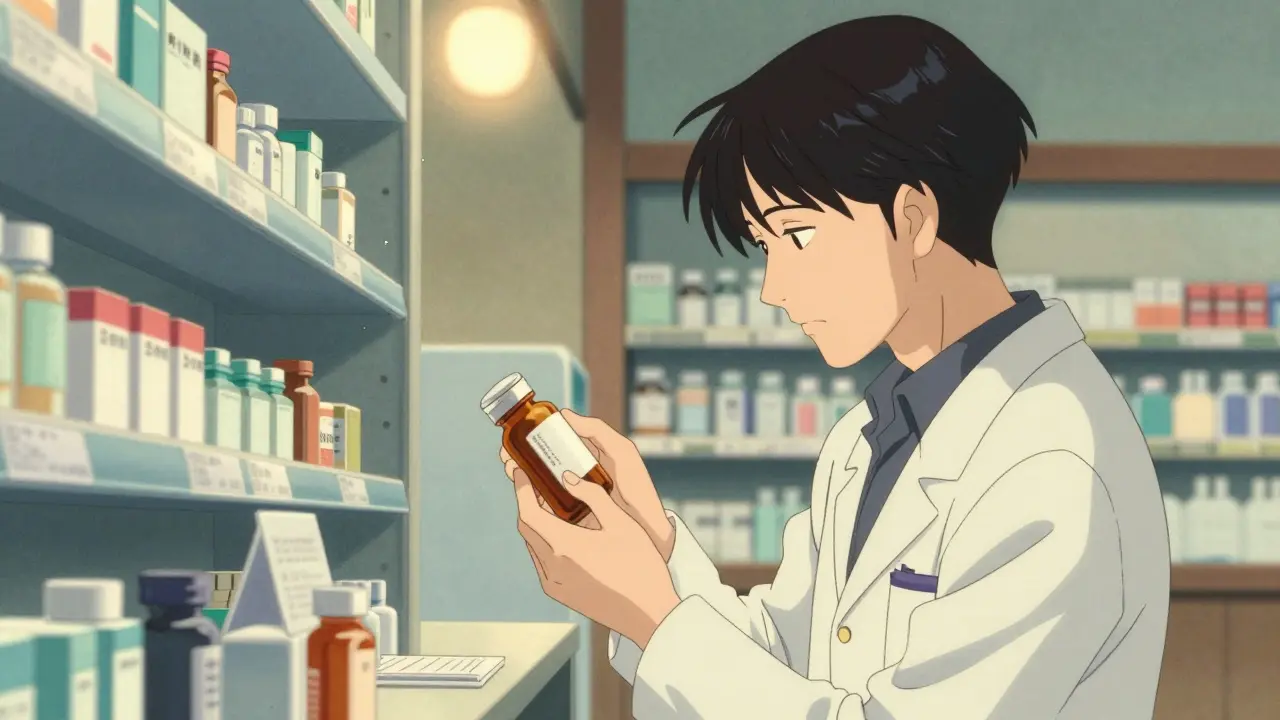
You've just waited twenty minutes in line at the pharmacy. You grab your bag of medicine and head for the door. Most of us don't give the small white sticker on the bottle a second look-we just assume the pharmacist got it right. But here is the scary part: about 67% of medication errors actually happen during administration, meaning the mistake happens while you're taking the drug at home. A simple misunderstanding of a label can lead to a serious health crisis.
Taking two minutes at the counter to verify your prescription label isn't being "difficult"; it's a critical safety step. In fact, people who actively question their labels can reduce adverse drug events by nearly half. Whether you are picking up a lifelong blood pressure medication or a one-time antibiotic, you need to be your own final line of defense. Here is exactly what you should be looking for and what you need to ask before you leave the store.
The "5 Rights" Checklist
Before diving into complex questions, use the gold standard for medication safety known as the "5 Rights." This is a quick mental scan to ensure the basics are correct. If any of these feel "off," stop and ask for a double-check immediately.
- Right Patient: Does the name on the label match yours exactly? Watch out for similar names or old prescriptions that might have been mixed up.
- Right Medicine: Is this the drug your doctor mentioned? If you've seen the pill before and it looks like a different color or shape, ask why.
- Right Amount: Does the strength (e.g., 81 mg vs 325 mg) match what was prescribed?
- Right Way: Is it clear how to take it? (e.g., by mouth, topical cream, or injection).
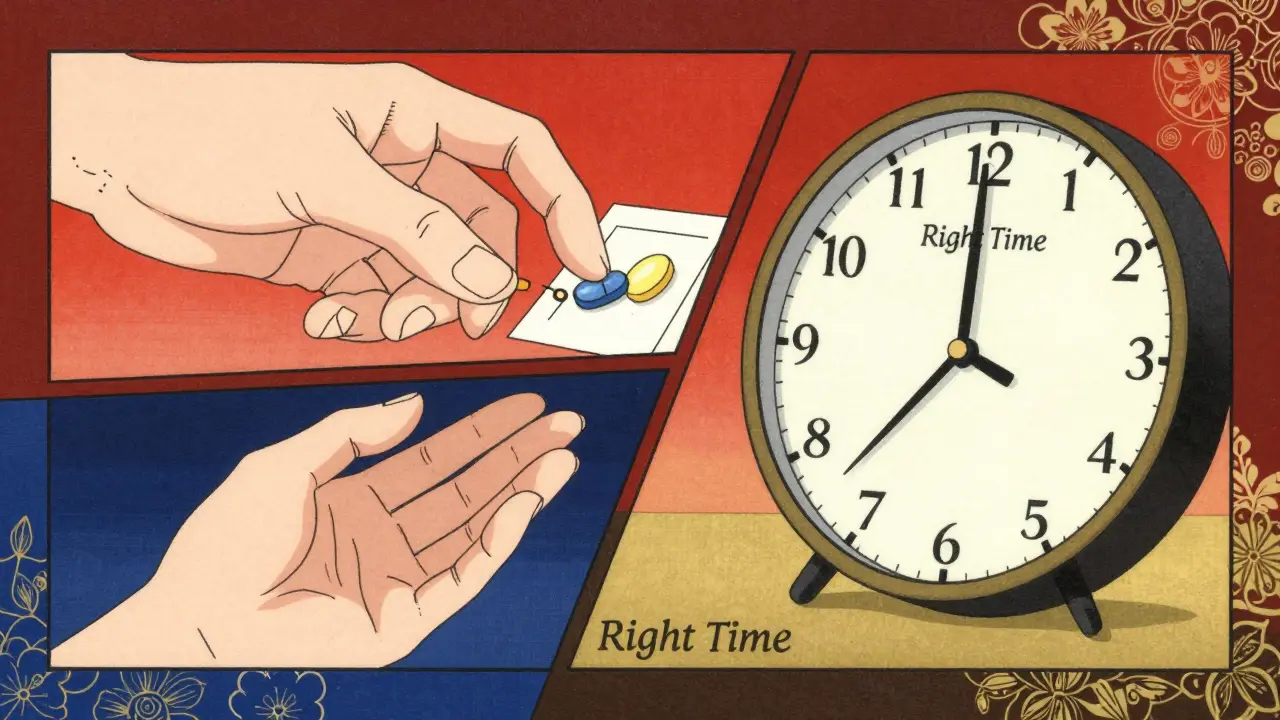
- Right Time: Is the frequency clear? "Once daily" is different from "three times a day."
Critical Questions About Dosage and Timing
The directions for use are where most confusion happens. Many labels use abbreviations that can be misinterpreted. For instance, some people see "qhs" and don't realize it means "at bedtime." Don't guess-ask for a plain-English explanation.
Ask your pharmacist: "Can you walk me through exactly when and how I should take this?" If the label says "take with food," ask if that means a full meal or just a light snack. Some medications, like certain antibiotics, can have their effectiveness reduced if taken with dairy products, while others require an empty stomach to be absorbed properly.
Another common pitfall is the "missed dose" scenario. Ask: "What should I do if I forget a dose?" Should you take it as soon as you remember, or wait until the next scheduled time? Some medications can be dangerous if you double up to "catch up," while others need to be taken immediately to keep the drug level in your blood stable.
Storage and Stability Secrets
Most people assume all medicine goes in the bathroom cabinet. That's a mistake. Humidity and heat can break down the chemical compounds in your medication, making it less effective or even inactive.
About 15% of all prescriptions require refrigeration (usually between 2°C and 8°C). If you miss a refrigeration warning because it's in tiny print, you could be taking a drug that has already spoiled. Ask your pharmacist: "Does this medication have specific storage requirements?"
| Storage Type | Ideal Temperature | Common Example | Risk of Improper Storage |
|---|---|---|---|
| Room Temperature | 20°C to 25°C | Most tablets/capsules | Degradation from heat/moisture |
| Refrigerated | 2°C to 8°C | Insulin, certain liquids | Loss of potency; spoilage |
| Special/Cool | Varies | Specific biologics | Chemical instability |
Decoding the Fine Print and Warnings
The FDA is a regulatory agency that mandates scientifically accurate labeling to ensure safe and effective drug use. However, the actual label on your bottle is often a condensed version of the full prescribing information. For high-risk medications, you should receive a Medication Guide is a FDA-required patient-directed document for high-risk drugs like opioids or estrogen products.
If you see a warning sticker (like "May cause drowsiness" or "Avoid alcohol"), don't ignore it. Ask: "How severe is this side effect, and what should I do if it happens?" For example, if a drug causes dizziness, you need to know if that's a temporary adjustment period or a sign that you need to stop the medication and call your doctor immediately.
Check the expiration date. While most drugs are stable until that date, some liquid medications or reconstituted powders expire much faster once opened. Ask: "Is the expiration date on the bottle the only date I need to worry about, or does this expire sooner once I open it?"
Overcoming Barriers: When the Label is Hard to Read
Health literacy is a real challenge; millions of adults struggle with standard medical instructions. If you find the text too small or the language too complex, you have options. You can request a large-print label, which is available at the vast majority of pharmacies.
If English isn't your first language, ask for translation services. Under the Affordable Care Act, pharmacies receiving federal funds are required to provide these services. You can also ask for a verbal verification, where the pharmacist reads the instructions aloud while you follow along. A pro tip is to use the "teach-back" method: tell the pharmacist, "Just to make sure I have this right, I'm taking one pill every morning with breakfast, and I'm keeping it in the fridge. Is that correct?"
The Future of Labels: Digital Tools
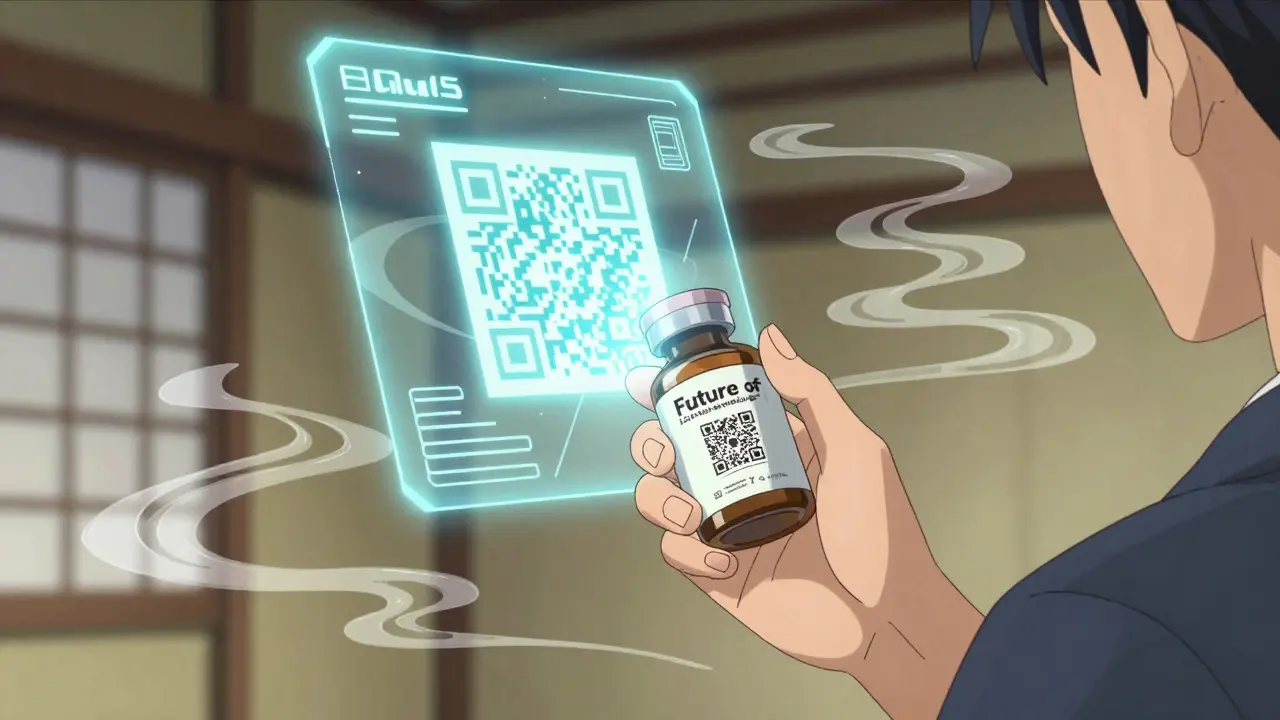
We are moving away from purely text-based stickers. Many pharmacies are now implementing QR Codes are machine-readable codes that link patients to digital instructions or video guides on their labels. This technology has been shown to reduce medication errors significantly by providing visual demonstrations of how to use a device or take a drug.
Some pharmacies are even testing augmented reality (AR) systems that overlay instructions on your phone screen as you look at the bottle. If your pharmacy offers a digital portal or a QR code, use it. It's often much easier to watch a 30-second video on how to administer a nasal spray than it is to decipher a three-sentence instruction on a tiny sticker.
What should I do if the drug name on the label is different from what my doctor said?
This is very common and usually means you received a generic version of a brand-name drug. Ask the pharmacist, "Is this the generic version of [Brand Name]?" They can confirm if the active ingredients and strength are identical. Never take the medicine until you have confirmed this.
Why does my label say "take as directed" instead of giving specific instructions?
This happens when the doctor provides a separate instruction sheet or gave you verbal directions. This is a dangerous gap in communication. Ask the pharmacist to call the doctor's office to get the specific dosage and timing in writing on the label before you leave.
Can I ask for a label in a different language?
Yes. Many pharmacies can provide translation services or labels in multiple languages. If you have limited English proficiency, explicitly ask for a translated Medication Guide or a staff member who speaks your preferred language.
How can I tell if my medication has expired?
Check the "Exp" date on the label. However, also look for physical signs: unusual odors, changes in color, or pills that are crumbling. If any of these occur, even before the expiration date, take the bottle back to the pharmacy for a consultation.
Is it okay to just trust the pharmacist's verbal explanation?
While pharmacists are experts, human error exists. Always verify that the verbal instructions match the written label. If there is a discrepancy, the written label is the legal record, but the verbal instruction might be a newer update. Always resolve the conflict before leaving the pharmacy.
Next Steps for Your Medication Safety
Depending on your situation, here is how to handle your next pharmacy visit:
- If you are a caregiver: Request "patient-specific" labeling that clearly identifies which family member the medicine belongs to, especially if you manage multiple prescriptions in one home.
- If you have vision impairment: Ask for large-print labels or a tactile marker (like a rubber band or specific sticker) to help you identify different bottles.
- If you are on multiple meds: Ask the pharmacist to create a "Medication List" or a chart that summarizes all your labels in one place, including the purpose of each drug and the time of day to take it.
Daniel Runion
April 25, 2026 AT 14:20Oh please!!! As if anyone actually has the patience to do a "5 rights" checklist every single time they pick up a script!!! It is absolutely absurd to expect the average person to act like a licensed nurse in a CVS aisle!!! Total overkill!!!
Kristen O'Neal
April 26, 2026 AT 11:29I totally get where you're coming from, but safety is just too important to skip. I've actually had a pharmacy give me the wrong dose once, and it was a nightmare to fix after I'd already left the store. It's way better to spend two minutes being "annoying" at the counter than to end up in the ER because of a typo on a label. We should all be advocating for better systems so the burden isn't just on the patient!
Sharyl Foster
April 27, 2026 AT 20:33Generic vs Brand is such a joke. Everyone acts like they're the same just because the active ingredient matches, but the fillers can totally mess with how some people react. Also, those QR codes are just a way for pharmacies to stop paying for actual staff to explain things to you. Total lazy move by the industry.
Anand Mehra
April 28, 2026 AT 17:31system failure is inevitable logic says trust no one not even the pharmacist basic entropy applied to healthcare
Vijay AGarwal
April 28, 2026 AT 19:52OH MY GOD! People really don't understand the absolute horror of storing meds in a bathroom! The humidity is a silent killer of potency! I have seen so many medications completely degrade into useless powder because someone thought a mirrored cabinet was a good idea! It is an absolute tragedy of ignorance! PLEASE, for the love of everything, keep your meds in a cool, dry place or you are basically taking expensive sugar pills!
Nikita Shabanov
April 28, 2026 AT 20:28From a clinical perspective, the teach-back method mentioned is the most effective way to ensure compliance. It removes the ambiguity of "yes" answers and forces the patient to demonstrate understanding. If you are managing medications for elderly parents, I highly recommend implementing a weekly pill organizer alongside the pharmacist's list to prevent the administration errors cited in the post. It provides a physical double-check that complements the label verification.
Michael Deane
April 29, 2026 AT 07:41I don't care about the FDA's little guidelines because we have the best pharmaceutical industry in the world right here in the USA and if you can't read a simple English label then that's your own problem honestly. It's crazy how people want everything handed to them on a silver platter with translations and large print when we've built the most advanced medical system in human history and we're just expected to keep babying everyone who can't follow a basic instruction on a bottle that's been standardized for decades now.