
Rosacea: Managing Facial Flushing with Topical Antibiotic Treatment

When your face turns red for no clear reason - not from heat, not from exercise, not from embarrassment - and it keeps happening, you’re not just blushing. You might be dealing with rosacea. It’s not acne. It’s not an allergy. It’s a chronic skin condition that starts with flushing and can grow into persistent redness, bumps, and visible blood vessels. For many, it begins subtly: a warm flush after coffee, a red nose after spicy food, or cheeks that stay pink long after others have cooled down. If this sounds familiar, you’re not alone. About 16 million Americans have rosacea, and millions more worldwide. The good news? It’s manageable. The better news? Topical antibiotics can make a real difference - if you know how to use them right.
What Exactly Is Rosacea?
Rosacea isn’t one thing. It’s a group of symptoms that usually show up on the central face - cheeks, nose, chin, and forehead. The earliest sign? Facial flushing. Think of it like a sunburn that doesn’t fade. Normal blushing lasts seconds. Rosacea flushing can last minutes, sometimes hours. It’s triggered by things like hot drinks, alcohol, spicy food, sun exposure, or even stress. For 75% of people with rosacea, flushing is the very first clue.Left unchecked, this flushing turns into persistent redness. Then come the bumps - small red pimples or pus-filled spots that look like acne but aren’t caused by bacteria or oil. You might also notice thin, visible blood vessels (telangiectasia), burning, or stinging. Around 50% of people with rosacea also get eye symptoms: dryness, grittiness, redness, or light sensitivity. And while women are diagnosed more often, men tend to get worse forms, like rhinophyma - a thickening of the nose skin that’s rare but unmistakable.
There’s no single cause. Genetics play a role. So do immune system misfires, overactive blood vessels, and tiny mites called Demodex that live on everyone’s skin - but seem to multiply in rosacea. UV light is a major trigger. So are harsh skincare products, extreme temperatures, and even certain foods. The key? You can’t cure it, but you can control it.
Why Topical Antibiotics? Not What You Think
You might assume antibiotics are for infections. But in rosacea, they’re not fighting bacteria the way they do for a sore throat. Instead, they calm inflammation. The bumps and pustules in rosacea (called papulopustular rosacea) aren’t infected. They’re the result of your skin’s immune system going into overdrive. Topical antibiotics reduce that inflammation - and, in some cases, they also reduce the number of Demodex mites.Three topical treatments dominate the scene:
- Metronidazole 0.75% gel (Rozex®): First approved in 1985, it’s the classic. Reduces bumps by 60-70% after 6-9 weeks. Gentle on sensitive skin. Costs less than others.
- Ivermectin 1% cream (Soolantra®): Approved in 2014, it’s now the top choice for many dermatologists. In a 2019 study of 900 people, it cut bumps by 76% in 12 weeks - better than metronidazole. It also targets Demodex mites, which may explain why it works so well.
- Azelaic acid 15% gel (Finacea®): Not technically an antibiotic, but often grouped with them. Reduces inflammation and redness. Works well for those who can’t tolerate antibiotics. Takes longer - about 15 weeks - but has fewer side effects like stinging.
Here’s the catch: none of these work overnight. You need 4 to 8 weeks just to start seeing changes. Full results take 12 to 16 weeks. That’s why so many people quit too soon.
Real Results: What Patients Actually Experience
On Drugs.com, ivermectin has a 7.2 out of 10 rating from over 1,200 users. About 62% say it helped. But 16% say it made things worse - often at first. One Reddit user wrote: “First two weeks of metronidazole? My face looked like a lobster. I almost gave up. Then, slowly, the redness faded. Now I can wear makeup without feeling judged.”That’s common. Many people experience a “flare” at the start - more redness, dryness, stinging. It’s not the medication failing. It’s your skin adjusting. The trick? Stick with it. Studies show that 40-50% of people stop using their topical treatment within 3 months because they don’t see quick results. But if you stick past 8 weeks, your chances of success jump dramatically.
Another big issue? Cost. Without insurance, these creams can run $300-$400 a year. That’s a barrier for many. Some patients split doses, use less than prescribed, or skip days. But under-dosing doesn’t work. You need consistent, daily use - even when your skin looks better.
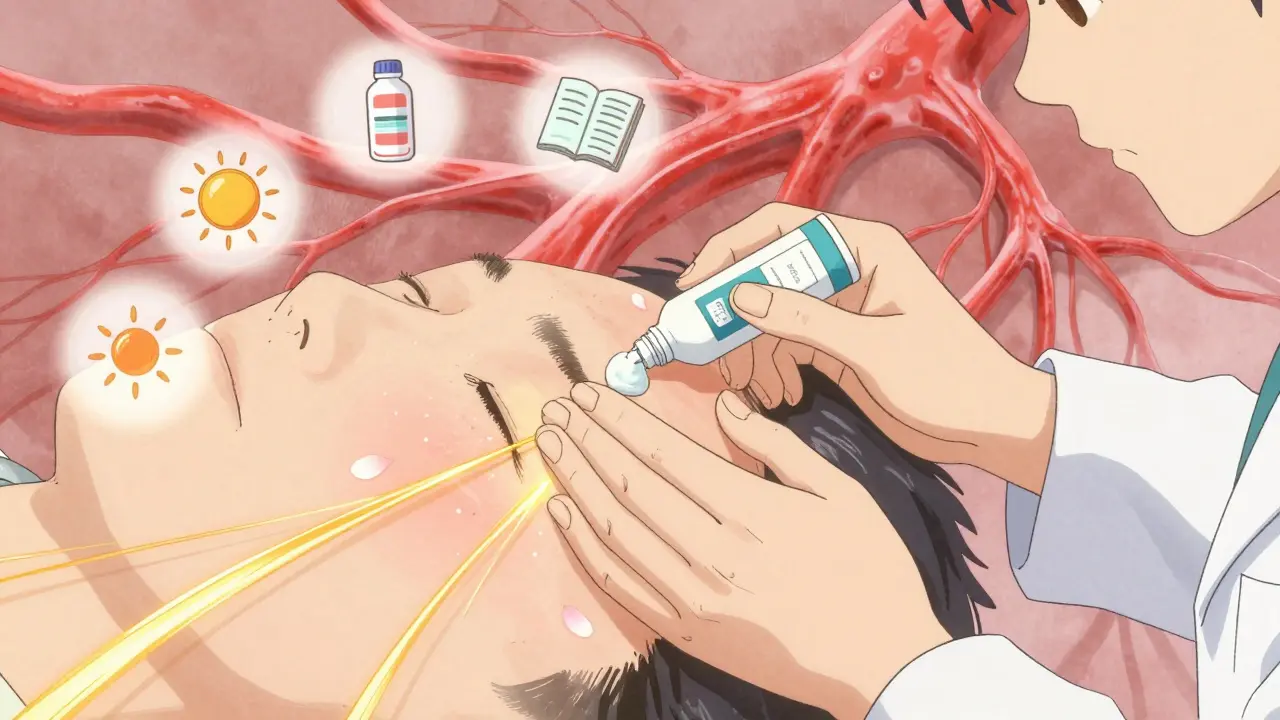
How to Use Them Right
Using these creams wrong is the #1 reason they fail.- Apply a pea-sized amount for your whole face. Too much doesn’t help - it irritates.
- Wait 15 minutes after washing your face. Skin should be completely dry. Wet skin increases stinging.
- Apply at night if you’re using it twice daily. Sun exposure can make irritation worse.
- Don’t layer it under heavy moisturizers or actives like retinol. Let it sit on clean skin.
- Do a patch test first. Put a tiny bit on your jawline for 3 days. If it stings or turns red, talk to your doctor before full use.
Side effects? Mild and temporary. About 15-25% feel a brief sting or burning. 10-20% get dryness. Less than 1% have serious reactions. If your skin gets worse after 2 weeks, don’t assume it’s the medication. Talk to your dermatologist. You might need a different formulation or to adjust your skincare routine.
What They Don’t Fix - And What You Need Alongside
Topical antibiotics are great for bumps and pustules. But they do almost nothing for facial flushing or persistent redness. That’s because those are caused by blood vessels, not inflammation. For that, you need different tools:- Sunscreen - daily, every single day. Mineral sunscreen with zinc oxide (10-20%) is best. No chemical filters - they can sting.
- Gentle cleanser - pH 5.5 to 7.0. No soap, no scrubs, no alcohol.
- Trigger tracking - keep a diary. Note what you ate, drank, or did before a flare. Common triggers: red wine, hot showers, wind, caffeine, stress.
- Moisturizer with ceramides - helps repair your skin barrier. Less irritation = better treatment results.
Some dermatologists now combine treatments. For example, use ivermectin for bumps and brimonidine gel (Mirvaso®) for redness. It’s not magic - but it’s more effective than one alone.

When to See a Dermatologist
If you’ve been using a topical antibiotic for 8 weeks and see less than 25% improvement, it’s time to re-evaluate. You might need:- A different medication
- An oral antibiotic (like doxycycline) for short-term control
- A laser or light therapy for visible blood vessels
- Testing for other conditions (like lupus or seborrheic dermatitis)
Also, if your eyes feel dry, gritty, or sensitive to light - see a dermatologist or ophthalmologist. Ocular rosacea can damage your eyes if ignored.
The Bigger Picture
The global rosacea treatment market is growing fast - expected to hit $2.7 billion by 2030. That’s because more people are being diagnosed, and treatments are getting smarter. New combinations are in trials - like ivermectin paired with anti-inflammatory agents - and early results show even better results.But the real breakthrough isn’t a new cream. It’s awareness. Rosacea isn’t just “sensitive skin.” It’s a medical condition. And it’s not your fault. You didn’t eat too much sugar. You didn’t skip showers. You didn’t stress too much - though stress can make it worse.
What matters now is getting the right treatment, staying consistent, and protecting your skin. You don’t need to hide. You don’t need to feel embarrassed. With the right approach, you can reduce the bumps, calm the redness, and take back control - one pea-sized dab at a time.
Can topical antibiotics cure rosacea?
No. Rosacea is a chronic condition with no cure. Topical antibiotics help control symptoms - especially bumps and pustules - but they don’t eliminate the underlying causes. Long-term management requires ongoing care, trigger avoidance, and often multiple treatments working together.
Why does my skin sting when I apply the cream?
Stinging is common in the first 1-2 weeks, especially with sensitive skin. It’s usually temporary and improves as your skin adjusts. To reduce it, apply the cream to completely dry skin, wait 15 minutes after washing, and use a gentle moisturizer with ceramides. If stinging lasts longer than 2 weeks or worsens, talk to your doctor - you may need a different formulation.
Is ivermectin better than metronidazole?
In clinical studies, ivermectin 1% cream reduces inflammatory lesions by 76% at 12 weeks, compared to 55% with metronidazole 0.75%. It also targets Demodex mites, which may contribute to inflammation. However, metronidazole is often preferred for very sensitive skin because it causes less irritation. Both are effective - the best choice depends on your skin type and tolerance.
Do I need to use sunscreen every day if I have rosacea?
Yes. Sun exposure is one of the top triggers for flushing and redness. UV rays can worsen inflammation and damage blood vessels. Use a mineral sunscreen with zinc oxide (10-20%) daily, even on cloudy days. Avoid chemical sunscreens - they can sting. Reapply every 2 hours if you’re outside.
Can I use makeup with topical antibiotics?
Yes, but wait at least 15 minutes after applying the cream before putting on makeup. Use non-comedogenic, fragrance-free products. Mineral makeup with zinc oxide can even help soothe redness. Avoid thick, oil-based foundations - they can clog pores and trap irritants. Always remove makeup gently with a mild cleanser.
Kathy Leslie
March 14, 2026 AT 10:29Amisha Patel
March 16, 2026 AT 03:01Elsa Rodriguez
March 17, 2026 AT 09:33Serena Petrie
March 17, 2026 AT 16:01Buddy Nataatmadja
March 18, 2026 AT 21:49mir yasir
March 19, 2026 AT 06:37Stephanie Paluch
March 21, 2026 AT 04:20Rex Regum
March 22, 2026 AT 16:04